
Málaga Day Trip from Seville
Whether Málaga is worth a day trip from Seville: the museums and Picasso connection, the beach and seafood, what the high-speed train actually costs you in time, and how to plan a day that's relaxed rather than rushed.

Photo: Yuliya Matuzava / Unsplash
- ✓Málaga gives you something Seville can't: the Mediterranean — a real beach, a breezy harbour and grilled seafood by the water.
- ✓It has reinvented itself as an art city, anchored by the Picasso Museum (Picasso was born here) and a clutch of strong modern galleries.
- ✓The fast train from Seville is comfortable but not short — roughly 2 to 2.5 hours each way (verify the current timetable) — so it's a committed day, not a quick hop.
- ✓The headline sights — old town, cathedral, Alcazaba and Gibralfaro castle, the museums and the beach — all cluster within walking distance of the centre.
- ✓Best for: art and beach lovers, and travellers who want a change of scene by the sea; less essential if your priority is more Andalusian palaces and tapas.
Why go to Málaga from Seville?
After a few days of Seville's palaces, patios and inland heat, Málaga offers a genuine change of register — the sea. As Andalusia's big coastal city and the gateway to the Costa del Sol, it pairs a walkable, sunny old town with a working harbour, a long city beach and a food culture built around what comes out of the Mediterranean. For travellers craving salt air, an afternoon on the sand and a plate of grilled sardines, it's the obvious counterpoint to landlocked Seville.
Málaga has also shed its old reputation as merely a transit airport for the resorts. In the last couple of decades it has remade itself as a serious cultural city, led by the Picasso Museum in the painter's birthplace and a growing constellation of galleries. So the day works on two levels: art-and-old-town in the morning, sea-and-seafood in the afternoon. The question isn't whether Málaga is worth seeing — it is — but whether it's worth the round trip from Seville on the time you have, which comes down mostly to the train.
- The big draw: the Mediterranean — beach, harbour and seafood by the water.
- A reinvented art city, led by the Picasso Museum in his birthplace.
- A compact, sunny old town with cathedral, fortress and castle close together.
- Best for: art and beach lovers wanting a coastal break from inland Seville.
At a glance
A quick-reference card before the detail. Train times and prices change, so verify the current timetable and fares close to your trip.
- Distance from Seville: roughly 200 km; about 2–2.5 hours each way by high-speed train (verify).
- Getting there: fastest and easiest by train from Santa Justa; driving is possible but longer with parking to sort.
- Headline sights: old town and cathedral, the Alcazaba and Gibralfaro, the Picasso Museum, the port and beach.
- Time on the ground: a full day after travel — comfortable for old town + one museum + beach if you pace it.
- Best seasons: spring and autumn for warm, swimmable-edge days; summer for full beach mode (and heat).
- Bring: swimwear if you want the beach, sun cover, comfortable shoes and an appetite for seafood.
- Verdict: worth it for art-and-sea; skip if you'd rather have more Seville or a closer trip.
Getting there: the train reality
The good news is that Seville and Málaga are linked by high-speed rail, so you don't have to drive the motorway or wrestle with parking. The realistic news is that it's still a meaningful journey — on the order of two to two and a half hours each way depending on the service, with a limited number of daily departures (verify the current timetable). That's noticeably longer than Córdoba's quick forty-five minutes, and it shapes the day: expect to give up four to five hours to travel and to enjoy a full but not leisurely afternoon at the other end.
Trains leave from Seville's Santa Justa station and arrive at Málaga's main María Zambrano station, a short ride or walk from the centre and beach. Book ahead for the best fares and to lock in convenient departure and return times, since the handful of fast services can fill up and the last good train home sets your curfew. Driving is an alternative if you want to combine Málaga with stops along the way, but for a straight day trip the train is more relaxing and lets you nap, read or work each way.
- High-speed train from Santa Justa to Málaga María Zambrano — around 2–2.5 hours each way (verify).
- Fewer daily services than Córdoba, so book ahead and note the last good train home.
- María Zambrano station is close to the centre and beach — easy onward access.
- Driving works if you want stops en route, but the train is the easier day-trip choice.
Málaga the art city
Málaga's cultural pull starts with Pablo Picasso, who was born in the city, and the Museo Picasso Málaga is the natural first stop — a handsome collection in a fine old palace that traces his range across decades. You can also visit his birthplace house on the Plaza de la Merced for context. Around these, the city has assembled an unusually rich set of museums for its size, including the colourful Centre Pompidou outpost on the harbour with its glowing glass cube, and the Carmen Thyssen museum of Spanish and Andalusian painting in the old town.
What makes the art easy here is geography: the major museums sit within the compact, pedestrian-friendly old town, so you can stitch a couple together with the cathedral and a coffee in between without ever needing transport. For a one-day visit, the trick is to choose — picking one museum to do properly rather than racing through three — and to let the old town's marble-paved Calle Larios, leafy squares and tucked-away churches fill the gaps. The atmosphere between the galleries is half the pleasure.
- Museo Picasso Málaga — the headline, in the artist's home city; his birthplace is nearby.
- Centre Pompidou Málaga on the harbour and the Carmen Thyssen in the old town round out the art.
- All cluster in the walkable old town — no transport needed between them.
- For one day, choose one museum to do well rather than rushing several.
Old town, fortress and the Gibralfaro view
Beyond the galleries, Málaga's historic core repays slow wandering. The cathedral — nicknamed La Manquita, 'the one-armed lady', for its famously unfinished second tower — anchors the old town, surrounded by pedestrian streets, tapas bars and shaded plazas. Rising above it all are two layered fortifications: the Alcazaba, a beautifully preserved Moorish palace-fortress with gardens and tiled courtyards stepping up the hillside, and, higher still, the Gibralfaro castle connected to it.
The climb (or a short bus or taxi) up to Gibralfaro delivers the day's best view: a sweeping panorama over the city's rooftops, the cathedral, the bullring and the blue arc of the harbour and sea beyond. It's the postcard that makes the whole geography click — old town below, Mediterranean ahead. If you only have energy for one fortress on a day visit, the Alcazaba is the richer interior, while Gibralfaro is about the view; pick according to whether you want detail or panorama, or combine them if your legs and the heat allow.
- The cathedral, 'La Manquita', anchors a walkable old town of tapas bars and plazas.
- The Alcazaba: a gorgeous Moorish palace-fortress of gardens and tiled courtyards.
- Gibralfaro castle above it: the day's best panorama over city, port and sea.
- Short on time or energy? Alcazaba for the interior, Gibralfaro for the view.
Beach, harbour and the food
This is where Málaga earns its place on a Seville day-trip list. A short walk from the old town brings you to the revamped port and the palm-lined Muelle Uno promenade, all sea air, boats and waterfront bars, leading on to La Malagueta, the city beach with its dark sand and rows of loungers. Even outside swimming season, an hour by the Mediterranean — coffee or a cold drink with the sea in front of you — is exactly the tonic a Seville-weary traveller wants.
The food is inseparable from the coast. Málaga's signature is the espeto: fresh sardines skewered and grilled over open wood fires on the beach, smoky and simple and best eaten right there with your fingers and a cold drink. Beyond that, the city is famous for fried fish, fresh seafood and the sweet local Málaga wine. A long, late lunch by the water — espetos, a plate of fritura and a glass of something cold — is the natural centrepiece of the afternoon and the moment most people decide the train ride was worth it.
- Muelle Uno harbour promenade and La Malagueta city beach — a short walk from the centre.
- The espeto: sardines grilled over beach fires — Málaga's must-eat.
- Fried fish, seafood and sweet Málaga wine round out the coastal table.
- A long lunch by the water is the heart of the day — don't skimp on time for it.
A realistic one-day plan
With the travel time in mind, keep the day focused. A clean shape: catch an early fast train from Santa Justa, arrive mid-morning, and spend the late morning on the old town and one museum — the Picasso for art lovers, or straight up to the Alcazaba and Gibralfaro for views and history. Break for a long, unhurried seafood lunch down by the port or on the beach around the middle of the day, then give the afternoon to La Malagueta and the harbour, dipping your feet in the Mediterranean before you head back.
Resist the urge to cram in every museum and both fortresses — the joy of Málaga as a day trip is its easy, sun-and-sea rhythm, and over-scheduling kills it. Keep one eye on your return train so the last good service home doesn't catch you out, and treat anything you don't reach as a reason to come back for a coastal overnight. Done at this pace, Málaga is a deeply satisfying contrast day; rushed, it just becomes a long round trip for a hurried lunch.
- Morning: old town + one museum, or Alcazaba and Gibralfaro for history and views.
- Midday: long seafood lunch by the port or on the beach — the centrepiece.
- Afternoon: La Malagueta beach and the harbour promenade before the train home.
- Don't over-schedule; keep one eye on the last good return train.
When Málaga is — and isn't — worth it
Málaga is worth the trip if you're drawn to the sea, to Picasso and modern art, or simply to a different, breezier kind of Andalusian city after Seville's intensity. Couples and families in particular often love it as a relaxed, change-of-pace day. It's less essential if your heart is set on more Moorish palaces and classic tapas crawls, in which case closer Córdoba or seaside Cádiz give you more for less travel — Cádiz especially is a quicker, cheaper coastal day if the beach is the main pull.
Whatever you decide, verify the current train times, fares and museum opening hours close to your visit, and book your seats early — the limited fast services are the real constraint on this day. Go for the sea and the art, keep the pace gentle, and Málaga rewards the journey with one of the most distinctive days out from Seville.
- Best for: sea lovers, art and Picasso fans, and anyone wanting a coastal contrast.
- Skip in favour of Córdoba or Cádiz if palaces, tapas or shorter travel matter more.
- Book train seats early and verify times, fares and museum hours before you go.

Best Beaches Near Seville
Seville has no beach of its own, but the Atlantic is closer than you think. A practical guide to the best beaches within reach — Cádiz, the Costa de la Luz, Huelva, Matalascañas and the Doñana coast — with how to get there by train, bus or car, when to go, and how to turn a hot Seville day into a sea breeze.
Read guide
Cádiz Day Trip from Seville
How to do Cádiz from Seville: a relaxed train to one of Europe's oldest cities, with a sea-wrapped old town, golden cathedral, fresh seafood and city beaches — plus the timing, the weather watch and when Cádiz beats another inland culture day.
Read guide
Best Day Trips from Seville
Seville is the best base in Andalusia for day trips — Córdoba's mosque-cathedral, Cádiz on the Atlantic, Ronda's gorge, Jerez sherry, the Roman ruins of Itálica and the white villages — compared by travel time, effort, season and who each one suits.
Read guideMore in Day Trips
6
Best Day Tours from Seville
When a guided day tour beats doing it yourself — and which ones are genuinely worth it. A comparison of organised day trips from Seville to Córdoba, Ronda and the white villages, Cádiz, Jerez, Itálica and Doñana, by who they suit, what they solve and when you're better off taking the train alone.
Read guide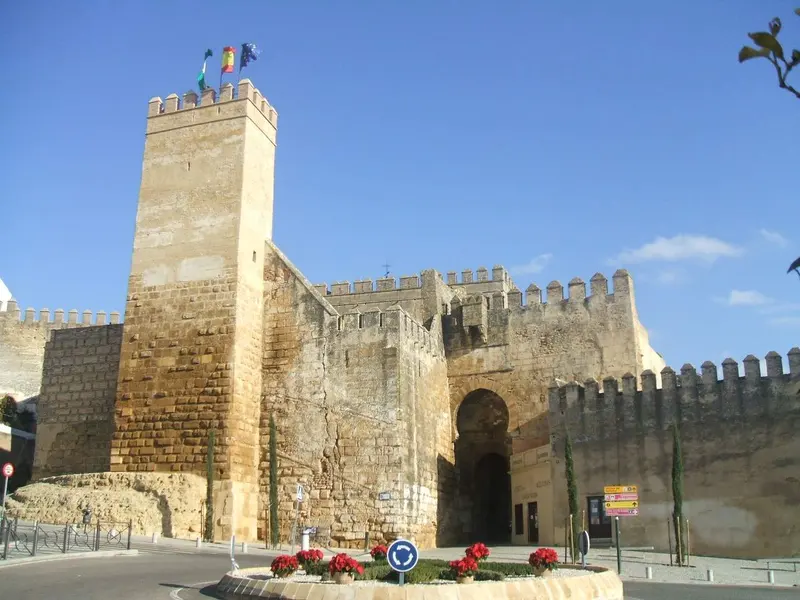
Carmona Day Trip from Seville
How to do Carmona from Seville: the Roman gates and necropolis, the clifftop viewpoints over the Vega, a parador lunch with a view, bus timing, and why this hilltop town makes one of the easiest small-town escapes from the city.
Read guide
Córdoba Day Trip from Seville
How to do Córdoba from Seville: the fast high-speed train versus a tour, booking the Mezquita-Catedral, a relaxed route through the Judería, patios and Roman bridge, and the heat-and-timing tradeoffs that make or break the day.
Read guideCórdoba or Cádiz from Seville?
Both Córdoba and Cádiz are easy, train-friendly day trips from Seville — but they're completely different days out. A clear-headed comparison by travel time, season, heat, food, scenery and the kind of traveller you are, so you can pick the right one (or sequence both).
Read guide
Doñana Day Trip from Seville
Whether Doñana works as a day trip from Seville: the wetlands and wildlife you'll actually see, the seasons that matter, why you can't drive into the park yourself, and how to build a realistic day around an official 4x4 tour.
Read guide
Gibraltar Day Trip from Seville
Whether Gibraltar is worth the long day from Seville: the distance and border reality, the passport and currency quirks of crossing into British territory, what the Rock and its apes actually deliver, and how a tour compares with going it alone.
Read guide