
Mercado de Triana Guide
Seville's most atmospheric food market sits at the foot of the Triana bridge, built over the ruins of a medieval castle. What to eat, when to go, the market bars worth a stop, and how to pair it with Triana's ceramics and a river walk.

Photo: CarlosVdeHabsburgo / Wikimedia Commons · CC BY-SA 4.0
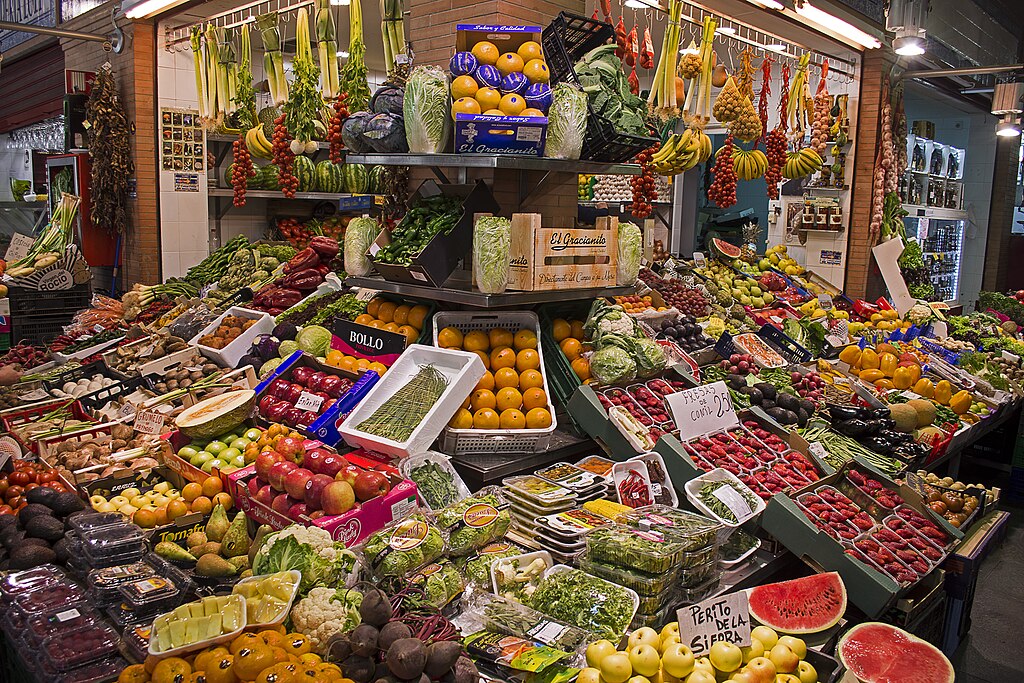
- ✓A working covered food market at the head of the Triana bridge — fishmongers, butchers, greengrocers and a growing band of market bars and food stalls.
- ✓Built over the excavated ruins of the Castillo de San Jorge, a medieval castle later used by the Spanish Inquisition; there's a small interpretive space on the site.
- ✓The easiest, most atmospheric casual meal in Triana: graze fried fish, ham, oysters and tapas with a glass of wine, no booking needed.
- ✓Best in the cooler hours; pair it with Triana's ceramics, a Calle Betis sunset and a walk back across the river.
A market built on a castle
The Mercado de Triana stands at the very head of the Puente de Isabel II — the iron Triana bridge — on a site with a deep history. Beneath the market lie the excavated ruins of the Castillo de San Jorge, a medieval fortress that later became the seat of the Spanish Inquisition in Seville. When the present market hall was built and renovated, those ruins were preserved, and a small interpretive space lets you glimpse the foundations and learn the darker chapter of the building's past. It gives an ordinary food market an unusually weighty backstory.
Above ground, though, it is all life and colour: a handsome covered hall, lined with painted azulejo tiles, where Triana shops and eats. It is the neighbourhood's larder and one of the most rewarding food stops in the city — close to the cathedral (just over the bridge) yet firmly part of the real, lived-in Triana. For a visitor it works on two levels at once: a window onto how Sevillanos actually eat, and an easy, atmospheric place to graze a casual meal.
At a glance
A quick orientation before you go. Treat the specifics below as a planning sketch rather than gospel — market and stall hours shift, and individual bars set their own — so verify current opening times if you're making a special trip, particularly for an evening visit.
- What it is: a covered neighbourhood food market with stalls and market bars.
- Where: at the foot of the Puente de Isabel II (Triana bridge), on the Triana bank.
- Getting there: a few minutes' walk over the bridge from the cathedral and old centre.
- Cost: free to enter and browse; you pay only for what you eat and buy.
- Best time: the cooler morning and lunch hours for the full market buzz; some bars run into the evening — verify.
- Pairs well with: the Triana Ceramics Center next door, Calle Betis at sunset, and a river walk.
- Note: hours for the market and individual stalls vary and change — confirm before a special trip.
Map pins
Map data © OpenStreetMap contributors · Tiles © OpenFreeMap
What to eat at the market
The pleasure of the Mercado de Triana is grazing. Alongside the produce stalls — fish on ice, hanging hams, olives, cheese, oranges and tomatoes — sits a growing band of market bars and food counters where you can eat standing or perched at a stool, assembling a casual lunch from a plate here and a plate there. It is one of the most relaxed meals in Seville: no booking, no formality, just point, order and eat.
Lean on the local classics. Fried fish (pescaíto frito) is a Triana speciality and turns up at the market bars; so do good jamón ibérico, fresh oysters and seafood, salmorejo, tortilla and a spread of tapas, washed down with a cold beer, a glass of wine or a fino sherry. Vegetarians do well too — the produce, olives and a tomato salad or aubergine dish are easy wins; ask for things 'sin jamón' where needed. Prices and the exact stalls change, so browse first, see what looks freshest and busiest, and order there.
- Graze the market bars — fried fish, ham, oysters, seafood, salmorejo, tortilla and tapas.
- Drink it local: cold beer, wine or a fino sherry.
- Vegetarian-friendly with produce, olives and tomato or aubergine dishes — ask 'sin jamón' if needed.
- Browse first, then order at the freshest, busiest counter; prices and stalls vary.
When to go
Timing makes a real difference. The market is at its most alive and authentic during the cooler morning and lunch hours, when the stalls are fully stocked and locals are doing their shopping — that is when it feels most like a working market rather than a tourist stop. It is also the most pleasant time in the heat of summer, when the covered hall offers welcome shade in the middle of the day.
Some of the market bars carry on into the early evening, which makes a relaxed aperitivo or early dinner possible, but stall opening varies and the produce side winds down earlier than the bars. As a rule, go in the morning or at lunch for the full experience, or in the early evening for drinks and a graze if the bars are open. Because these hours shift — and individual stalls keep their own schedules — verify current opening times if your visit hinges on it, especially around Sundays, public holidays and festival weeks.
- Morning and lunch: the fullest, most authentic market buzz, and welcome shade in summer.
- Early evening: some bars stay open for an aperitivo or early dinner — but verify.
- Hours shift and stalls vary, especially Sundays, holidays and festival weeks — confirm before a special trip.

The market bars: how it works
If you have never eaten at a Spanish market before, the rhythm is worth knowing. The food stalls inside the Mercado de Triana split, loosely, into two kinds: the traditional sellers — fishmongers, butchers, greengrocers, the olive and cheese counters — and the bars and gastro-stalls that cook and serve right there, often using produce from the market around them. You do not need a table or a reservation; you simply find a counter that looks good, order a couple of small plates and a drink, and stand or perch to eat. When you have had enough at one stall, you move to the next, exactly as you would on a tapas crawl.
Because the stalls are independent, each keeps its own prices, its own specialities and its own hours, and you pay each one separately rather than running a single tab. That independence is part of the charm: one counter may be the place for oysters and a glass of cold wine, another for fried fish, another for ham carved to order. Browsing first — a full loop of the hall before you commit — is the local move, and it lets you see what is freshest and where the locals are standing. Cash is handy for the smaller stalls, though many now take cards; if a visit is the whole reason for your trip, verify current stall hours, as they vary and shift seasonally.
- Two kinds of stall: traditional sellers (fish, meat, produce, cheese) and bars that cook and serve on the spot.
- No table or booking needed — order, stand or perch, eat, move on, pay each stall separately.
- Browse the whole hall first to spot the freshest counters and where the locals are.
- Carry some cash for smaller stalls; verify current hours, which vary by stall and season.

Pairing the market with the rest of Triana
The market is best treated as the opening move of a Triana afternoon rather than a destination on its own. Right beside it, along the riverbank, the Centro Cerámica Triana tells the story of the neighbourhood's thousand-year ceramics trade, built over its historic kilns — an easy and characterful pairing with a market visit. From there it is a short stroll to Calle Betis, the riverside row of terraces facing back across the water at the old city, perfect for a sunset drink once you've eaten.
A natural loop, then: graze the market, take in the ceramics, wander the ceramic streets and the quieter inland lanes, and drift back to the river for golden hour. After dark, Triana's flamenco venues add a final act. It is one of the most complete and characterful afternoons-into-evenings in Seville, and the market is the perfect, appetite-whetting place to begin it. Cross back over the lit Triana bridge at the end with the floodlit Giralda ahead.
- Pair the market with the Centro Cerámica Triana next door, then Calle Betis at sunset.
- Loop: market → ceramics → inland lanes → riverfront for golden hour → flamenco after dark.
- End by crossing the lit Triana bridge back toward the floodlit Giralda.
Practical tips for a market visit
A handful of small things make the visit smoother. The market sits right at the foot of the Triana bridge, so it is an easy few minutes' walk from the cathedral and the old centre — no transport needed. It is flat and step-free at the main entrance, which makes it accessible and easy with a pushchair, though the aisles get tight at busy times. Because it is covered, it doubles as a genuinely useful refuge from the midday sun in summer, when the rest of the city is at its hottest.
Go hungry rather than full — the whole point is to graze across several stalls — and go with a rough plan to browse first and order second. If you want the lively, fully stocked market, aim for the morning or lunch; if you want a quieter graze with drinks, the early evening can work where bars stay open. Avoid expecting the produce stalls to be in full swing on a Sunday or a public holiday, when much of the market may be closed. And, as ever in a busy public space, keep an eye on bags and phones in the crowd. Confirm opening hours close to your visit, since they change.
- Walkable in minutes from the cathedral; flat and step-free at the main entrance.
- Covered, so it's a welcome midday refuge from summer heat.
- Arrive hungry and browse before ordering; mornings and lunch are liveliest.
- Expect much of the market closed on Sundays and public holidays; verify hours near your visit.
- Mind bags and phones in the crowd, as in any busy market.
Triana Food Guide
A food-first route through Triana, Seville's proud neighbourhood across the river: the market, the classic tiled tapas bars, the riverside terraces of Calle Betis, fried fish and sherry, and how to thread it all into one perfect afternoon and evening.
Read guide
Triana Ceramics Center Guide
How to visit the Centro Cerámica Triana: the museum on the site of Triana's historic potteries, with excavated kilns, the story of Seville's tile-making, workshops and shops nearby, and how to weave ceramics into a Triana food-and-river walk.
Read guide
Triana Guide
Seville's proud neighbourhood across the Guadalquivir: flamenco roots, ceramic workshops, the Triana market, river-facing terraces on Calle Betis, real tapas, and what it's like to stay on the far bank.
Read guideMore in Food & Drink
6
Best Breakfast & Brunch in Seville
How to start the day in Seville — the local tostada-and-coffee ritual, where to find churros and pastries, the international brunch scene for a slower morning, and why an early breakfast is the smartest move you'll make in the heat.
Read guide
Best Cafés in Seville
A guide to choosing a Seville café for the right moment — a traditional tiled coffee house, a third-wave specialty bar, a leafy people-watching terrace, a cool work-friendly room or a cake-and-pastry stop — and how to use cafés as the city's best shade and pause from the heat.
Read guide
Best Churros in Seville
Where, when and how to eat churros con chocolate in Seville: the local calentitos and tejeringos, the difference from porras, the morning and late-night timing, what to order, and how a churrería breakfast fits a Seville day.
Read guide
Best Flamenco Shows in Seville
How to choose a flamenco show in Seville without falling into the tourist trap: the difference between polished tablaos, intimate small-venue shows, Triana's options, the Flamenco Museum's stage and the serious peñas, plus where each type suits you and how to book a night you'll remember.
Read guide
Best Ice Cream in Seville
A cold-stop guide to Seville: the difference between artisan helado, gelato and granizado, the flavours worth trying (turrón, leche merengada, Andalusian fruits), how to use ice cream to survive the heat, where to find it, and the family-friendly logistics.
Read guide
Best Restaurants in Seville
A framework for choosing where to eat in Seville rather than a brittle list of names: how to pick between a classic tapas crawl, a modern Andalusian kitchen, a romantic dinner, a family meal and a special-occasion splurge — and how to reserve, time and pace it around the heat.
Read guide