
Money & Tipping in Seville
How money actually works in Seville: when cards sail through and when you'll want coins, how light and optional tipping really is, the etiquette of paying at a tapas bar, and the small cash realities — markets, taxis, toilets — that catch visitors out.

Photo: Lothar Boris Piltz / Unsplash
- ✓Seville uses the euro, and cards — including contactless and phones — are accepted almost everywhere you'll eat, sleep and sightsee.
- ✓Tipping is genuinely optional and light: round up or leave small change, not a percentage. Service is built into prices.
- ✓Carry a little cash anyway — the smallest old tapas bars, a market stall, a tip jar and the odd paid toilet all run smoother with coins.
- ✓At a tapas bar you usually run a tab and settle at the end; one person pays and the group sorts it out afterwards.
- ✓Taxis take cards in most cabs now, but having cash avoids any 'machine's down' awkwardness, especially late at night.
Card or cash — what should I rely on in Seville?
Spain runs on the euro, and Seville is comfortably card-friendly: hotels, restaurants, monuments, shops, the tram and Metro, and the great majority of bars take cards, contactless and phone payments without fuss, and you can get through a whole trip leaning on plastic. For the big, predictable spends — accommodation, ticketed sights, sit-down meals — a card is the simplest and safest choice, and contactless is the norm rather than the exception.
That said, cash hasn't vanished, and a small float of euros saves you the occasional snag. The places most likely to want coins or notes are the oldest, tiniest tapas bars where the barman keeps a chalk tally rather than a card terminal, a market stall, a busker or flamenco hat, a tip saucer, and a few paid public toilets. You don't need a fat wallet — a modest amount in small notes and a pocket of coins covers the gaps. ATMs are plentiful in the centre; where you're given the choice, decline the machine's offer to convert to your home currency and let your own bank do the exchange, which is usually cheaper.
- Cards and contactless work almost everywhere — lean on them for hotels, sights and meals.
- Carry a little cash for tiny bars, markets, tips, buskers and the occasional paid toilet.
- At an ATM, decline on-the-spot currency conversion and pay in euros.

How does tipping work here — and how much?
This is the question that worries visitors most, and the reassuring answer is that tipping in Seville is light, optional and nothing like the obligatory percentages of some countries. Service is included in menu prices, staff are paid a wage, and there's no social pressure to add a set amount. What Sevillanos actually do is round up or leave a little loose change — a coin or two for a coffee or a round of tapas, perhaps a couple of euros on a fuller table — as a small, genuine thank-you rather than a calculated tip.
For a nicer sit-down meal where the service has been good, leaving something in the region of a few percent, or simply rounding the bill up generously, is a kind gesture and always welcome, but leaving nothing won't cause offence. The guiding principle is sincerity over arithmetic: tip because the moment earned it, not because a formula says you must. The same lightness applies across the city — a good rule is to keep small change to hand and let the occasion decide.
- Service is included; there is no expected percentage and no obligation to tip.
- Round up or leave small change at bars and cafés — a coin or two is normal.
- For a good full meal, rounding up generously or a few percent is a kind, optional gesture.
What's the etiquette for paying at a tapas bar?
The tapas bar has its own gentle ritual, and getting it right makes the whole evening flow. In most traditional bars you don't pay plate by plate — you run a tab, the barman keeps a running count (sometimes literally chalked on the marble in front of you), and you settle the lot when you're ready to move on. To pay, catch the barman's eye and ask for 'la cuenta' (the bill); there's no need to flag down a waiter or wait to be presented with a folder.
When the group pays, one person normally settles the whole tab and everyone squares up between themselves afterwards — asking the bar to split a bill item by item is unusual and slows the queue behind you. Tipping here is the lightest of all: round the total up or leave the small coins, and you've done exactly what a local would. If you're new to the rhythm of ordering, standing and crawling between bars, our tapas etiquette guide walks through the rest of the unwritten rules.
What about markets, taxis and toilets?
A few specific situations are worth a word. At food markets and small stalls — the Triana market, a cheese or jamón counter, a flower seller — cash is still king at the smaller pitches even where bigger stalls take cards, so keep coins and small notes for grazing your way around. Haggling isn't really a Seville thing in everyday shops and markets; prices are what they are, and a friendly exchange beats negotiation.
Taxis run on official tariffs rather than free-for-all pricing, and most cabs now take cards, but it's wise to carry enough cash for the fare in case a terminal isn't working, particularly late at night or from the airport. There's no need to tip a taxi heavily — rounding up to the nearest euro or two is plenty. As for toilets, the ones inside cafés, restaurants and the monuments you visit are free with your custom or ticket; some standalone public facilities charge a small coin, which is the main reason to keep a little change in your pocket as you wander.
- Markets — smaller stalls prefer cash; haggling isn't customary, prices are fixed and friendly.
- Taxis — metered/tariff-based and mostly card-enabled, but carry cash as backup; round up to tip.
- Toilets — free in cafés and monuments; some public ones charge a small coin, so keep change.
Any quick money habits worth adopting?
Three small habits keep money in Seville effortless. First, split your spending mentally: card for the big, planned things, a small cash float for the little, spontaneous ones. Second, keep coins accessible — a tip saucer, a market stall and a public loo all reward you for not having to break a note. Third, when a card machine offers to charge you in your home currency, always say no and choose euros, so the conversion happens at the better rate.
Do that and the financial side of Seville fades into the background, which is exactly where it belongs. The city is not expensive by Western-European standards, the tipping culture is relaxed and forgiving, and a few sensible coins in your pocket are all that stand between you and a completely frictionless trip.

Seville Tapas Etiquette
How to order, stand, split the bill and pace a tapas crawl in Seville without feeling lost — the small, unwritten rules that turn a tense first night at the bar into the most natural way to eat in the city.
Read guide
Seville on a Budget
How to do Seville well for less — smart-value hotels and areas, tapas eaten the local way, free sights and timed-free museum windows, cheap transport, and day trips done affordably — without losing any of the city's romance.
Read guide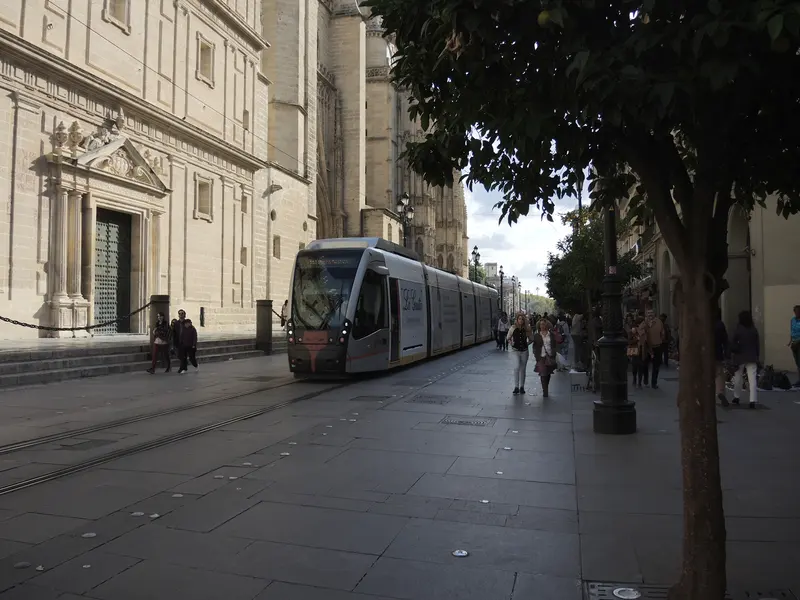
Seville Public Transport Guide
Buses, the tram, the single metro line, the airport bus and taxis explained — how Seville's transport fits together, when each is worth it, and the honest truth that in the old centre you'll mostly just walk.
Read guideMore in Travel Tips
6
Accessible Seville Travel Guide
A realistic, affectionate guide to seeing Seville with limited mobility, a wheelchair or a slower pace — which monuments roll well, where the cobbles bite, how the taxis and tram help, and how to build heat breaks into a day so the city stays a pleasure rather than a battle.
Read guide
Best Time to Visit Seville
When to come to Seville, season by season — orange-blossom spring and its great festivals, the fierce but manageable summer, golden autumn culture and quiet, well-priced winter — so you can match the city's mood to your own.
Read guide
Getting Around Seville
When to walk, take a taxi, hop the tram, ride the metro or a city bus, and when to cycle in Seville — with honest notes on the summer heat, the cobblestones and how compact the centre really is.
Read guide
Is Seville Safe?
Practical, honest safety advice for Seville: how the city feels day and night, pickpockets and petty theft in crowds, the very real danger of summer heat, nightlife, solo travellers and the special case of festival days.
Read guide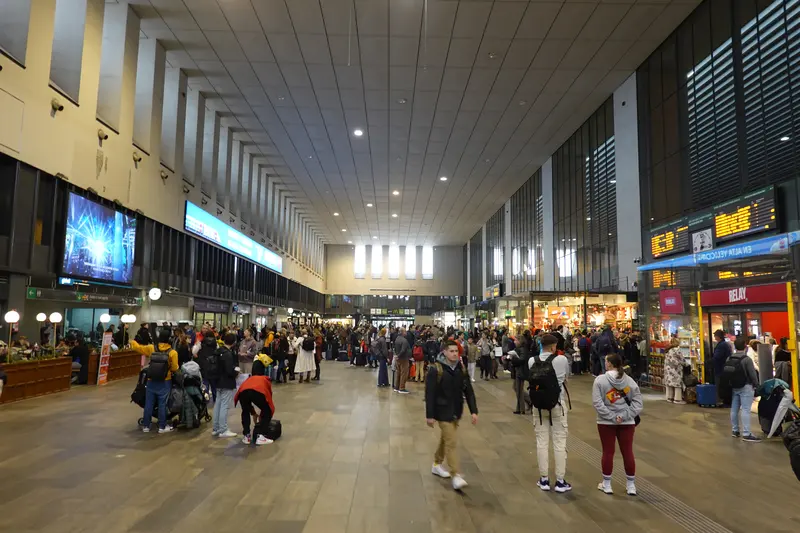
Luggage Storage in Seville
Where to drop your bags in Seville on an awkward in-between day — beside Santa Justa station, around the central sights, before a tour or after check-out — so you can spend your last hours wandering the orange-tree lanes instead of dragging a suitcase over cobbles.
Read guide
Seville Airport to City Center
The easiest ways from Seville Airport (SVQ) into the city — the airport bus, a fixed-tariff taxi, a pre-booked private transfer or a rental car — with honest notes on cost, comfort and which suits whom.
Read guide