
Seville Public Transport Guide
Buses, the tram, the single metro line, the airport bus and taxis explained — how Seville's transport fits together, when each is worth it, and the honest truth that in the old centre you'll mostly just walk.
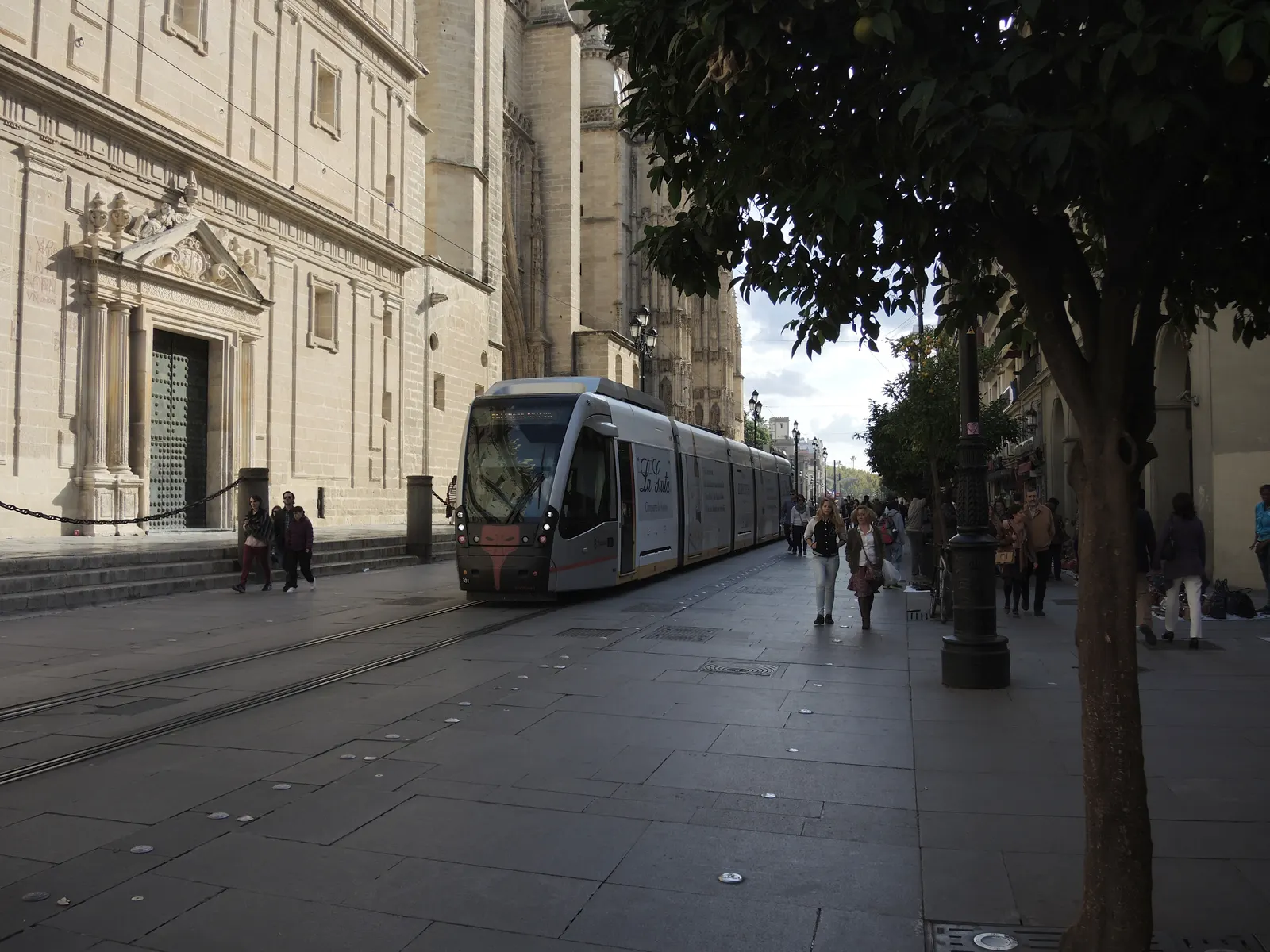
Photo: Iantomferry / Wikimedia Commons · CC BY-SA 3.0
- ✓Central Seville is small and flat — for most sightseeing, walking is faster and nicer than any transport.
- ✓The Metrocentro tram runs along the old-town spine past the Cathedral and is the handiest single line for visitors.
- ✓One Metro line, a wide bus network and the EA airport bus cover the wider city and the airport link.
- ✓Taxis are plentiful, reasonable for short hops, and run on a fixed tariff from the airport.
- ✓Fares, passes and exact routes change over time — confirm current details locally before relying on them.
Do I even need public transport in Seville?
Honestly, less than you might expect. The historic centre — the Cathedral, the Alcázar, Santa Cruz, the river, Plaza de España and the main tapas streets — is compact and almost entirely flat, and the walk between sights is part of the pleasure rather than a chore. For a typical sightseeing day you'll cover most ground on foot, reaching for transport only to save tired legs, cross town quickly, or escape the worst of the afternoon heat. So treat what follows as a toolkit for the moments walking doesn't suit, not a system you have to master.
When you do need a lift, the options are simple: a tram down the heart of the old town, a single metro line, a broad bus network, the airport bus, and ever-present taxis. Each has its place, and none is complicated. The art is just knowing which to grab when — which is exactly what the rest of this guide covers.
What is the tram (Metrocentro) and when do I use it?
The Metrocentro tram is the single most useful line for visitors. It's a short, modern, low-floor tram that runs right along the spine of the old town — broadly between the Plaza Nueva end and the San Bernardo area — passing the Cathedral and the main central avenue. Because it threads through exactly where you'll be sightseeing, it's a quick, easy way to skip a hot or footsore stretch in the very heart of town, and the level boarding makes it friendly for wheels and luggage.
Its limitation is its length: it's a short line, so it helps within the centre rather than carrying you across the whole city. For most visitors that's fine — it covers the bit you most want covered. Hop on when the heat is fierce or your feet are done and you're moving along its route; otherwise the same distance is often just as quick on foot. Check the current fare and how to pay before you board, as these arrangements change.
- Metrocentro: a short, low-floor tram along the old-town core, past the Cathedral.
- Ideal for skipping a hot or tiring central stretch; level boarding suits wheels and bags.
- A short line, so it helps within the centre rather than across the city; verify the current fare and payment method.
What about the Metro and the buses?
Seville has a single Metro line, fully accessible with lifts and quick where it runs — but it mostly serves the suburbs and outer districts rather than the tourist core, so it's useful chiefly if you're staying further out or heading somewhere on its route. Don't expect it to whisk you between the main old-town sights; that's the tram's job, and mostly your feet's.
City buses fill in everywhere else. The network is extensive and increasingly low-floor and ramped, reaching neighbourhoods and outer attractions the tram and metro don't, and it's the workhorse for longer hops across town. Buses can get busy and require a little more confidence with routes and stops than the tram, but they're cheap and reliable. As with everything here, fares, the ticketing system and any multi-trip or tourist travel cards change periodically, so check the current options and how to pay when you arrive rather than trusting old figures.
- Metro: one line, fully accessible with lifts, but serves the outskirts more than the centre.
- Buses: extensive, cheap and increasingly low-floor — the workhorse for longer cross-town trips.
- Confirm current fares, the ticketing system and any travel cards locally — they change.

How do I get to and from the airport?
The airport link deserves its own mention because it's a common first question. There's no airport train or metro to the centre, so the public-transport answer is the EA (Especial Aeropuerto) bus, which runs between Seville Airport and the city and stops at useful points including Santa Justa station. It's the budget choice and works well if you're travelling light or staying near a stop. The alternative is a taxi on a published fixed airport tariff — predictable, door-to-door and easy to split among a group.
Either way, the transfer into Seville is quick and painless. Pick the bus for value or the fixed-tariff taxi for ease and comfort, and check the current timetable and tariff before you fly, especially for early or late arrivals when bus frequencies thin out.
- No airport train/metro — the EA airport bus is the public route (stops include Santa Justa).
- Taxis from the airport run on a published fixed tariff — easy and predictable for groups.
- Verify the bus timetable and taxi tariff before travelling, especially for early/late flights.
Are taxis a good idea?
Taxis are a sensible part of the mix. They're plentiful, metered within the city and reasonable for short hops — the kind of journey where you've run out of energy in the heat, are carrying shopping, or need to get somewhere a little awkward for the tram or bus. From the airport they run on a fixed tariff, which keeps that particular trip predictable. You can hail one, find a rank, or use a phone app, and for a couple or small group a short central taxi often costs little more than the equivalent bus fares while saving you the walk.
They're especially worth it late at night, in the peak heat, or with luggage and tired children. There's no need to over-rely on them in such a walkable city, but knowing a taxi is always close at hand is part of what makes Seville so easy to navigate. Tipping is light — rounding up is plenty.
- Plentiful and reasonable for short hops, late nights, peak heat or with luggage.
- Metered in town; fixed tariff from the airport; hail, find a rank, or use an app.
- Tipping is light — rounding up is enough.
At a glance
A quick reference for moving around Seville. Fares, passes, routes and timetables change over time, so treat this as the shape of the system and confirm the current details locally before you rely on them.
- Default: walk — the flat, compact centre is faster and nicer on foot.
- Tram (Metrocentro): short central line past the Cathedral — best for skipping a hot or tiring stretch.
- Metro: one accessible line, mainly serving the outskirts.
- Buses: extensive, cheap, increasingly low-floor — for longer cross-town trips.
- Airport: EA bus (budget) or fixed-tariff taxi (easy).
- Taxis: handy for short hops, late nights, heat and luggage; tipping light.
- Always verify current fares, tickets, routes and timetables when you arrive.

Seville Airport to City Center
The easiest ways from Seville Airport (SVQ) into the city — the airport bus, a fixed-tariff taxi, a pre-booked private transfer or a rental car — with honest notes on cost, comfort and which suits whom.
Read guide
Getting Around Seville
When to walk, take a taxi, hop the tram, ride the metro or a city bus, and when to cycle in Seville — with honest notes on the summer heat, the cobblestones and how compact the centre really is.
Read guide
Accessible Seville Travel Guide
A realistic, affectionate guide to seeing Seville with limited mobility, a wheelchair or a slower pace — which monuments roll well, where the cobbles bite, how the taxis and tram help, and how to build heat breaks into a day so the city stays a pleasure rather than a battle.
Read guideMore in Travel Tips
6
Best Time to Visit Seville
When to come to Seville, season by season — orange-blossom spring and its great festivals, the fierce but manageable summer, golden autumn culture and quiet, well-priced winter — so you can match the city's mood to your own.
Read guide
Is Seville Safe?
Practical, honest safety advice for Seville: how the city feels day and night, pickpockets and petty theft in crowds, the very real danger of summer heat, nightlife, solo travellers and the special case of festival days.
Read guide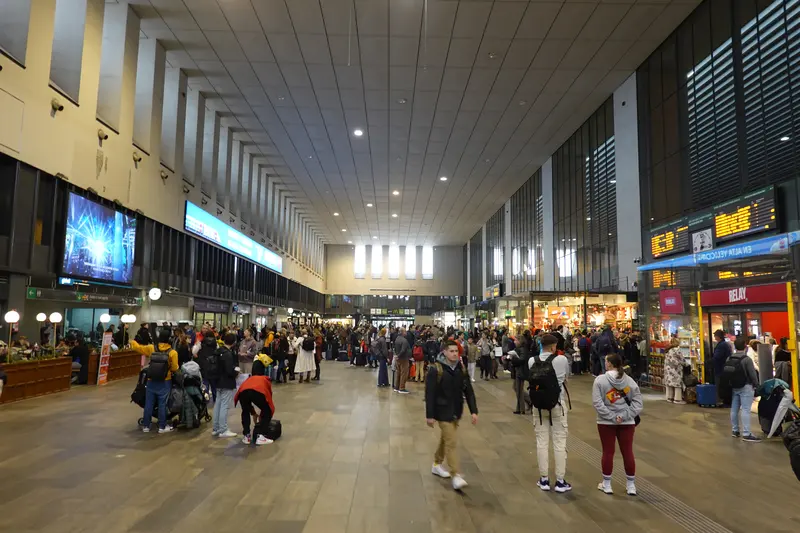
Luggage Storage in Seville
Where to drop your bags in Seville on an awkward in-between day — beside Santa Justa station, around the central sights, before a tour or after check-out — so you can spend your last hours wandering the orange-tree lanes instead of dragging a suitcase over cobbles.
Read guide
Money & Tipping in Seville
How money actually works in Seville: when cards sail through and when you'll want coins, how light and optional tipping really is, the etiquette of paying at a tapas bar, and the small cash realities — markets, taxis, toilets — that catch visitors out.
Read guide
Seville on a Budget
How to do Seville well for less — smart-value hotels and areas, tapas eaten the local way, free sights and timed-free museum windows, cheap transport, and day trips done affordably — without losing any of the city's romance.
Read guideSeville Santa Justa Station Guide
How to use Seville's main railway station, Santa Justa: arrivals, the AVE high-speed line to Madrid and Córdoba, regional trains to Cádiz and Jerez, taxis, the metro and tram, luggage storage and how to reach the old town.
Read guide