
Ronda Day Trip from Seville
How to do Ronda from Seville: the Puente Nuevo and El Tajo gorge, the clifftop viewpoints and gorge walks, train versus organised tour, pairing it with the white villages, who should go and who shouldn't, and how to plan around the heat and the distance.

Photo: Adam Young / Unsplash
- ✓Ronda's headline is the Puente Nuevo, a stone bridge spanning a 100-metre gorge — one of the great views in Andalusia, and worth the journey on its own.
- ✓It is the furthest of Seville's easy day trips: roughly two hours each way by road, so commit to a full day rather than a quick half.
- ✓The direct train from Seville is scenic but slow and limited; many people find an organised tour (often combined with white villages) the simpler choice.
- ✓The town itself is compact and walkable once you arrive — gorge views, the old Moorish quarter, the bullring and clifftop gardens, all within a short stroll.
- ✓Go for the drama of the setting and the white-town atmosphere; skip it if you only have one day in the region and would rather see Córdoba or Cádiz.
- ✓Train timetables, tour operators and monument hours change — verify current schedules and any booking requirement close to your trip.
Why Ronda is worth the distance
Of all the day trips from Seville, Ronda is the one that trades convenience for spectacle. It sits high in the mountains of Málaga province, an old white town cleaved in two by a gorge called El Tajo — a sheer, 100-metre slice in the rock with a river far below and the famous Puente Nuevo bridge stitching the two halves together. The first time you walk out onto the bridge or down into the gorge and look up at that wall of honey-coloured stone, you understand why Ronda has drawn travellers, painters and writers for two centuries. It is not subtle, and it is not trying to be.
Beyond the bridge, Ronda rewards an unhurried wander. The old Moorish quarter, La Ciudad, is a tangle of whitewashed lanes, small palaces and quiet plazas; the bullring is one of the oldest and most handsome in Spain; and a string of clifftop gardens and balconies give you the gorge from every angle. It is romantic in the way the best white towns are — slow, sun-warmed, a little vertiginous — and it photographs beautifully in the soft light of early morning or late afternoon. The catch, and the reason to plan carefully, is simply that it is far.
At a glance
A quick-reference card before the detail — distance, the rough shape of the day, and the trade-offs to weigh.
- Distance from Seville: roughly 100–130 km depending on route; about two hours each way by road.
- Best for: dramatic scenery, white-town atmosphere, photography, a slower full-day escape.
- How to get there: scenic but slow direct train, or an organised day tour (often with white villages); a hire car gives the most freedom.
- Time needed: a full day — Ronda does not reward a rushed half-day given the travel time.
- Don't miss: the Puente Nuevo, the gorge viewpoints, the old town, the bullring and clifftop gardens.
- Heat note: high and a touch cooler than Seville, but still hot in summer — start early and carry water and sun cover.
- Verify before you go: train times, tour availability and monument opening hours all change seasonally.
Getting there: train, tour or car
The train ride from Seville up to Ronda is a genuinely lovely one — it climbs into the mountains through gorges and white villages on a scenic mountain line that is half the experience. The catch is that the service is slow and runs only a handful of times a day, and depending on the day you may travel through or need to change along the way, so you are tied tightly to the timetable at both ends and a missed connection can cost you hours. If you are an independent traveller who enjoys the journey as part of the trip and you plan around the departures, the train is a fine, low-stress choice — just check the current Renfe schedule and routing carefully and build in a margin.
For many visitors, an organised day tour from Seville turns out to be the path of least resistance. Because Ronda is far and the public transport is sparse, a coach tour handles the long drive, often bundles in one or two white villages such as Zahara de la Sierra or Setenil de las Bodegas on the way, and gets you home the same evening without timetable anxiety. You give up flexibility and time alone in the town, but you gain ease and a fuller itinerary. A hire car sits between the two: it is the most flexible option, lets you stop at viewpoints and villages at will, and makes an early start easy — though the mountain roads are winding and you'll want to be comfortable with that.
Whichever you choose, the single most important planning decision is to treat Ronda as a full day, not a quick excursion. Two hours of travel each way means an early departure and a late return; a leisurely lunch in town with the gorge below is part of the reward, not a luxury to be skipped. Confirm train times or tour pick-up details before you commit, because operators, routes and timetables all shift through the year.
- Train: scenic and relaxing but slow and infrequent, and may need a change — plan tightly around the current timetable.
- Organised tour: easiest for the distance; often combines Ronda with one or two white villages.
- Hire car: most flexible and best for an early start, but expect winding mountain roads.
- However you go, block out a full day — the travel time rules out a satisfying half-day.
A walking plan for the day
Ronda is small and the sights cluster around the gorge, so once you arrive you can see the headline town comfortably on foot. A natural loop starts at the Plaza de España end, where the Puente Nuevo carries the road across El Tajo — cross it slowly, then look for the paths and viewpoints that let you see the bridge in full from below and from the surrounding balconies. The Mirador de Aldehuela beside the bridge and the gardens further along the cliff give the classic postcard angles, and there are steep paths down into the gorge itself for those with the legs and the time for the best view of all, looking up.
From the bridge, cross into La Ciudad, the old Moorish quarter on the far side. Wander its white lanes to the small palaces and the Arab baths down by the river, then circle back via the bullring — the Plaza de Toros is one of Spain's oldest and grandest, with a quiet museum and an elegant ring you can walk around. The adjoining Alameda del Tajo gardens hang right over the cliff edge and make the best spot for a pause with a view. Round the day off with a long lunch on a terrace overlooking the gorge: the food is hearty mountain Andalusian, and the setting does the rest.
- Start at the Puente Nuevo — cross it, then find the viewpoints that show it from below.
- Cross into La Ciudad, the old Moorish quarter, for white lanes and small palaces.
- Take in the Plaza de Toros bullring and the clifftop Alameda del Tajo gardens.
- Save time for an unhurried lunch on a gorge-view terrace — it's part of the point.

Pairing Ronda with the white villages
Ronda is the unofficial capital of the pueblos blancos — the white villages scattered through the sierras between Seville, Cádiz and Málaga — and the country around it is some of the prettiest in Andalusia. If you're making the long drive anyway, it makes sense to fold in a village or two. Setenil de las Bodegas, famous for streets built under overhanging rock, is a short hop away and a memorable contrast; Zahara de la Sierra perches above a turquoise reservoir; Grazalema sits in a green mountain park. Most organised tours from Seville build one or two of these into the day automatically.
If you have a car, the white-village route is a glorious slow drive, and you can string several together at your own pace. If you're on the train or a fixed tour, you'll likely see Ronda plus whatever the operator includes — which is plenty for one day. The key is not to over-pack the schedule: a single beautiful village done properly, with a coffee in its plaza, beats three rushed photo stops. Treat the villages as the bonus and Ronda as the anchor.
- Ronda is the gateway to the pueblos blancos — Setenil, Zahara and Grazalema are nearby highlights.
- Most Seville tours bundle one or two villages into the Ronda day automatically.
- With a car, the white-village drive is a destination in itself — but don't over-schedule it.
- One village done slowly beats three rushed stops — keep Ronda as the anchor.
Who should go — and who shouldn't
Ronda is for travellers chasing landscape and atmosphere over checklist monuments. If you love dramatic scenery, white-town wandering, photography or a romantic, slow-paced day out, the gorge and the bridge will stay with you long after the trip. Couples in particular tend to fall for it — the clifftop balconies at golden hour, a quiet terrace lunch and the long, scenic ride make for an easy, unhurried day for two. It's also a strong pick if you've already done the obvious Seville day trips and want something with a different character.
Be honest about the trade-off, though. Ronda is the furthest and most time-consuming of Seville's day trips, and if you have only one spare day in the region, the quicker, train-easy options may serve you better: Córdoba for the Mezquita is forty-odd minutes away, and Cádiz adds the Atlantic in well under two hours. If you tire of long bus rides, travel with small children who won't enjoy hours in transit, or want to be back in Seville early, Ronda can feel like a lot of road for one town. Weigh the distance honestly, and if you do go, commit to the full day and let the scenery earn the journey.
- Go for: scenery, white-town atmosphere, photography, a romantic slow day, or variety beyond the obvious trips.
- Reconsider if: you have only one spare day and would rather see Córdoba or Cádiz the easy way.
- Reconsider if: long bus rides tire you, or you're travelling with small children.
- If you go, commit to a full day — Ronda repays patience, not a rushed schedule.
Practical tips and timing
A few logistics make the Ronda day smoother. Start early: whether by train, tour or car, an early departure gives you the cooler, quieter morning in town and the best light, and takes the pressure off the return journey. Ronda sits high, so it can run a touch cooler and breezier than Seville — pleasant in summer, but it can feel sharp on a winter morning, so pack a layer. In high summer, the heat is still real; carry water, wear sun cover and treat the early afternoon gently, as you would in the city.
Wear comfortable shoes — the gorge paths and old-town lanes are steep and cobbled — and bring a head for heights if you plan to walk down into El Tajo. Cash is handy in smaller spots, though cards are widely accepted. Most of all, don't over-plan: Ronda's pleasure is in lingering on a viewpoint, not in ticking boxes. As with every trip from Seville, confirm the volatile details — train times, tour pick-ups, and the opening hours of the bullring and any sites you want to enter — close to your visit, since these change with the season and the operator.
- Start early for cooler air, fewer crowds, the best light and a relaxed return.
- Pack a layer — Ronda is higher and can be cooler and breezier than Seville.
- Wear sturdy shoes for steep, cobbled lanes and the gorge paths; bring a head for heights.
- Carry water and sun cover in summer, and verify train, tour and monument times before you go.

White Villages from Seville
How to do the Pueblos Blancos as a day trip from Seville: which white villages to choose — Arcos, Zahara, Grazalema, Setenil, Olvera — whether to drive or take a tour, and how to combine them with Ronda.
Read guide
Best Day Tours from Seville
When a guided day tour beats doing it yourself — and which ones are genuinely worth it. A comparison of organised day trips from Seville to Córdoba, Ronda and the white villages, Cádiz, Jerez, Itálica and Doñana, by who they suit, what they solve and when you're better off taking the train alone.
Read guide
Best Day Trips from Seville
Seville is the best base in Andalusia for day trips — Córdoba's mosque-cathedral, Cádiz on the Atlantic, Ronda's gorge, Jerez sherry, the Roman ruins of Itálica and the white villages — compared by travel time, effort, season and who each one suits.
Read guideMore in Day Trips
6
Best Beaches Near Seville
Seville has no beach of its own, but the Atlantic is closer than you think. A practical guide to the best beaches within reach — Cádiz, the Costa de la Luz, Huelva, Matalascañas and the Doñana coast — with how to get there by train, bus or car, when to go, and how to turn a hot Seville day into a sea breeze.
Read guide
Cádiz Day Trip from Seville
How to do Cádiz from Seville: a relaxed train to one of Europe's oldest cities, with a sea-wrapped old town, golden cathedral, fresh seafood and city beaches — plus the timing, the weather watch and when Cádiz beats another inland culture day.
Read guide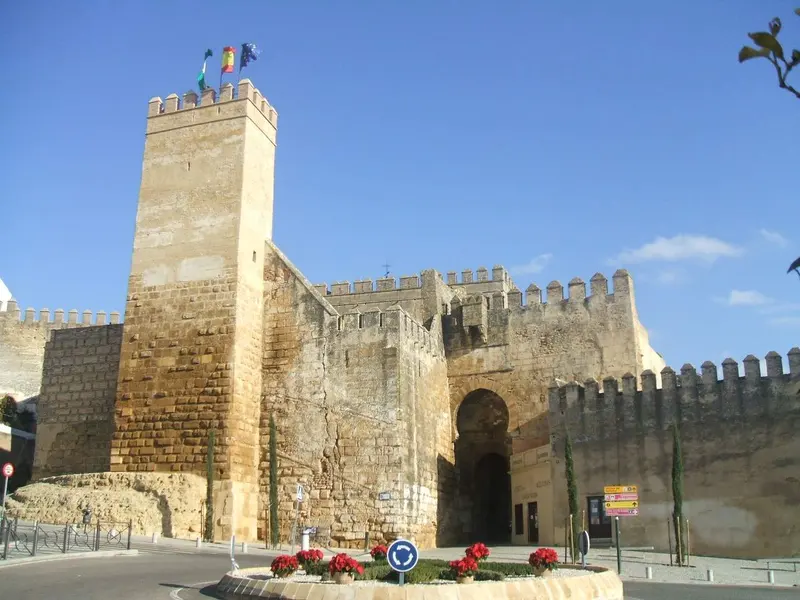
Carmona Day Trip from Seville
How to do Carmona from Seville: the Roman gates and necropolis, the clifftop viewpoints over the Vega, a parador lunch with a view, bus timing, and why this hilltop town makes one of the easiest small-town escapes from the city.
Read guide
Córdoba Day Trip from Seville
How to do Córdoba from Seville: the fast high-speed train versus a tour, booking the Mezquita-Catedral, a relaxed route through the Judería, patios and Roman bridge, and the heat-and-timing tradeoffs that make or break the day.
Read guideCórdoba or Cádiz from Seville?
Both Córdoba and Cádiz are easy, train-friendly day trips from Seville — but they're completely different days out. A clear-headed comparison by travel time, season, heat, food, scenery and the kind of traveller you are, so you can pick the right one (or sequence both).
Read guide
Doñana Day Trip from Seville
Whether Doñana works as a day trip from Seville: the wetlands and wildlife you'll actually see, the seasons that matter, why you can't drive into the park yourself, and how to build a realistic day around an official 4x4 tour.
Read guide