Seville in January
January is Seville at its calmest and cheapest: mild, often sunny days, thin crowds, winter tapas, museums without queues, the post-Christmas sales and easy day trips. A practical month guide to the weather, what's open, what to wear and how to make the most of the off-season.

Photo: Lothar Boris Piltz / Unsplash
- ✓January is mild by northern-European standards — cool, often sunny days and chilly nights — with the year's thinnest crowds and lowest hotel prices.
- ✓The big monuments and museums are open and blissfully quiet; this is the best month to walk into the Alcázar and Cathedral without a long queue.
- ✓Three Kings (Reyes Magos) on 6 January is the festive highlight; the rebajas (winter sales) make it a good shopping month.
- ✓Pack layers and a warm jacket for evenings, and treat all opening hours, prices and event dates as things to verify before you travel.
What January feels like in Seville
January is the quiet heart of Seville's winter, and for a certain kind of traveller it's the best-value month of the year. The savage summer heat is a distant memory; instead you get mild, frequently sunny days and properly cold, crisp nights. It can rain — January is one of the wetter months — but it rarely settles in for long, and clear blue-sky mornings are common, with that low winter light that flatters the city's stone and tilework beautifully. Snow is essentially unheard of, and daytime temperatures are gentle enough for comfortable sightseeing in a jacket.
What really defines January, though, is the absence of crowds. The Christmas and New Year visitors have gone home, the spring festival rush is months away, and the city more or less belongs to its own people again. You'll share Santa Cruz with locals walking their dogs, find tables at restaurants that would have a queue in April, and wander the big sights at a pace that's impossible in high season. If you've ever wanted to see Seville without the throng — and at the lowest prices of the year — this is the month.

Weather and what to pack
Think layers. January days are mild but not warm, and the temperature swing between a sunny afternoon and a clear night is large, so the trick is dressing for both. A warm jacket or coat, a couple of layers, and a scarf will carry you through; you'll often shed the jacket in the midday sun and want it firmly back on after dusk. Bring an umbrella or a light rain layer for the wetter spells, and comfortable shoes that cope with the occasional damp cobble.
Crucially, check whether your accommodation has decent heating — older Andalusian buildings are designed to keep heat out, not in, and some patios-and-tiles charmers that are glorious in summer can feel cool in January. Daylight is shorter too, so plan to be out and sightseeing in the bright middle of the day and save cosy indoor plans — tapas bars, museums, flamenco — for the long evenings. Always verify the current forecast close to your trip rather than relying on averages.
- Mild, often sunny days; cold, crisp nights — pack layers, a warm jacket and a scarf.
- One of the wetter months: bring an umbrella or light rain layer, but expect plenty of clear days too.
- Check your accommodation's heating — older buildings can feel cool inside.
- Shorter daylight: sightsee at midday, keep evenings for indoor warmth.

What to do: monuments without the queues
January is the connoisseur's month for Seville's headline sights, because the queues all but vanish. The Real Alcázar — which can mean a long wait in spring — is calm and walkable, and its gardens take on a different, quieter beauty in the bare winter light. The Cathedral and the climb up the Giralda are easy to fit in, and you can linger over the art without being swept along by a crowd. Plaza de España, often thronged, is at its most photogenic and peaceful on a clear January morning.
It's also the ideal month to lean into the indoor and cultural side of Seville, which pays off when a rain shower passes through. The Museo de Bellas Artes and the city's smaller museums are uncrowded; an intimate flamenco show feels all the more atmospheric on a cold night; and the tapas bars are full of locals rather than tour groups, which is exactly how you want them. Add the bare-branched parks, the river walks under low sun, and the simple pleasure of an unhurried city, and January gives you a Seville few summer visitors ever see. Confirm opening hours before you go, as some sights run reduced winter timetables.
- The Alcázar, Cathedral and Plaza de España are open and refreshingly quiet — the best month to see them.
- Lean into museums, flamenco and tapas bars — perfect for a passing rain shower.
- Locals outnumber tourists, giving the bars and lanes an authentic winter feel.
- Check for reduced winter opening hours at the monuments and museums.
Festivals, the sales and day trips
The festive calendar carries into early January. The Día de Reyes (Three Kings Day) on 6 January is the climax of the Spanish Christmas — the day children traditionally receive their gifts — and the night before brings the Cabalgata, a lively procession of the Three Kings through the streets, often showering the crowd with sweets. It's a warm, family-centred celebration and a lovely thing to catch if your trip overlaps with it. After the festive days, the winter rebajas — the post-holiday sales — kick in, making January a genuinely good month for shopping in Centro and the bigger stores.
The off-season is also a fine time for day trips, with one big caveat: pick the inland cultural ones. Córdoba is wonderful in the crisp winter air, with its great Mezquita free of summer crowds, and other Andalusian towns reward a clear, cool day. The beaches, by contrast, are best left for warmer months — the Atlantic in January is cold and the coastal days short. So save Cádiz's sands for summer and spend January exploring Seville's interior neighbours instead. As ever with the off-season, double-check festival dates, procession routes, opening hours and prices in advance, since winter timetables and event schedules can change year to year.
- Three Kings (6 January) and the Cabalgata procession the evening before are the festive highlight — verify the route and timing.
- The winter rebajas (sales) make January a strong month for shopping.
- Great for inland day trips like Córdoba; save the beaches for summer.
- Confirm event dates, procession routes and opening hours before you travel.
What to eat and drink in January
January is the one time of year Seville actively wants warming food, and the kitchen obliges. This is the season for cocido andaluz and pucheros — slow-simmered chickpea-and-meat stews — for espinacas con garbanzos (spinach with chickpeas), for cola de toro (oxtail), and for hot, soupy dishes that make a cold evening feel like a treat. The early-January festive tail also brings the roscón de Reyes, a ring-shaped sweet bread eaten on Three Kings Day, with a hidden figurine and a dried bean baked inside; you'll see them stacked in every pastelería in the first week of the month.
Drinking turns toward the warming, too. A glass of oloroso or amontillado — the darker, richer sherries — suits the season far better than summer's pale fino, and a small brandy after dinner is an old Andalusian habit on a cold night. The big winter advantage is comfort: with the terraces quiet, the atmospheric old tabernas in Santa Cruz and Triana feel cosy rather than crowded, and you can settle in for a long, unhurried meal indoors. For breakfast, January is prime churros-con-chocolate weather — a thick hot chocolate and a plate of fried churros is exactly the right way to start a crisp Seville morning.
- Warming plates: cocido andaluz, pucheros, espinacas con garbanzos, oxtail stew.
- Festive sweet: roscón de Reyes around Three Kings Day (6 January).
- Switch to darker sherries — oloroso and amontillado — for the cold evenings.
- Prime churros-con-chocolate weather; cosy tabernas without the crowds.
January at a glance
A quick planning summary. Temperatures are broad seasonal guides; confirm forecasts, festival dates and winter opening hours on official sources before you commit.
- Weather: cool, often crisp and sunny; chilly mornings and evenings; some rain. Pack layers and a warm jacket.
- Crowds/prices: the quietest, best-value month of the year — short queues and low hotel rates.
- Festivals: Three Kings (6 January) and the Cabalgata the evening before; the rebajas sales follow.
- Do: monuments without queues, cosy tabernas, churros, and inland day trips like Córdoba.
- Confirm: winter opening hours and any holiday closures before you travel.
Where to stay in January
January is the cheapest month to stay in Seville and the easiest to book, so you can aim higher than usual for your money — a boutique hotel with a patio, or a room you'd never get at spring prices, is suddenly within reach. Because the weather pushes you indoors more than in spring, prioritise a warm, characterful base over a pool you won't use: somewhere central in Barrio Santa Cruz, El Arenal or Centro keeps the monuments, the cosy tabernas and the churros stops a short walk away on a cold morning. Triana is a lovely, slightly more local alternative just across the river.
Check that heating is genuinely effective, since Andalusian buildings are built for summer and can feel cold in a January cold snap. The early-January days around Three Kings can be a little busier with Spanish families travelling, so if your trip falls in the first week, book a touch ahead; after that, January is as relaxed and well-priced as Seville ever gets.


What to Do in Seville When It Rains
A flexible, indoor-friendly plan for wet days in Seville: palaces and museums, long tapas lunches, flamenco, beautiful churches, covered markets, and how to keep a romantic city romantic under grey skies.
Read guide
Best Museums in Seville
A decisive guide to Seville's museums: the golden-age paintings of Bellas Artes, the living art of the flamenco museum, contemporary work at the CAAC, ceramics in Triana and the palace-museums — compared by art, history, rain value and who each suits.
Read guide
Seville on a Budget
How to do Seville well for less — smart-value hotels and areas, tapas eaten the local way, free sights and timed-free museum windows, cheap transport, and day trips done affordably — without losing any of the city's romance.
Read guideMore in Best Time to Visit
6
Seville in April
April is peak spring in Seville — warm sun, orange blossom and, most years, the city's two great festivals: the tail of Semana Santa and the riot of Feria de Abril. A guide to the weather, the crowds, the festival logistics and exactly what to book first.
Read guide
Seville in August
What Seville is really like in August — the hottest, quietest month of the year. How to plan around the heat, where to find pools and beaches, why some bars and restaurants close, and how to enjoy the long, balmy evenings when the city finally comes alive.
Read guide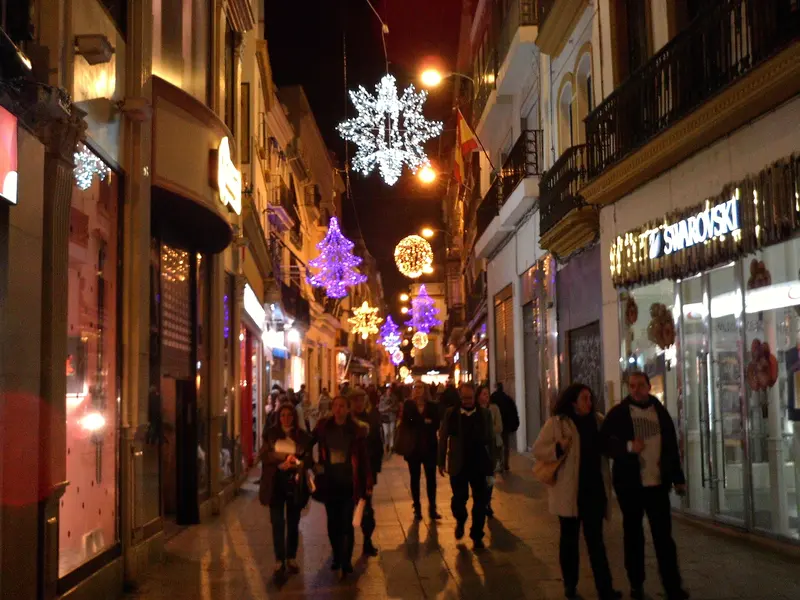
Seville in December
Seville in December — Christmas lights, nativity scenes (beléns) and festive markets, mild cool-weather sightseeing, good shopping, family-friendly plans, and atmospheric evenings, all at the year's gentlest prices outside the holiday peak.
Read guide
Seville in February
February is winter-sun Seville: mild, often bright days, low crowds and gentle prices, with the first hint of spring in the air. A practical month guide to the weather, culture, patios and tapas, early blossom, and how to enjoy the city just before high season arrives.
Read guide
Seville in July
July is peak heat in Seville — one of the hottest big-city months in Europe. A practical guide to thriving rather than surviving: siesta timing, pools, cool indoor sights, late-night street life and exactly how to plan a July trip that works.
Read guide
Seville in June
June is early summer in Seville — hot, bright and long-evening'd, the moment the city's heat-smart rhythm kicks in. A guide to pacing your days around the warmth, when a pool matters, late dinners, shaded sights and the magic of June nights.
Read guide