
Seville in August
What Seville is really like in August — the hottest, quietest month of the year. How to plan around the heat, where to find pools and beaches, why some bars and restaurants close, and how to enjoy the long, balmy evenings when the city finally comes alive.

Photo: Dmitry Romanoff / Unsplash
- ✓August is Seville's hottest month — afternoons routinely sit in the high thirties Celsius and can spike well above 40°C, so plan around the heat rather than fighting it.
- ✓Borrow the local rhythm: sightsee in the cool of the morning, retreat through the brutal middle of the day, and re-emerge for the long, lively evening.
- ✓It's the city's holiday month, so some family-run bars and restaurants close for two or three weeks — always good to have a backup plan.
- ✓Stay somewhere with a pool or strong air-conditioning; hotel prices are softer now than in festival-time spring.
- ✓Escape options are close: a hotel pool, the shaded refuge of María Luisa Park, or an Atlantic beach a short ride away.
What August in Seville is really like
Let's not soften it: August is the hottest month in one of the hottest cities in Europe. Afternoon highs routinely land in the high thirties Celsius, and serious heatwaves can push the thermometer past 40°C for days at a stretch, with the old town's stone and tile radiating warmth well into the night. Rain is almost unheard of, the sky stays a relentless blue, and the sun is at its most punishing between roughly two and six in the afternoon. If you arrive expecting to march around monuments at three o'clock, you will have a miserable time.
And yet August has its own quiet magic. This is the month Seville half-empties as locals decamp to the coast, leaving the centre unusually hushed by day and gently atmospheric by night. The headline sights are open and often less frantic than in spring; the evenings stretch out warm and balmy long past midnight; and the city's deep instinct for shade, cold drinks and late dinners turns the whole month into an exercise in slowing down. Come in August if it's your only window — just come prepared, and plan to do as the Sevillanos do.
Weather and what to pack
Plan for sustained, dry heat rather than humidity — it's the intensity and the duration of the sun that catch people out, not stickiness. Mornings start warm and climb fast; by mid-afternoon the streets in full sun feel like an oven, while shaded lanes and the river path stay noticeably kinder. Evenings remain warm enough for shirtsleeves until very late, which is exactly when the city wakes up. Treat any temperature figures as the broad shape of the month and check the official AEMET forecast as your dates approach, especially for heat warnings.
Pack light, breathable clothing in pale colours, a refillable water bottle, a real sun hat and high-factor sunscreen, and comfortable shoes you can walk in for hours. A hand fan — sold on every corner — is not a cliché here but a genuine tool. Sunglasses are essential, and a light layer is worth having only for over-air-conditioned interiors. Above all, build your day around shade and water; everything else is detail.
- Expect high-thirties afternoons and occasional 40°C-plus heatwaves; near-zero rain and unbroken sun.
- Pack pale, breathable clothes, a sun hat, strong sunscreen, sunglasses and a refillable water bottle.
- Buy a hand fan locally — it's a practical heat tool, not a souvenir gimmick.
- Check the official AEMET forecast and any heat warnings close to your trip.

How to plan your day around the heat
The single most useful thing to understand about August is the daily rhythm, because it solves almost every problem the heat creates. Start early: the Real Alcázar, the Cathedral and the Giralda, Plaza de España and any serious walking are best done from opening time until late morning, while the air is still bearable and the light is gorgeous. Book the Alcázar and Cathedral ahead with the earliest timed slot you can get — queues build fast once the day warms, and an early entry buys you cool air and thinner crowds at once.
Through the worst of the afternoon — roughly two to six — do as the city does and retreat. This is the time for a long lunch, a siesta, a hotel pool, an air-conditioned museum, or simply lying low until the edge comes off the heat. Then re-emerge in the evening, when the streets refill, the terraces open and the temperature finally relents. Dinner here runs late by northern standards — nine or ten o'clock is normal — and the warm night air, lit monuments and easy tapas crawls are the best of August. Front-load your sightseeing, protect the middle of the day, and own the evening.
- Morning: monuments and walking, with the earliest Alcázar and Cathedral slots you can book.
- Midday (≈14:00–18:00): retreat — long lunch, siesta, pool, or an air-conditioned museum.
- Evening: terraces, tapas, lit monuments and the late, lively city that makes August worth it.
Cooling off: pools, parks and beach escapes
In August, where you can cool down matters as much as what you come to see. A hotel pool stops being a luxury and becomes part of your strategy — it's what lets you write off the brutal afternoon hours and still feel fresh for the evening. If your budget allows, prioritise a stay with a pool or, at minimum, genuinely strong air-conditioning; it changes the whole trip. Inside the city, the shaded glorietas, fountains and tree-canopy of María Luisa Park are the classic free refuge, far cooler than the open plazas, and Seville's museums double as air-conditioned shelters with culture attached.
When the city itself feels too hot, the Atlantic is within easy reach for a day. The beaches of the Costa de la Luz — around Cádiz and beyond — are a comfortable train or drive away and offer cooler sea air and a proper swim, and they make a refreshing change of pace from the inland furnace. Treat a beach day as a deliberate reset midway through a hot stay rather than a daily commute, and you'll come back to Seville's evenings with new energy.
- A hotel pool or strong AC is a planning tool in August, not just a perk — prioritise it.
- María Luisa Park's shade and fountains are the best free heat refuge in the centre.
- Museums work as air-conditioned shelters; an Atlantic beach day is an easy reset.
Closures, crowds and prices
August is Spain's holiday month, and Seville feels it. Many smaller, family-run bars and restaurants shut for two or three weeks while their owners head to the coast, so the place you bookmarked may be closed when you arrive — always have a couple of alternatives in mind, and don't be surprised by a 'cerrado por vacaciones' sign. The big sights, major tapas bars and tourist-facing venues stay open, but the local texture thins out, especially in residential neighbourhoods away from the centre.
The flip side is that the headline monuments can feel calmer than in the spring rush, and hotel prices are gentler than during festival season — there's no Semana Santa or Feria premium in high summer. It's a fair trade for many travellers: you accept the heat and a few closures in exchange for lower costs and a quieter, more spacious city. Book the Alcázar and Cathedral ahead regardless, but you'll generally find more give in accommodation and restaurants than in the packed shoulder months.
- Expect some smaller bars and restaurants to close for summer holidays — keep backups.
- Big sights and central tapas bars stay open; the local, residential texture quietens.
- Hotel prices are softer than festival-time spring; monuments can feel less frantic.

What's worth doing in August
August rewards a slower, shade-smart version of the classic Seville trip. Do the great monuments early — the Alcázar with its cool, fountain-fed gardens is a genuinely clever heat-season choice — and save your energy for the evenings, when the city is at its most seductive. Flamenco shows, lit-up rooftop bars with a Giralda view, riverside walks at dusk along the Guadalquivir, and long, late tapas crawls all come into their own once the sun is down and the air softens. The warm August night, with the monuments floodlit and the streets full again, is the month's real reward.
Lean into the things heat actually suits: an early-morning garden, a midday museum, an evening on a terrace, a cold fino sherry, a granizado or an ice cream on a hot afternoon. Keep your ambitions modest and your hydration high, and you'll find August Seville has a particular, languid charm — fewer locals, longer evenings, and a city that has quietly slowed to your pace.
- Morning palaces and gardens (the Alcázar's shade and fountains are ideal), midday museums, evening terraces.
- Save flamenco, rooftop bars, river-at-dusk walks and late tapas for the cooler night hours.
- Embrace cold comforts — fino sherry, granizados, ice cream — and keep the pace gentle.
At a glance
A quick summary to plan an August trip from. Temperatures are broad guides and heat can vary sharply year to year, so confirm the forecast and any heat warnings on official sources before you rely on them.
- Weather: Seville's hottest month — high-thirties afternoons, occasional 40°C-plus heatwaves, near-zero rain.
- Rhythm: morning sights, midday retreat (pool/shade/AC), long balmy evenings — borrow the local pattern.
- Stay: prioritise a pool or strong air-conditioning; prices are softer than in festival-time spring.
- Watch for: some smaller bars and restaurants closed for summer holidays — keep backups.
- Cool off: María Luisa Park's shade, air-conditioned museums, or an Atlantic beach day.
- Whatever you do: pre-book the Alcázar and Cathedral early slots and check the AEMET forecast.

Best Beaches Near Seville
Seville has no beach of its own, but the Atlantic is closer than you think. A practical guide to the best beaches within reach — Cádiz, the Costa de la Luz, Huelva, Matalascañas and the Doñana coast — with how to get there by train, bus or car, when to go, and how to turn a hot Seville day into a sea breeze.
Read guide
Heat-Smart Summer Seville Itinerary
How to actually enjoy Seville in summer: a day built around early starts, a long midday break, pools and shade in the worst hours, and the long warm evenings the city was made for — with a sample three-day plan.
Read guide
Seville Summer Heat Guide
How to enjoy Seville in serious heat: an early-start, midday-rest, late-evening rhythm, plus shade routes, pools, taxis, hydration and the safety basics — so the hottest big city in Europe stays a pleasure, not a punishment.
Read guideMore in Best Time to Visit
6
Seville in April
April is peak spring in Seville — warm sun, orange blossom and, most years, the city's two great festivals: the tail of Semana Santa and the riot of Feria de Abril. A guide to the weather, the crowds, the festival logistics and exactly what to book first.
Read guide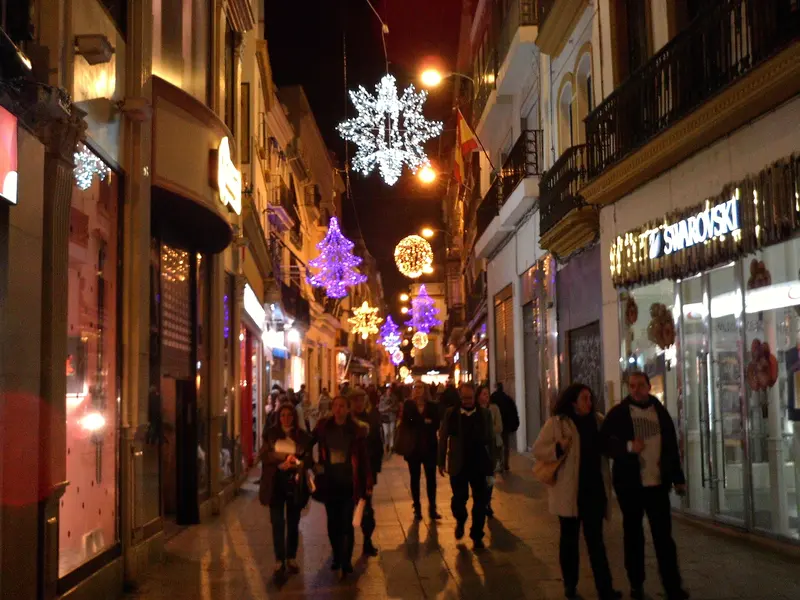
Seville in December
Seville in December — Christmas lights, nativity scenes (beléns) and festive markets, mild cool-weather sightseeing, good shopping, family-friendly plans, and atmospheric evenings, all at the year's gentlest prices outside the holiday peak.
Read guide
Seville in February
February is winter-sun Seville: mild, often bright days, low crowds and gentle prices, with the first hint of spring in the air. A practical month guide to the weather, culture, patios and tapas, early blossom, and how to enjoy the city just before high season arrives.
Read guide
Seville in January
January is Seville at its calmest and cheapest: mild, often sunny days, thin crowds, winter tapas, museums without queues, the post-Christmas sales and easy day trips. A practical month guide to the weather, what's open, what to wear and how to make the most of the off-season.
Read guide
Seville in July
July is peak heat in Seville — one of the hottest big-city months in Europe. A practical guide to thriving rather than surviving: siesta timing, pools, cool indoor sights, late-night street life and exactly how to plan a July trip that works.
Read guide
Seville in June
June is early summer in Seville — hot, bright and long-evening'd, the moment the city's heat-smart rhythm kicks in. A guide to pacing your days around the warmth, when a pool matters, late dinners, shaded sights and the magic of June nights.
Read guide