
Seville in March
March in Seville means waking spring — mild, bright days, the first orange blossom, gardens reopening and, in some years, Semana Santa. A month-by-month guide to weather, crowds, festival timing and what to book before you come.

Photo: VENUS MAJOR / Unsplash
- ✓One of the loveliest months to visit: mild, bright spring days, cool evenings and the first orange blossom in the air.
- ✓Whether Semana Santa falls in March depends entirely on the year — Holy Week tracks Easter, so check the specific year's calendar before booking.
- ✓Crowds and prices are moderate early in the month but climb fast if Semana Santa lands here; book hotels and the Alcázar early either way.
- ✓Pack layers: warm enough for terraces by day, but evenings still call for a jacket, and spring rain is possible.
What March feels like
March is when Seville shakes off winter. The light lengthens and softens, the orange trees that line the old town begin to bud and, by the back half of the month, often open into the white blossom that perfumes the whole centre. Days are mild and frequently sunny — comfortable for long hours of walking — while mornings and evenings still carry a cool edge. It is, for many people, the start of Seville's prime season: warm enough to enjoy the terraces and gardens, but well short of the summer heat that defines the city from June onward.
Treat the weather as gentle but changeable rather than guaranteed. Early March can still feel wintry, with grey spells and a real chance of rain, while late March can already feel like full spring. As a broad guide, expect pleasant daytime warmth and noticeably cooler nights — but check the official AEMET forecast as your dates approach, and pack so you can add and shed layers through the day. A light jacket, comfortable shoes and a small umbrella cover almost every March scenario.
- Mild, often sunny days; cooler mornings and evenings — bring a layer.
- Orange blossom typically opens through the second half of the month, scenting the centre.
- Changeable: early March can feel wintry, late March almost summery — spring rain is possible.
- Treat any temperature figures as broad guides; trust the AEMET forecast near your trip.
Semana Santa: it depends on the year
The single biggest variable in a March trip is Holy Week. Semana Santa is one of Seville's two great festivals — days of solemn, extraordinary processions winding through the streets — but its dates move every year because they track Easter. In some years Holy Week falls entirely in March; in others it slips into April; and often it straddles the two. So whether you catch it (or want to avoid it) is decided by your specific year, not the month itself. Before you book flights or hotels, look up the exact dates for your year and decide deliberately.
If Semana Santa lands in your March dates, expect a transformed city: huge crowds, rerouted streets, packed viewing points and hotels charging premium rates and selling out far ahead. It is unforgettable, but it demands planning. If you'd rather have a calmer, cheaper trip, simply aim for the weeks of March that sit clear of Holy Week — early March is usually safe. Our dedicated guide explains how the processions work and where to watch them; pair it with the festival calendar so you know precisely what you're walking into.
- Semana Santa's dates shift yearly — it may fall in March, April or across both. Check your year first.
- If it lands in March: crowds, road closures, sold-out hotels and peak prices — book months ahead.
- Want a quieter month? Aim for the March weeks clear of Holy Week, usually early in the month.
Crowds, prices and what to book
Outside Holy Week, March is a comfortable middle ground: busier and pricier than quiet winter, but a long way from the Feria-driven peaks of April. The headline sights are pleasant rather than overwhelming, terraces and rooftops are coming back into use, and hotel rates sit in shoulder-season territory. The exception, as ever, is any week touched by Semana Santa, when demand spikes sharply — so the smartest move is to fix your festival decision first, then book accordingly.
Whatever your dates, pre-book the two sights whose queues build regardless of season: the Real Alcázar and the Cathedral with the Giralda. An early timed slot lets you enjoy the Alcázar gardens — at their blossoming spring best in March — before the day warms and the crowds arrive. With those secured, March rewards a relaxed, walkable plan: the UNESCO core in the cool of the morning, long lunches, and golden-hour wanders through Santa Cruz and along the river. Three days is an ideal length to take it all in without rushing.
- Moderate crowds and shoulder-season prices — except in any week touched by Semana Santa.
- Book the Real Alcázar and Cathedral/Giralda ahead; an early slot means quiet, blossoming gardens.
- Decide your festival question before booking hotels, then lock in accommodation early.
What to do in March
March is one of the best sightseeing months of the year, precisely because the weather is kind and the summer crowds have not arrived. Use the cool, clear mornings for the ticketed monuments — book the Real Alcázar first slot and the Cathedral with a Giralda climb — and save the open-air sights for the warm middle of the day, when the gardens of the Alcázar and María Luisa Park feel just right. The Setas de Sevilla walkway, the Triana riverside, and a self-guided loop through Barrio Santa Cruz are all far more pleasant now than in the heat. If the orange trees have started to blossom by your visit, the scent through Santa Cruz and around the Cathedral's Patio de los Naranjos is unforgettable.
It is also a strong month for the things that are unbearable in July: a long walk along the Guadalquivir, a bike loop through the parks, or a day trip to Córdoba's Mezquita or the white town of Carmona. Rainy spells do happen, so keep a flexible indoor list ready — the Museo de Bellas Artes, the Flamenco Museum, Casa de Pilatos, and a leisurely tapas crawl all work whatever the sky does.
- Cool mornings are ideal for the Alcázar, Cathedral and Giralda; book timed slots ahead.
- Gardens, Setas, Santa Cruz and the river are comfortable now and quieter than spring peak.
- Keep a rainy-day list ready: Bellas Artes, the Flamenco Museum, Casa de Pilatos.
What to eat in March
March cooking still leans towards the cool-weather kitchen, with hearty plates that suit the chilly mornings. Look for espinacas con garbanzos (spinach with chickpeas), a Sevillian staple that becomes especially common during Lent, and cola de toro (oxtail stew) in the older tabernas. Snails — caracoles — begin appearing in bar windows towards the end of the month, an early sign of spring. If Semana Santa falls in your week, seek out torrijas: bread soaked in milk or wine, fried and dusted with sugar and cinnamon, the city's classic Holy Week sweet, sold in pastelerías all over the centre.
It is warm enough by midday to sit on a terrace, but not so hot that you need to chase shade, which makes March a relaxed month for a proper tapas wander. Start with a fino sherry and something fried, then graze your way between a couple of bars in Santa Cruz or Triana. The cold soups of summer are still a few weeks off, so this is the time to enjoy Seville's warming, traditional side.
- Lenten and winter plates: espinacas con garbanzos, oxtail stew, the first caracoles.
- Holy Week sweet: torrijas, found in pastelerías across the centre during Semana Santa.
- Mild middays make March a relaxed month for an unhurried tapas crawl.

Where to stay in March
For most of March you can stay wherever suits your trip, since the city runs at a relaxed shoulder-season pace and rooms are still reasonably priced. Barrio Santa Cruz and El Arenal keep you within a short walk of the Cathedral, the Alcázar and the river; Centro around the Setas is handy for shopping and tapas; and Triana, just across the bridge, trades a few minutes' walk for a more local, neighbourhood feel. The exception is Semana Santa: if Holy Week falls in your year's March, central hotels book out months ahead and prices jump, and the processional streets in the centre fill and reroute on the big nights, so weigh whether you want to be in the thick of it or a short walk back from the crowds.
Because March mornings and evenings can be genuinely cool, prioritise comfort over a pool — a warm, characterful room near the centre beats a poolside resort you won't use yet. Whatever you pick, book a little ahead if your dates touch Easter and confirm the cancellation terms, since Semana Santa rates are often non-refundable.

March at a glance
A quick summary to plan from. Temperatures are broad seasonal guides and festival dates move each year, so confirm both on official sources before you rely on them.
- Weather: mild, often sunny days; cool mornings and evenings; spring rain possible. Pack layers and an umbrella.
- Scenery: orange blossom typically opening in the second half of the month — one of the prettiest times to visit.
- Festivals: Semana Santa may or may not fall in March — check your year's Easter dates first.
- Crowds/prices: moderate, except around Holy Week, when both spike.
- Book ahead: hotels (especially if Semana Santa lands here), plus early Alcázar and Cathedral slots.

Semana Santa in Seville Guide
How to experience Seville's Holy Week with understanding and respect: what the processions are, where they pass, the great floats and brotherhoods, the all-night Madrugá, the crowds and street closures, what to wear and how to behave, where to stay, and how to plan a complex week calmly.
Read guide
Best Time to Visit Seville
When to come to Seville, season by season — orange-blossom spring and its great festivals, the fierce but manageable summer, golden autumn culture and quiet, well-priced winter — so you can match the city's mood to your own.
Read guide
3 Days in Seville Itinerary
A complete three-day Seville itinerary: the UNESCO icons and Plaza de España; Triana, the Setas and flamenco; then a quieter palace, a market morning, a museum and slow golden-hour river time.
Read guideMore in Best Time to Visit
6
Seville in April
April is peak spring in Seville — warm sun, orange blossom and, most years, the city's two great festivals: the tail of Semana Santa and the riot of Feria de Abril. A guide to the weather, the crowds, the festival logistics and exactly what to book first.
Read guide
Seville in August
What Seville is really like in August — the hottest, quietest month of the year. How to plan around the heat, where to find pools and beaches, why some bars and restaurants close, and how to enjoy the long, balmy evenings when the city finally comes alive.
Read guide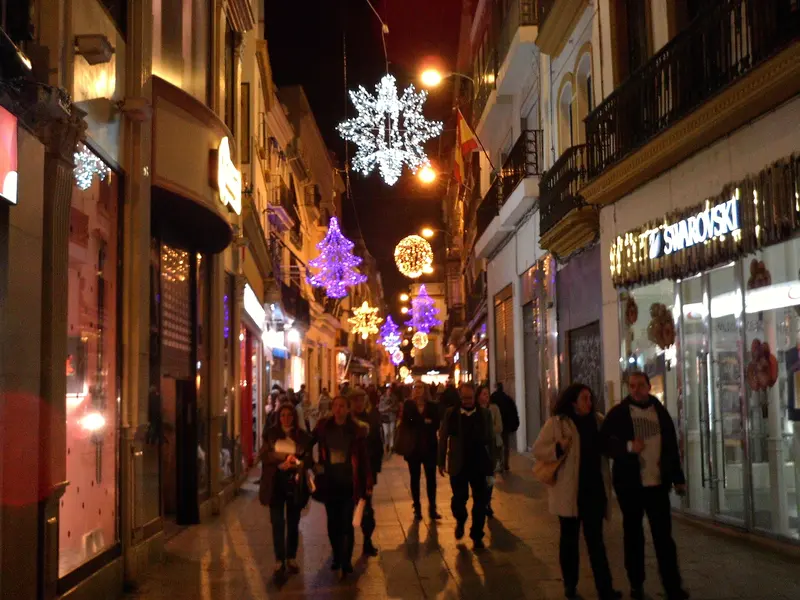
Seville in December
Seville in December — Christmas lights, nativity scenes (beléns) and festive markets, mild cool-weather sightseeing, good shopping, family-friendly plans, and atmospheric evenings, all at the year's gentlest prices outside the holiday peak.
Read guide
Seville in February
February is winter-sun Seville: mild, often bright days, low crowds and gentle prices, with the first hint of spring in the air. A practical month guide to the weather, culture, patios and tapas, early blossom, and how to enjoy the city just before high season arrives.
Read guide
Seville in January
January is Seville at its calmest and cheapest: mild, often sunny days, thin crowds, winter tapas, museums without queues, the post-Christmas sales and easy day trips. A practical month guide to the weather, what's open, what to wear and how to make the most of the off-season.
Read guide
Seville in July
July is peak heat in Seville — one of the hottest big-city months in Europe. A practical guide to thriving rather than surviving: siesta timing, pools, cool indoor sights, late-night street life and exactly how to plan a July trip that works.
Read guide