Christmas in Seville Guide
Christmas in Seville means lights along the old streets, nativity scenes (belenes), traditional markets like the one in Plaza de San Francisco, festive shopping, sweets and family events — all in cool, comfortable sightseeing weather. How to enjoy the season and plan around it.
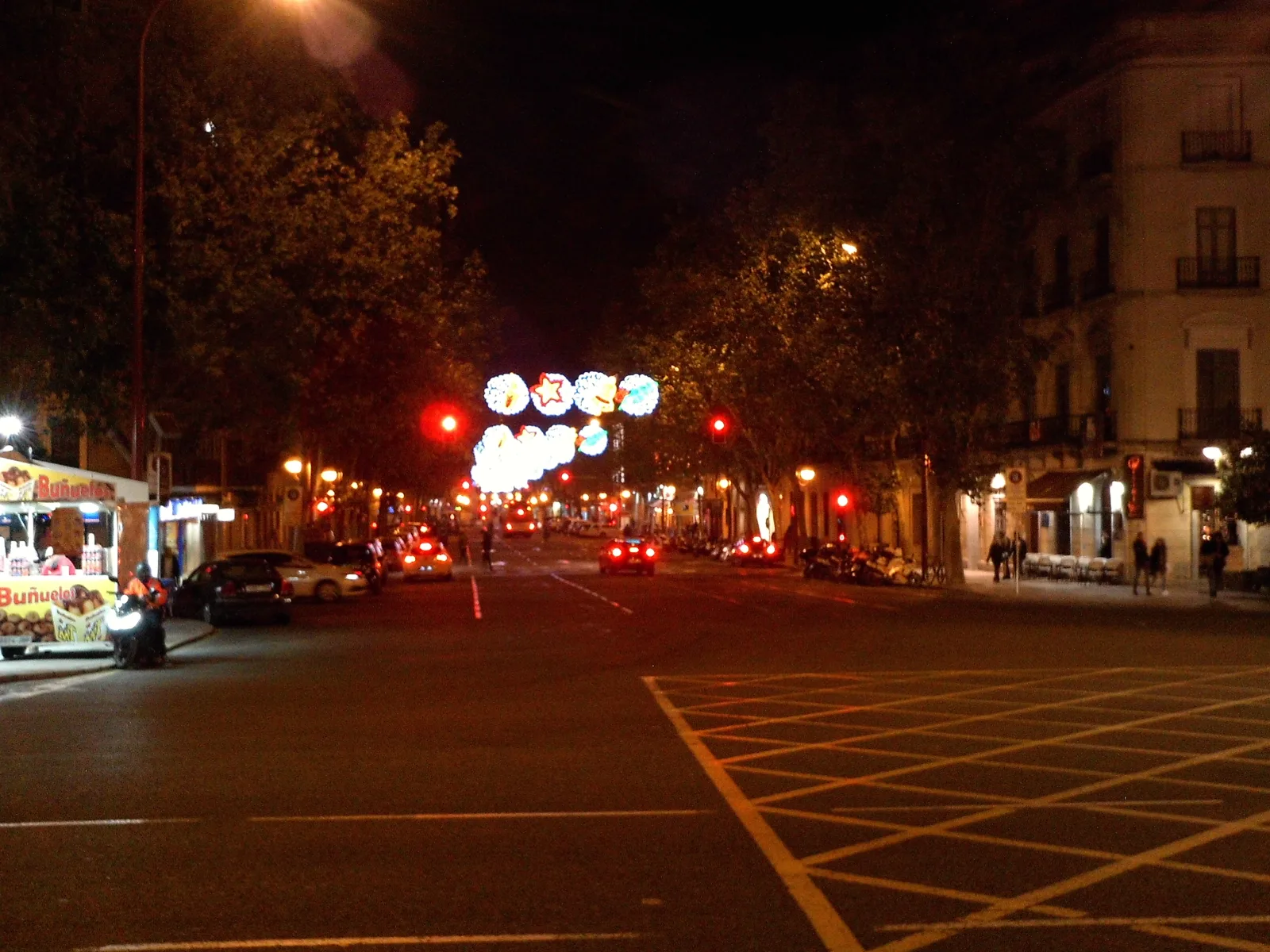
Photo: CarlosVdeHabsburgo / Wikimedia Commons · CC BY-SA 4.0
- ✓Christmas lights, beautiful belenes (nativity scenes) and traditional market stalls fill the centre through December.
- ✓The Plaza de San Francisco hosts a long-running Christmas market beside the Cathedral and town hall.
- ✓Cool, mild weather makes December one of the most comfortable months to actually sightsee in Seville.
- ✓The Spanish festive calendar runs to Three Kings on 6 January — the season is longer than many visitors expect.
Seville at Christmas
Seville does Christmas with warmth rather than snow. From late November the centre lights up — strings and arches of bulbs over the main streets, the Cathedral and the great avenues glowing after dark — and the city settles into a gentle, family-centred festive mood. There are no alpine chalets and mulled-wine villages here; the Sevillian version is softer and more local, built around lights, nativity scenes, traditional sweets and the simple pleasure of being out in the cool evening air with everyone else. It is one of the loveliest and least-touristed times to be in the city.
The centrepiece tradition is the belén, the nativity scene, which Andalusia takes seriously and stages beautifully. Churches, institutions and shops display them through December, some of them elaborate miniature worlds, and 'belén-spotting' becomes a genuine reason to wander the centre. Alongside them come the festive market stalls — most famously in the Plaza de San Francisco, beside the town hall and a short step from the Cathedral — selling nativity figures, decorations, moss and cork for home belenes, and seasonal crafts. It is a market for soaking up atmosphere and buying small, meaningful things rather than a sprawling commercial fair.
- Lights over the centre and great avenues from late November, glowing after dark.
- Belenes (nativity scenes) on display in churches, institutions and shops — a tradition worth seeking out.
- The Plaza de San Francisco market sells nativity figures, decorations and seasonal crafts.
- A softer, more local Christmas than northern-European markets — atmosphere over spectacle.
Lights, markets and family days
The evening light displays are the season's free, central pleasure. Wrap up, head into the centre after dark, and walk the main streets and squares — the Cathedral surrounds, Avenida de la Constitución, the shopping streets of Centro — to see the city at its prettiest. Many cities switch their lights on with a small ceremony in late November or early December; whether one happens and exactly when is set yearly, so check local listings if you want to catch it. Pair a lights walk with the San Francisco market and a stop for sweets, and you have the perfect cool-weather Seville evening.
It is also a strongly family season. Children's activities, fairground rides and small attractions appear in the run-up to the holidays, and the Christmas window of the great department stores and the lit streets are a treat for younger visitors. On the sweet side, this is the time for turrón, polvorones and mantecados — almond-and-lard sweets that are everywhere in December — and good hot chocolate with churros against the chill. None of it needs much planning; the joy of Seville at Christmas is that the best of it is simply out in the streets, free, and open to everyone.
- Walk the lit centre after dark — the Cathedral surrounds and main avenues are the highlights.
- Light switch-on ceremonies, if held, fall in late November or early December — verify the date locally.
- Family-friendly: children's activities and rides appear in the run-up to the holidays.
- Seasonal sweets — turrón, polvorones, mantecados — and churros con chocolate against the cool.
Weather, timing and how long the season runs
December is, quietly, one of the best months to actually see Seville. The brutal summer heat is long gone; days are mild and often sunny, evenings are cool and crisp, and the monuments — the Alcázar, the Cathedral and Giralda, Plaza de España — are comfortable to visit at any hour rather than only at dawn. Bring layers and a warm coat for the evenings, and an umbrella in case of a winter shower, but expect a kinder climate than most northern-European Decembers. It is a genuinely good time for a sightseeing trip with a festive overlay.
One thing visitors often miss: the Spanish festive season runs longer than the 25th. Nochebuena (Christmas Eve, the 24th) is the big family dinner, Christmas Day itself is quiet, and the celebrations build again toward Nochevieja (New Year's Eve) and then the Three Kings — Reyes Magos — on the night of 5–6 January, when cities hold the Cabalgata, a grand evening parade, and children receive their gifts. If your trip stretches into early January, you catch the Kings, which is arguably the most magical night of the Spanish Christmas. Note that many shops, restaurants and attractions keep reduced or special hours around the 24th, 25th, 31st, 1st and 6th, so confirm opening times for those specific dates before you plan around them.
- Mild, often-sunny days and cool evenings — December is comfortable for sightseeing at any hour.
- Bring layers, a warm coat for the evenings, and an umbrella for the odd winter shower.
- The season runs to Three Kings (Reyes Magos) on 5–6 January, with the Cabalgata parade.
- Expect reduced or special hours around 24, 25, 31 December and 1, 6 January — verify before planning.
What to do over Christmas in Seville
Because the weather is so kind, December and early January are a fine time to combine festive atmosphere with serious sightseeing. Do the headline monuments by day — the Real Alcázar, the Cathedral with a Giralda climb, Plaza de España and the Setas viewpoint are all comfortable now and far quieter than in spring — then save the lit centre for after dark. A classic festive evening runs: a wander through the illuminated streets around the Cathedral and Avenida de la Constitución, a look at a belén or two, the Plaza de San Francisco market stalls, and a stop for hot chocolate and churros. Ice rinks and small fairground attractions sometimes pop up around the city over the holidays, which younger visitors love.
The season also pairs well with a day trip, since the inland Andalusian towns are atmospheric in the crisp winter air. Córdoba's Mezquita is wonderful without the summer crowds, and the AVE makes it an easy hour away; Carmona and the other white towns reward a clear, cool day out. Just build your plans around the special holiday hours — many sights, shops and restaurants run reduced or closed days around 24, 25 and 31 December and 1 and 6 January — and confirm opening times for those specific dates before you commit.
- Sightsee by day (Alcázar, Cathedral, Plaza de España) and walk the lit centre after dark.
- A festive evening: lights, a belén, the San Francisco market, churros con chocolate.
- Inland day trips like Córdoba shine in the crisp winter air.
- Watch the holiday opening hours around the key festive dates.
Christmas sweets and seasonal food
Christmas in Seville is, above all, a season of sweets, and the pastelerías and convents fill their windows with them from late November. The headline trio is mantecados, polvorones and turrón — crumbly almond-and-lard shortbreads (the first two, traditionally from nearby Estepa) and the dense almond nougat (turrón) that comes in soft and hard versions. You'll also find pestiños, honey-glazed fried pastries, and roscos de vino. A lovely Sevillian tradition is buying convent sweets (dulces de convento) made by cloistered nuns, sold through a torno (a revolving hatch) at convents such as Santa Paula — a quietly memorable thing to do at Christmas.
On the savoury side, the big meal is the family dinner on Nochebuena (Christmas Eve), and seafood features heavily across the season — prawns, fine hams and rich stews. For a visitor, the simplest pleasure is the cold-weather classic: a thick hot chocolate and a plate of churros to warm up between lit-street walks. Save 6 January for the roscón de Reyes, the ring-shaped Three Kings cake with a hidden figurine baked inside, which appears in every bakery in the first week of the new year.
- The sweet trio: mantecados, polvorones and turrón, plus pestiños and roscos de vino.
- Buy dulces de convento from cloistered nuns via the torno hatch — a Seville tradition.
- Nochebuena (24 Dec) is the big seafood-heavy family dinner.
- Roscón de Reyes — the Three Kings cake — arrives for 6 January.

Christmas in Seville at a glance
A quick planning summary. Ceremony dates and holiday opening hours are set yearly, so always confirm with official Seville sources and individual venues before planning around them.
- What: lights, belenes (nativity scenes), traditional market stalls, festive shopping and family events.
- When: late November through 6 January (Reyes Magos / Three Kings) — the full Spanish festive season.
- Markets: the Plaza de San Francisco market, beside the Cathedral and town hall, is the traditional one.
- Weather: mild, often sunny days, cool evenings — bring layers and a warm coat.
- Key dates: 24, 25, 31 December and 1, 6 January carry reduced/special hours — verify locally.
- Don't miss: a lit-centre walk after dark, a few good belenes, and seasonal sweets with hot chocolate.
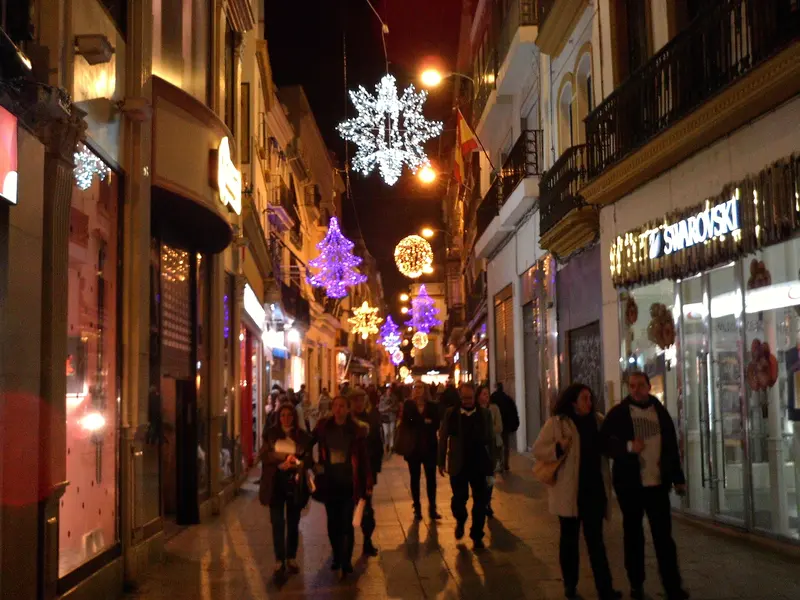
Seville in December
Seville in December — Christmas lights, nativity scenes (beléns) and festive markets, mild cool-weather sightseeing, good shopping, family-friendly plans, and atmospheric evenings, all at the year's gentlest prices outside the holiday peak.
Read guide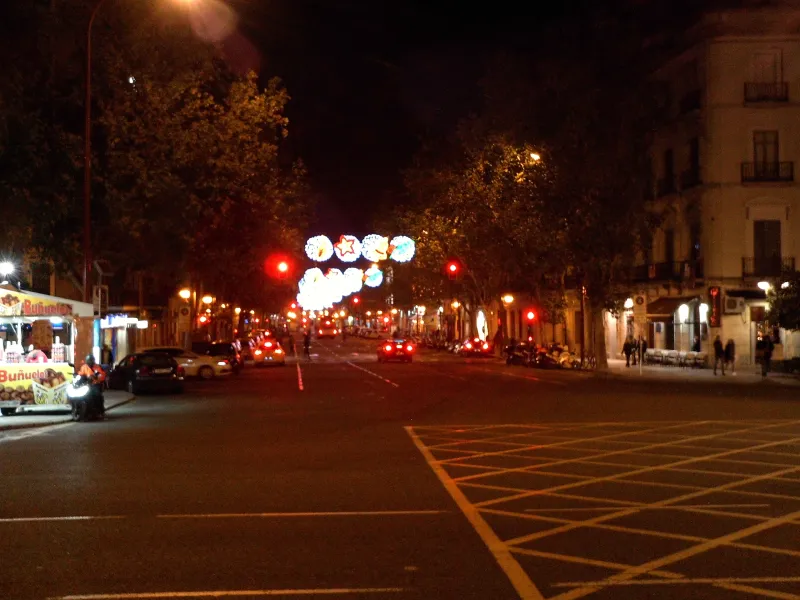
Seville Christmas Itinerary
A festive plan for Seville in December: the lights and Christmas market, the elaborate nativity scenes (belenes), seasonal sweets and food, comfortable cool-weather sightseeing, family evenings, and the rhythm of a Spanish Christmas through to Three Kings.
Read guide
Shopping in Seville
Where to shop in Seville for ceramics, hand-painted fans, Spanish fashion, food gifts and craft: the pedestrian streets of Centro, the workshops of Triana, the markets and the boutiques — plus how to shop tastefully and avoid the tourist tat.
Read guideMore in Events
6
Bienal de Flamenco Guide
How to plan a trip around Seville's Bienal de Flamenco, the world's most important flamenco festival: when it runs, the kinds of shows and venues, how to find and book tickets, where to stay, and what to do if your trip falls in an off year.
Read guide
Corpus Christi in Seville
A guide to one of Seville's most beautiful and least touristy traditions: the Corpus Christi morning, when the centre is strewn with fragrant herbs and a stately procession winds from the Cathedral through streets dressed for the feast. When it falls, what to expect, where to watch, and how to plan around the early-summer crowds.
Read guide
Feria de Abril Guide
Everything a first-timer needs to understand Seville's April Fair: when it falls, what the fairground and the casetas are, the private-caseta system and how to get inside the fun, the daytime horse paseo and the lantern-lit nights, what to wear, what to eat and drink, where to stay, and how to fit the city around the fair.
Read guide
New Year's Eve in Seville
Nochevieja in Seville: the tradition of twelve grapes at midnight, where to gather, dinner timing, the late-night fiesta, taxis and getting home, and how to plan January 1. A practical guide to seeing in the year, Sevillano-style.
Read guide
Noche en Blanco Seville Guide
Seville's citywide cultural night, when museums, palaces, galleries and institutions open late and often free for one evening, usually in autumn. How it works, how to plan a route, what to reserve, and how to use it well.
Read guide
Semana Santa in Seville Guide
How to experience Seville's Holy Week with understanding and respect: what the processions are, where they pass, the great floats and brotherhoods, the all-night Madrugá, the crowds and street closures, what to wear and how to behave, where to stay, and how to plan a complex week calmly.
Read guide