New Year's Eve in Seville
Nochevieja in Seville: the tradition of twelve grapes at midnight, where to gather, dinner timing, the late-night fiesta, taxis and getting home, and how to plan January 1. A practical guide to seeing in the year, Sevillano-style.

Photo: Farnaz Kohankhaki / Unsplash
- ✓Nochevieja's signature ritual: twelve grapes (las uvas), one on each chime of midnight, with cava to follow.
- ✓A late, festive night — dinner runs late, the real party starts after midnight and goes until dawn.
- ✓A central plaza or a booked dinner-and-party venue are the two classic ways to see in the year.
- ✓Plan transport ahead: taxis are scarce and pricier at midnight, so stay walkable or book early.
How Seville sees in the year
New Year's Eve — Nochevieja — in Seville is a warm, late, family-then-fiesta affair, anchored by one of Spain's most beloved rituals: las doce uvas de la suerte, the twelve lucky grapes. As the clock strikes midnight you eat one grape on each of the twelve chimes, one for every month of the coming year, racing to keep up and laughing when you can't. Get all twelve down in time and the year ahead is supposed to be lucky. It is silly, delicious and completely universal — everyone does it, from grandparents at the table to revellers in the square — and joining in is the single best way to feel part of a Spanish New Year.
The shape of the night is distinctly Spanish. Families and friends gather for a long, late dinner — often the year's most lavish — counting down at home or in a restaurant. Midnight brings the grapes and cava and a flurry of toasts and hugs; and then, rather than winding down, the night truly begins. The young and the up-for-it pour out to bars, clubs and parties that run until dawn, often pausing for chocolate con churros at first light before finally heading to bed. If you want the full experience, plan to be out very late; if you'd rather a gentler version, the grapes and a glass of cava somewhere atmospheric are plenty.
- The twelve grapes at midnight (one per chime) are the essential, universal ritual — join in.
- Dinner runs long and late; the real party starts after midnight and runs to dawn.
- Cava and toasts follow the grapes; churros con chocolate is the traditional dawn finish.
- You can do a full all-nighter or a gentle grapes-and-cava version — both are 'proper'.
Where to be at midnight
There are two classic ways to spend Nochevieja, and which suits you depends on how much you want planned. The free, public option is to gather in a central plaza or open space with the crowd, grapes and cava in hand, and count down together — a sociable, atmospheric, no-cost choice. Which square the city focuses on can vary year to year, so check local listings as the date nears for the official gathering point and any organised countdown. The booked option is a New Year's dinner-and-party at a hotel, restaurant or venue — typically a set menu, grapes and cava at midnight, and a cotillón (party favours, music, sometimes a DJ) afterwards. These are popular, sell out, and need reserving well ahead.
Whichever you choose, sort the logistics that actually decide whether the night runs smoothly. Restaurants serving Nochevieja menus book up early and almost always require advance reservation, often at a fixed price — so don't expect to walk in on the night. If you're partying late, the smartest move is to stay somewhere central and walkable, because taxis are genuinely hard to find and dearer around midnight and in the small hours. Dress warmly for the cool winter night if you'll be outdoors, keep some cash for late bars, and agree a meeting point with your group in case phones don't connect in the crowd.
- Public: gather in a central plaza for the countdown — free and atmospheric; verify the focal square locally.
- Booked: a hotel/restaurant dinner-and-party (set menu, grapes, cava, cotillón) — reserve well ahead.
- Nochevieja restaurant menus book up early and need advance reservation — don't rely on walking in.
- Stay central and walkable: taxis are scarce and pricier at midnight and after.
January 1 and the days after
Plan for a very quiet New Year's Day. After a night that runs to dawn, the 1st is the slowest day of the Seville year: many shops, restaurants and some attractions stay closed or open late, the streets are hushed in the morning, and the city moves at half speed. Don't schedule anything ambitious. The classic Año Nuevo day is a slow, late surfacing, a long lunch if you can find a kitchen open, and a gentle walk to clear the previous night — confirm opening hours for any specific place you're counting on, because the 1st is the date most likely to catch you out.
Look a little further and the festive season isn't over: the celebrations build again toward the Three Kings — Reyes Magos — on the night of 5–6 January, with the grand Cabalgata parade, so a trip that spans into early January gets a second high point. Across the whole period, weather is cool — bring a warm coat and layers for late nights and an umbrella for the odd shower — and remember that 1 and 6 January carry holiday opening hours just as 31 December does. Because the focal plaza, organised countdowns, venue events and holiday hours are all set fresh each year, confirm the current details with official Seville sources and individual venues before building plans around them.
- January 1 is the year's quietest day — many places closed or late-opening; plan nothing ambitious.
- The season continues to Three Kings (5–6 January) and the Cabalgata parade — a second high point.
- Cool weather — warm coat, layers and an umbrella; 1 and 6 January carry holiday hours.
- Verify the focal square, countdowns, venue events and holiday hours via official sources each year.
What to do on the 31st before midnight
The countdown is a late event, so you have a full, pleasant winter day to fill before it. Use the cool, often-sunny daytime for sightseeing while the city is calm: the Real Alcázar and its gardens, the Cathedral and a Giralda climb, and the lit-up Plaza de España are all comfortable in late December and far quieter than in peak season. The Christmas lights are still strung across the centre and the belenes (nativity scenes) are still on display in churches and institutions, so an afternoon stroll through the illuminated old town doubles as festive sightseeing. Aim to be back near your base by late afternoon to rest before the long night.
There's a peculiar Sevillian wrinkle worth knowing: many people effectively rehearse New Year a few days early. On 30 December the city of Seville traditionally holds its own informal countdown — sometimes called the 'Nochevieja universitaria' or campanadas a few days before — where mainly students gather to eat the grapes ahead of time. If your trip lands in that window, it's a fun, low-stakes way to practise the grape ritual before the real thing. Either way, eat something substantial in the early evening, because the official dinner runs very late and the night is long.
- Use the calm winter day for the Alcázar, Cathedral and Plaza de España before the late night.
- Christmas lights and belenes are still up — an afternoon walk is festive sightseeing.
- Seville often holds an early, informal countdown around 30 December — fun if you're in town.
- Rest in the late afternoon; eat early-ish before the very late official dinner.
Three Kings: the season's real finale
If you can extend a New Year trip a few days, do — because for Spanish families the climax of the whole festive season is not the 25th or the 31st but Reyes Magos, the Three Kings, on 5–6 January. The evening of the 5th brings the Cabalgata de Reyes, a grand procession of ornate floats carrying the Three Kings through the city, showering the crowds with thousands of sweets (caramelos) — children come armed with bags and upturned umbrellas to catch them. It's the most magical night of the Spanish Christmas, and a wonderful, free, family-friendly spectacle to witness even as a visitor.
The morning of the 6th is when children traditionally receive their gifts, and the day is marked by the roscón de Reyes, a ring-shaped sweet bread with a hidden figurine baked inside. Both the 1st and the 6th are public holidays with reduced opening hours, so plan light, slow days around them and confirm what's open. Check the Cabalgata's route and timing locally, as it's set fresh each year.
- The Cabalgata de Reyes on the evening of 5 January parades floats and showers sweets on the crowd.
- Bring a bag to catch caramelos — children and adults alike join in.
- 6 January: gift-giving and the roscón de Reyes cake; a public holiday with reduced hours.
- Verify the Cabalgata route and timing locally — it changes each year.

New Year's Eve in Seville at a glance
A quick planning summary. Gathering points, organised events and holiday opening hours change every year, so always confirm with official Seville sources and individual venues before planning around them.
- What: Nochevieja — twelve grapes at midnight, cava, a late dinner, and a party to dawn.
- Where: a central plaza countdown (free) or a booked dinner-and-party venue.
- Book ahead: Nochevieja restaurant menus and venue parties sell out — reserve early.
- Transport: stay central and walkable; taxis are scarce and dearer at midnight.
- January 1: the quietest day of the year — many places closed; plan a slow day.
- After: the season runs to Three Kings (5–6 January) and the Cabalgata parade.
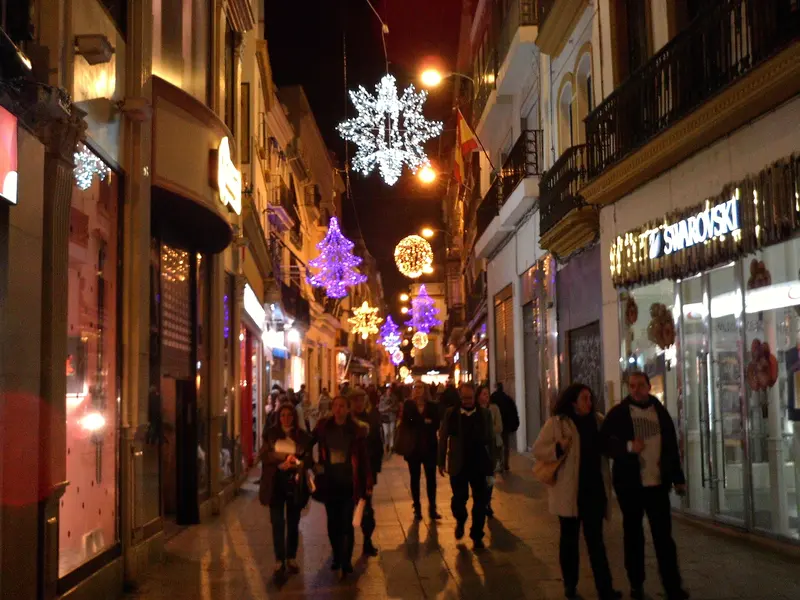
Seville in December
Seville in December — Christmas lights, nativity scenes (beléns) and festive markets, mild cool-weather sightseeing, good shopping, family-friendly plans, and atmospheric evenings, all at the year's gentlest prices outside the holiday peak.
Read guide
Best Romantic Hotels in Seville
How to choose a romantic hotel in Seville: atmospheric patio houses and palace stays, rooftop-pool boutiques, grand luxury hotels, and value-for-charm picks. What romantic touches to look for, which neighbourhood suits couples, and how to book the right room.
Read guide
Seville at Night
How to spend an evening in Seville: floodlit monuments, rooftop sunsets, the tapas paseo, flamenco, riverside walks, and the safe, slow rhythm of an Andalusian night — all timed around the heat and the late local clock.
Read guideMore in Events
6
Bienal de Flamenco Guide
How to plan a trip around Seville's Bienal de Flamenco, the world's most important flamenco festival: when it runs, the kinds of shows and venues, how to find and book tickets, where to stay, and what to do if your trip falls in an off year.
Read guide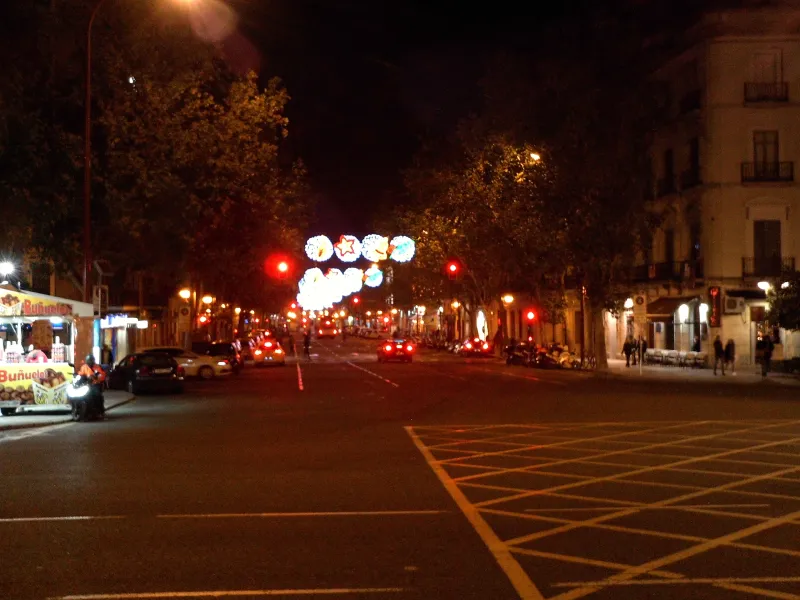
Christmas in Seville Guide
Christmas in Seville means lights along the old streets, nativity scenes (belenes), traditional markets like the one in Plaza de San Francisco, festive shopping, sweets and family events — all in cool, comfortable sightseeing weather. How to enjoy the season and plan around it.
Read guide
Corpus Christi in Seville
A guide to one of Seville's most beautiful and least touristy traditions: the Corpus Christi morning, when the centre is strewn with fragrant herbs and a stately procession winds from the Cathedral through streets dressed for the feast. When it falls, what to expect, where to watch, and how to plan around the early-summer crowds.
Read guide
Feria de Abril Guide
Everything a first-timer needs to understand Seville's April Fair: when it falls, what the fairground and the casetas are, the private-caseta system and how to get inside the fun, the daytime horse paseo and the lantern-lit nights, what to wear, what to eat and drink, where to stay, and how to fit the city around the fair.
Read guide
Noche en Blanco Seville Guide
Seville's citywide cultural night, when museums, palaces, galleries and institutions open late and often free for one evening, usually in autumn. How it works, how to plan a route, what to reserve, and how to use it well.
Read guide
Semana Santa in Seville Guide
How to experience Seville's Holy Week with understanding and respect: what the processions are, where they pass, the great floats and brotherhoods, the all-night Madrugá, the crowds and street closures, what to wear and how to behave, where to stay, and how to plan a complex week calmly.
Read guide