
Itálica Day Trip from Seville
How to visit the Roman ruins of Itálica from Seville: the great amphitheatre and its mosaics, the Game of Thrones connection, getting there by bus, tickets, how much time to allow, and the heat-aware timing that makes or breaks the visit.
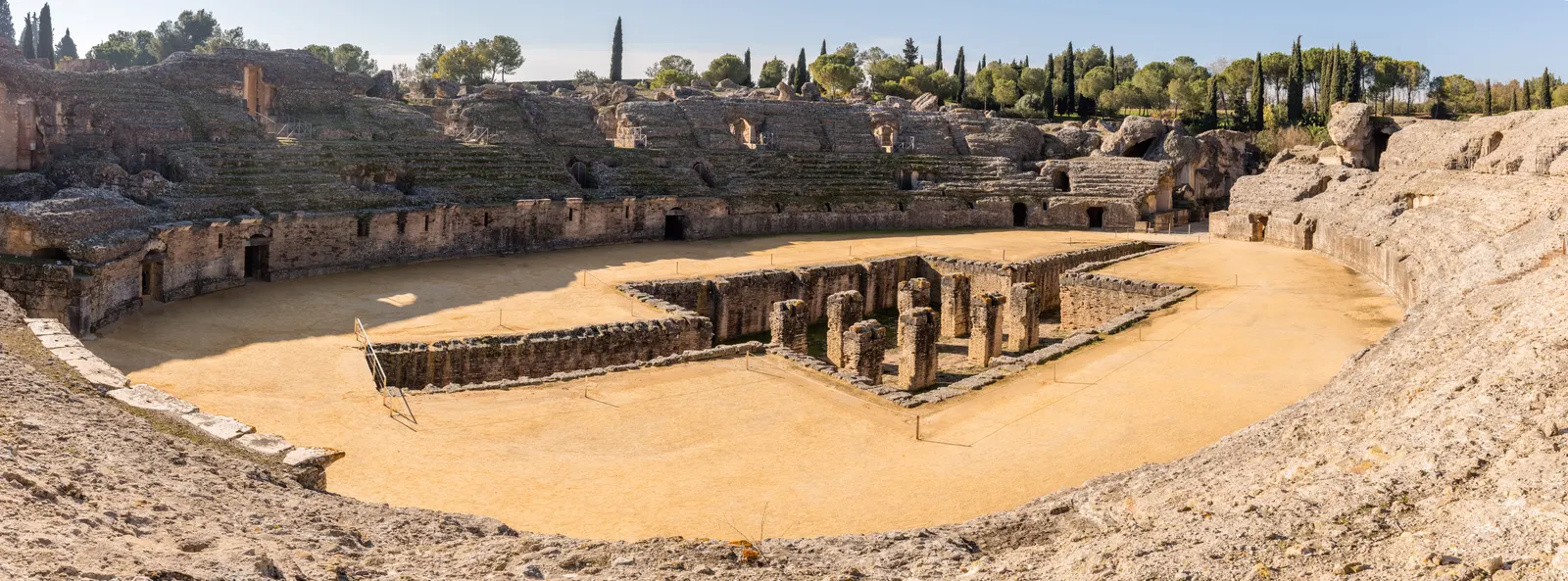
Photo: Diego Delso / Wikimedia Commons · CC BY-SA 4.0

- ✓Itálica is the closest day trip to Seville — a ruined Roman city in nearby Santiponce, reachable by a short public bus ride.
- ✓Its showpiece is one of the largest amphitheatres of the Roman world, alongside in-situ floor mosaics and the grid of a planned imperial town.
- ✓Game of Thrones fans will recognise the amphitheatre as a filming location — a draw for older kids and teens as much as history lovers.
- ✓It's a flat, open, half-day site with very little shade, so morning visits and sun cover are essential, especially in summer.
- ✓Modest admission (free for EU citizens at the time of writing) makes it one of the cheapest and easiest escapes from the city.
- ✓Bus times, ticket prices and opening hours change — and the site closes one day a week — so verify the current details before you go.
A Roman city on Seville's doorstep
You don't have to travel far to stand inside the Roman world. Just northwest of Seville, on the edge of the town of Santiponce, lie the ruins of Itálica — founded in 206 BC and later expanded into a grand imperial showpiece, the birthplace of the emperors Trajan and Hadrian. What survives is part of that ambitious second-century city: a vast amphitheatre, the paved streets and house plots of a planned Roman grid, the columns of a temple, and a scattering of beautifully preserved floor mosaics still lying where they were laid. After the tilework and palaces of central Seville, it is a completely different register — open, ancient and quietly awe-inspiring.
Because it is so close to the city, Itálica makes an easy half-day rather than a logistical commitment. You can be among the ruins within an hour of leaving the centre, wander the amphitheatre and mosaics at your own pace, and be back for a late lunch. It suits history lovers, families with curious kids, and anyone who wants a change from monuments and tapas — and it carries an extra modern hook in the form of its on-screen fame, which we'll come to. The one thing it lacks is shade, which makes when you go more important than almost anything else.
At a glance
A quick-reference card before the detail — what it is, how to reach it, and the timing that matters most.
- Location: Santiponce, just northwest of Seville — the city's nearest day trip.
- Best for: Roman history, the amphitheatre and mosaics, families, teens, Game of Thrones fans.
- How to get there: a short public bus ride from central Seville; organised tours also run.
- Time needed: a half-day is plenty — roughly two to three hours on site, plus travel.
- Tickets: modest admission, free for EU citizens at the time of writing — verify current policy.
- Heat note: flat, open and almost shadeless — go early, carry water, and avoid midday in summer.
- Closed days: the site closes one day a week — check current hours before you set out.
Getting there by bus (and by tour)
Itálica is the rare Seville day trip you can do cheaply on public transport without much planning. Regional buses run from the city to Santiponce, dropping you a short walk from the entrance, and the ride is short — this is the closest of all the escapes. It is an easy, independent half-day: hop on the bus, spend a couple of hours among the ruins, and return whenever you like. Because the journey is so brief and inexpensive, Itálica is also a good choice for travellers on a tighter budget or anyone who wants a low-effort outing that doesn't eat a whole day.
If you'd rather not navigate the bus, organised tours from Seville include Itálica, sometimes paired with other nearby sights, and a guide adds context that brings the bare stones to life — useful, because the site has relatively little on-the-ground interpretation. A taxi or rideshare is another option for a small group wanting to come and go on its own schedule. Whichever way you travel, the practical detail that trips people up is the timetable and the site's weekly closing day: confirm current bus times, tour availability and opening hours before you commit, since all of these change with the season.
- Cheapest and easiest: a short regional bus from central Seville to Santiponce.
- Guided tours add context the sparsely-labelled ruins otherwise lack.
- A taxi or rideshare suits small groups wanting their own schedule.
- Verify bus times, tour options and the weekly closing day before you go.
The amphitheatre, the mosaics and the city
The undisputed star of Itálica is its amphitheatre — one of the largest in the entire Roman world, built to seat tens of thousands and now a sweep of weathered stone tiers around a sandy arena. You can walk the seating, look down into the central pit where the machinery and gladiators once waited, and feel the scale of a city that punched far above its size. It is the kind of place that needs no labelling to impress; standing in the middle of the arena floor with the empty banks rising on every side is the single best moment of the visit.
Don't stop at the amphitheatre, though. The wider site preserves the layout of Hadrian's planned town — broad paved streets, the footprints of grand houses, and the remains of a temple — and the real treasures hide at ground level in the mosaics. Several survive in remarkable condition, laid into the floors of houses with names like the House of the Birds and the House of Neptune, their tesserae picking out birds, sea creatures and geometric patterns under the open sky. Walking the grid and crouching over these floors, you get a vivid sense of how a wealthy Roman family lived. Allow a couple of unhurried hours to do both the amphitheatre and the mosaics justice.
- The amphitheatre is the highlight — vast tiers, a sandy arena, and the central pit to look into.
- Walk the Roman street grid and the footprints of grand houses across the site.
- Seek out the in-situ floor mosaics — the Houses of the Birds and of Neptune are standouts.
- Allow two to three hours to see the amphitheatre and mosaics without rushing.
The Game of Thrones connection
Itálica picked up a second life as a screen location, and for many younger visitors that's the hook. The amphitheatre stood in as the Dragonpit of King's Landing in Game of Thrones — the great open arena where, in the show's final season, the leaders of the realm gathered. If you've seen it, the geography is instantly recognisable, and standing on the spot where those scenes were filmed adds a jolt of fun to the history. It is one of several Andalusian filming locations the series used, and the easiest to reach from Seville.
The on-screen fame is a genuine draw for teenagers and older children who might shrug at 'some Roman ruins' but light up at a real filming location — a useful card to play if you're travelling as a family. That said, the appeal works in both directions: even without the television connection, the amphitheatre is a magnificent piece of antiquity, and the show simply gives newcomers an extra reason to make the short trip. Manage expectations a little — there are no sets or signage dedicated to the series — but the place itself does the work.
- The amphitheatre played the Dragonpit in Game of Thrones — instantly recognisable to fans.
- A strong draw for teens and older kids who might otherwise resist a ruins visit.
- It's one of several Andalusian filming locations, and the closest to Seville.
- Don't expect sets or themed signage — the genuine Roman arena is the attraction.
Heat, timing and what to bring
If there is one rule for Itálica, it is this: go in the morning. The site is flat, open and almost completely without shade, which makes it punishing in the heat of a Seville summer afternoon and merely demanding the rest of the year. An early start gives you cooler air, softer light on the stones and the place at its quietest; by midday in July or August, the exposed amphitheatre and street grid can be genuinely uncomfortable. The same heat discipline you apply to the city — sightsee in the cool hours, rest in the afternoon — applies double here, with no cathedral nave or tiled courtyard to duck into.
Come prepared. Carry plenty of water, wear a hat and sunscreen, and choose sturdy, comfortable shoes for the uneven ancient paving. There is little in the way of facilities on site, so sort food and drink before or after rather than expecting much within the ruins. Outside summer, Itálica is a pleasure in spring and autumn light and perfectly doable on a mild winter morning. As always, confirm the volatile details — opening hours, the weekly closing day, current ticket policy and bus times — close to your visit, since these shift through the year.
- Go early: the site is flat, open and almost shadeless — mornings are far more comfortable.
- Avoid the midday heat in summer; spring and autumn light are ideal.
- Bring water, a hat, sunscreen and sturdy shoes for uneven ancient paving.
- Facilities are limited — verify hours, closing day, tickets and bus times before you go.
Tickets and what to expect on site
Itálica is refreshingly affordable. Admission is modest, and at the time of writing it is free for citizens of the European Union — one of the reasons it's such an easy, low-commitment outing. Even for those who pay, the cost is small, which makes it an excellent choice for budget-minded travellers and families who balk at the steeper tickets of the city's headline monuments. There's no need for the kind of advance, timed-slot booking that the Real Alcázar or the Cathedral demand; you arrive, pay if applicable, and walk in. That said, ticket policy and prices do change, so confirm the current arrangement rather than relying on a figure you read months earlier.
Set your expectations for an archaeological site rather than a manicured attraction. Itálica is a working ruin: open ground, ancient paving, partial walls and the great empty bowl of the amphitheatre, with relatively sparse signage to explain what you're looking at. That rawness is part of its appeal — you're left to imagine the city for yourself — but it does mean a guide, an audio guide or a little reading beforehand pays off, turning bare stones into streets, houses and lives. Facilities on site are limited, so don't count on a café or much shade; come self-sufficient with water and sun cover, and treat the visit as an open-air walk through antiquity.
- Admission is modest and free for EU citizens at the time of writing — verify current policy.
- No timed-slot booking needed, unlike the Alcázar or Cathedral — just turn up.
- It's a real archaeological site with sparse signage — a guide or some reading helps a lot.
- Facilities are limited; come self-sufficient with water, sun cover and sturdy shoes.

Pairing Itálica with your day
Because Itálica is a half-day rather than a full one, it slots neatly into a wider plan. The most natural pairing is simply the rest of Seville: spend a cool early morning among the ruins, ride back to the city by lunchtime, and give the afternoon to a tiled courtyard, a museum or a long lazy meal once the heat builds. That rhythm — open-air history first, shaded city pleasures later — is exactly how to handle a Seville summer, and it makes Itálica feel like a smart use of the cooler hours rather than a whole day surrendered to one site.
It also pairs well thematically. If the Roman world fascinates you, follow the ruins with the city's museums, where many of the region's finest classical finds and mosaics are displayed indoors — air-conditioned context for what you walked among in the morning. Game of Thrones fans can string Itálica's Dragonpit together with Osuna's bullring, used for the fighting pits of Meereen, into a screen-tourism theme across two day trips. However you build it, keep Itálica in the morning and let the rest of the day flex around it; the site is small enough that you never need to rush it, and good enough that you won't want to.
- Pair Itálica's cool morning with shaded city pleasures — museums, courtyards, a long lunch.
- Follow the ruins with the city's museums, where many of the region's Roman finds are shown.
- Fans can combine Itálica's Dragonpit with Osuna's Meereen bullring for a screen-tourism theme.
- Keep Itálica in the morning and let the rest of the day flex around it.

Seville with Teens
Seville for teenagers: standout viewpoints, bikes along the river, flamenco and food tours, street culture and contemporary art, a couple of great day trips, and heat-smart pacing that keeps older kids engaged.
Read guide
Best Day Tours from Seville
When a guided day tour beats doing it yourself — and which ones are genuinely worth it. A comparison of organised day trips from Seville to Córdoba, Ronda and the white villages, Cádiz, Jerez, Itálica and Doñana, by who they suit, what they solve and when you're better off taking the train alone.
Read guide
Best Day Trips from Seville
Seville is the best base in Andalusia for day trips — Córdoba's mosque-cathedral, Cádiz on the Atlantic, Ronda's gorge, Jerez sherry, the Roman ruins of Itálica and the white villages — compared by travel time, effort, season and who each one suits.
Read guideMore in Day Trips
6
Best Beaches Near Seville
Seville has no beach of its own, but the Atlantic is closer than you think. A practical guide to the best beaches within reach — Cádiz, the Costa de la Luz, Huelva, Matalascañas and the Doñana coast — with how to get there by train, bus or car, when to go, and how to turn a hot Seville day into a sea breeze.
Read guide
Cádiz Day Trip from Seville
How to do Cádiz from Seville: a relaxed train to one of Europe's oldest cities, with a sea-wrapped old town, golden cathedral, fresh seafood and city beaches — plus the timing, the weather watch and when Cádiz beats another inland culture day.
Read guide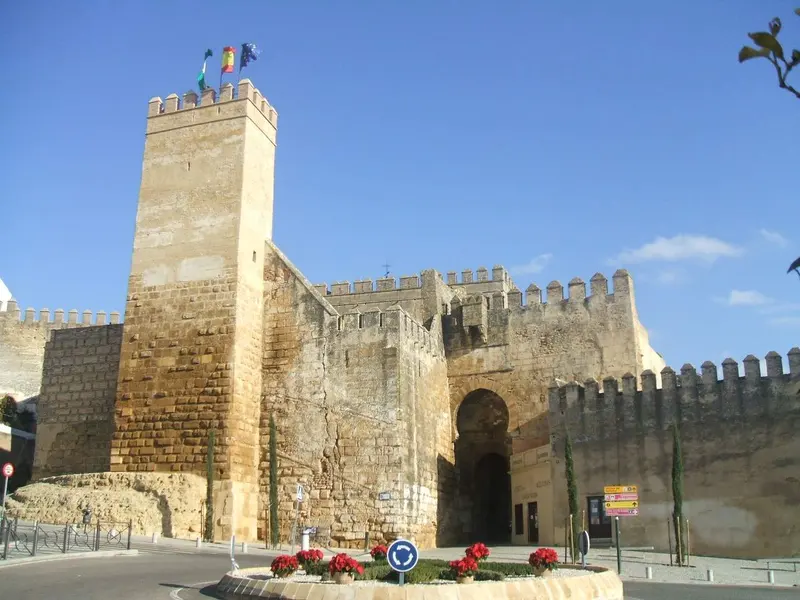
Carmona Day Trip from Seville
How to do Carmona from Seville: the Roman gates and necropolis, the clifftop viewpoints over the Vega, a parador lunch with a view, bus timing, and why this hilltop town makes one of the easiest small-town escapes from the city.
Read guide
Córdoba Day Trip from Seville
How to do Córdoba from Seville: the fast high-speed train versus a tour, booking the Mezquita-Catedral, a relaxed route through the Judería, patios and Roman bridge, and the heat-and-timing tradeoffs that make or break the day.
Read guideCórdoba or Cádiz from Seville?
Both Córdoba and Cádiz are easy, train-friendly day trips from Seville — but they're completely different days out. A clear-headed comparison by travel time, season, heat, food, scenery and the kind of traveller you are, so you can pick the right one (or sequence both).
Read guide
Doñana Day Trip from Seville
Whether Doñana works as a day trip from Seville: the wetlands and wildlife you'll actually see, the seasons that matter, why you can't drive into the park yourself, and how to build a realistic day around an official 4x4 tour.
Read guide