
Macarena Guide
Northern Seville's most local quarter: the Basílica de la Macarena and its venerated image, the surviving Almohad city walls, real-life markets and tapas, the Alameda edge, and when this slower, better-value base makes sense.

- ✓The Macarena spreads across the northern edge of the old city — less polished than Santa Cruz, more lived-in, and noticeably better value.
- ✓Its two anchors are the Basílica de la Macarena, home to Seville's most beloved Holy Week image, and the surviving stretch of Almohad city walls beside it.
- ✓It borders the Alameda de Hércules, so you're a short walk from one of the city's best nightlife and café zones.
- ✓Calle San Luis, with its Baroque churches, and a clutch of honest neighbourhood tapas bars give the area a strong local character.
- ✓Stay here for a slower, more authentic, more affordable Seville — accepting a slightly longer walk to the cathedral and main monuments.
The other Seville
The Macarena is the great northern quarter of Seville's old town — and it feels different from the rest. Where Santa Cruz is groomed for visitors and Centro hums with shops, the Macarena is workaday and proudly local: laundry on the balconies, neighbourhood bars where everyone knows everyone, market stalls, parish churches and a pace that has little to do with tourism. It is the part of the historic centre where ordinary Seville life is most visible.
That doesn't make it short on sights. The neighbourhood holds one of the city's most important religious shrines, its best-preserved medieval defences, a run of remarkable Baroque churches and the springboard to the Alameda's nightlife. What it offers a visitor is a more honest, less curated Seville — and prices, both for rooms and for tapas, that tend to undercut the tourist core. For travellers who'd rather feel like temporary residents than sightseers, the Macarena is a quietly rewarding base.
The basilica and the beloved Virgin
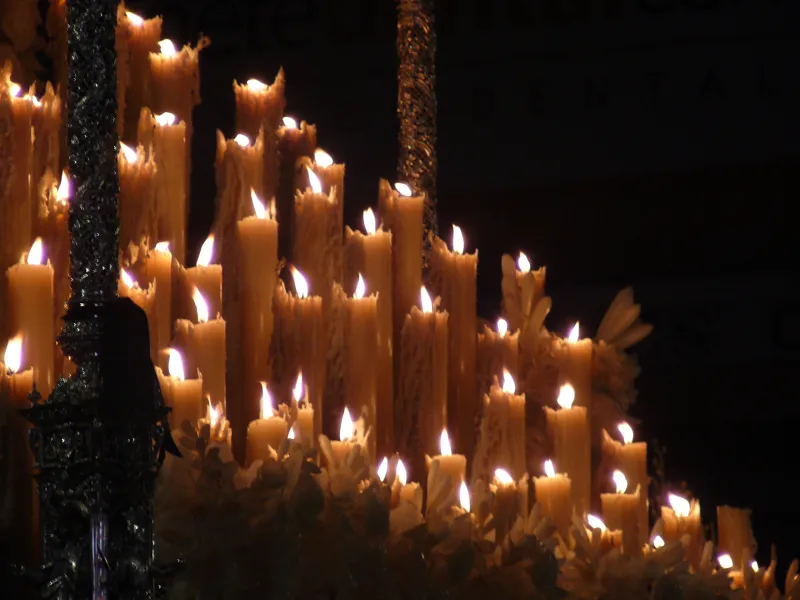
The neighbourhood takes its emotional centre from the Basílica de la Macarena, which houses the image of the Virgen de la Esperanza Macarena — perhaps the single most adored Holy Week figure in a city obsessed with them. Her procession in the early hours of Good Friday morning, La Madrugá, is one of the most charged moments of Seville's Semana Santa, drawing enormous, devout crowds. Even outside Holy Week the basilica is a place of constant local devotion, and its small museum displays the lavish robes and processional silver kept for the image.
You don't need to be religious to feel the weight of the place — the basilica explains a great deal about Seville's identity, where faith, art and civic pride knot together. It makes a natural first stop in the neighbourhood and pairs neatly with the city walls just outside its doors. Check opening times and any museum entry locally before you go, as these can vary by season and around Holy Week.
The neighbourhood itself takes its name from the image, and the connection runs deep into local life. Bars, streets and even a famous Spanish song carry the Macarena name; the whole quarter orients itself, in a quiet everyday way, around the basilica and its brotherhood. To stay here is to be in the part of Seville where the city's intense, year-round relationship with its Holy Week imagery is most palpable — not just during the processions, but in the ordinary devotion you'll see any day of the year.
The Almohad walls
Beside the basilica runs the finest surviving stretch of Seville's medieval walls — long ramparts and towers raised under the Almohads in the 12th century, when the city was a great capital of Moorish Spain. Most of Seville's defences were demolished in the 19th century, which makes this honey-coloured run, anchored by the Puerta de la Macarena gate, all the more striking. Walking along it, with the basilica's domes rising behind, is the neighbourhood's best free spectacle.
The walls are a reminder of how old and how layered this city is, and they frame the Macarena beautifully at golden hour, when the stone glows. They're a short, easy thing to see — there's no ticket to walk beside them — and they connect the basilica to the wider sweep of the city's history that you'll also meet at the Alcázar and the Giralda.
- The best-preserved stretch of Seville's 12th-century Almohad walls.
- Anchored by the Puerta de la Macarena city gate, beside the basilica.
- Free to walk alongside; loveliest in the low golden light of evening.

Baroque churches and a palace next door
Calle San Luis, the long street that runs down through the quarter, is a corridor of Baroque splendour. The church of San Luis de los Franceses is the showpiece — an exuberant 18th-century interior that ranks among the most dazzling in the city — and there are further fine churches strung along the route for anyone who enjoys this kind of decorative drama. It's an easy, atmospheric walk that most visitors miss entirely.
On the southern edge of the neighbourhood, toward Centro, the Palacio de las Dueñas offers a quieter, less crowded alternative to the Alcázar: an aristocratic palace of courtyards, gardens and tilework, and the childhood home of the poet Antonio Machado. Together, the church and the palace make a rewarding cultural half-day that keeps you off the main tourist trail.
Eating like a local
The Macarena is excellent territory for honest, unpretentious eating. The neighbourhood market and the bars around it serve the kind of no-frills tapas — fried fish, stews, good ham, cold beer and fino — that Seville does best, and the clientele is overwhelmingly local. Prices here tend to sit below those of the tourist core, and the welcome is warm if you're willing to order at the bar and take the room as you find it.
Because the neighbourhood isn't built around visitors, you eat on local rhythms: a late lunch, an evening that starts after most tourists have gone to bed. That's part of the charm. For a fuller sense of how to order and pace a Seville tapas evening, our etiquette guide is worth a read before you dive in.
- Honest, local tapas bars and a neighbourhood market — generally better value than the centre.
- Local rhythms: late lunches, evenings that get going after the tourist hours.
- Order at the bar, keep it simple, and follow the room.
The Alameda edge
The Macarena shades into the Alameda de Hércules on its western side, and that proximity is a real bonus. The Alameda — a long, tree-lined boulevard ringed with bars, cafés and live-music venues — is one of the city's main nightlife and café hubs, with a creative, easygoing, slightly bohemian feel. From a Macarena base you can stroll over for an evening drink, brunch or live music, then walk home to the quieter streets near the walls.
That blend — a calm, local, affordable base within walking distance of a lively scene — is one of the strongest arguments for the area. You get the best of both: residential peace by night and a buzzing edge whenever you want it.
Staying in the Macarena: the trade-offs
The Macarena suits travellers who value authenticity and value over polish and proximity. You'll typically pay less for a room here than in Santa Cruz or El Arenal, you'll feel embedded in real Seville life, and you're a short walk from both the city walls and the Alameda's nightlife. It's a particularly good fit for return visitors, longer stays and anyone on a tighter budget who still wants to be inside the historic centre.
The trade-off is the walk. The cathedral and the main monuments are a touch further off than they are from the central neighbourhoods — comfortably walkable, but not on your doorstep — and the streets nearest the basilica are workaday rather than picture-postcard. By night the deep-residential parts are quiet, which most people welcome. As always, check the exact location and walking times when you book, since 'the Macarena' stretches from lively, well-connected edges to sleepier inner streets.
- Best for: value-seekers, longer and repeat stays, travellers who want local life over polish.
- Less ideal for: first-timers who want the headline sights a minute from the door.
- Pros: lower prices, real-Seville atmosphere, the Alameda nightlife close by.
- Cons: a longer walk to the cathedral; workaday rather than postcard streets near the basilica.
A half-day in the Macarena
To get the measure of the neighbourhood, give it a relaxed half-day. Start at the Basílica de la Macarena and its museum, then walk the Almohad walls beside it as the stone catches the light. Drift down Calle San Luis, ducking into San Luis de los Franceses if it's open, and let the Baroque churches and ordinary street life set the pace. There's no rush and no ticket queue out here.
Break for tapas at a local bar away from the tourist flow, then, as the evening comes on, wander west to the Alameda for a drink, brunch or live music. If you've timed your trip for Holy Week, the Macarena takes on an intensity found nowhere else in the city; the rest of the year, it offers something just as valuable — the chance to feel, briefly, like a Sevillano rather than a sightseer.
- Basilica and museum → walk the Almohad walls → Calle San Luis and its churches.
- Local tapas, then west to the Alameda for the evening.
- Around Holy Week, the neighbourhood becomes the emotional heart of the city.

Basílica de la Macarena Guide
How to visit the Basílica de la Macarena in northern Seville: the beloved image of the Virgin of Hope, the on-site treasury museum, the Roman wall beside it, and the basilica's deep ties to Semana Santa.
Read guide
Palacio de las Dueñas Guide
How to visit the Palacio de las Dueñas: the courtyards and gardens, the lived-in aristocratic interiors, the poet Antonio Machado's birthplace, and why this is Seville's most rewarding quieter palace stop — north of the tourist crush, in the Macarena.
Read guide
Seville Hidden Gems Worth Your Time
Beyond the Alcázar and the Cathedral: Seville's quieter palaces, small museums, tiled corners, local neighbourhoods and underused walking routes — the places that make the city feel like a discovery rather than a checklist.
Read guideMore in Where to Stay
6
Alameda de Hércules Guide
Seville's most easygoing, creative quarter: the long tree-lined Alameda boulevard, its bars, cafés and live-music nights, brunch culture, apartments and bohemian energy — and who should choose it as a base.
Read guide
Alfalfa & Encarnación Guide
Alfalfa and Encarnación are the old town's tapas-and-nightlife engine: a dense pocket of bars and plazas under the Setas, full of central apartments and walk-home-after-dinner energy.
Read guide
Barrio Santa Cruz Guide
Stay, walk, eat and sightsee in Barrio Santa Cruz — Seville's atmospheric old Jewish quarter, wrapped tight around the cathedral and the Alcázar, all whitewashed lanes, tiled patios and orange trees.
Read guide
Best Area to Stay in Seville First Time
The simplest hotel-area decision guide for a first Seville visit: where to base yourself for the icons, the tapas and the evening paseo, and how to choose between Santa Cruz, El Arenal, Centro and Alfalfa without overthinking it.
Read guide
Best Boutique Hotels in Seville
A guide to Seville's smaller, stylish hotels — the patio houses, rooftop-pool conversions and design-led stays with real neighbourhood character — including which areas suit which mood, the trade-offs of historic buildings, and what to confirm before you book.
Read guide
Best Budget Hotels in Seville
Where to save on a Seville hotel without losing too much time, shade or transport convenience: which neighbourhoods give the best value, when budget rooms make sense, and the trade-offs to watch in the hot months and festival weeks.
Read guide