
Palacio de las Dueñas Guide
How to visit the Palacio de las Dueñas: the courtyards and gardens, the lived-in aristocratic interiors, the poet Antonio Machado's birthplace, and why this is Seville's most rewarding quieter palace stop — north of the tourist crush, in the Macarena.

Photo: Make With James / Unsplash
- ✓A still-private aristocratic palace, long the Seville home of the Dukes of Alba, opened to visitors with its rooms left as if the family had just stepped out.
- ✓Eleven courtyards and gardens layer Mudéjar, Gothic and Renaissance details — heavy with jasmine, bougainvillea and orange blossom in spring.
- ✓The poet Antonio Machado was born in a house within the palace grounds in 1875; a plaque and his verse mark the connection.
- ✓Far calmer than the Alcázar or Casa de Pilatos — a half-hour to ninety minutes of beauty without the bottleneck.
- ✓Sits in the southern Macarena, an easy walk from the Setas and the Centro, away from the Santa Cruz crowds.
What the Palacio de las Dueñas is
The Palacio de las Dueñas is the kind of place that makes you lower your voice. It is a real, still-private palace — for centuries one of the principal Seville residences of the House of Alba, one of Spain's oldest and grandest noble families — and it was the much-loved home of Cayetana Fitz-James Stuart, the late 18th Duchess of Alba, whose presence still lingers in the photographs, the religious images and the small personal objects left throughout the rooms. Rather than being scrubbed into a museum, it has been opened to visitors as a lived-in house, which is exactly what gives it its charm.
Built largely between the 15th and 16th centuries, the palace is a Sevillian hybrid: Gothic-Mudéjar bones dressed in Renaissance detail, with the Moorish-influenced love of tiled dados, carved plasterwork and shaded courtyards that runs through the whole city. The name 'las Dueñas' recalls a former convent of dueñas (matrons) that once stood nearby. What you walk through today is a sequence of patios, gardens and salons that feels intimate rather than monumental — a palace at human scale, and all the more romantic for it.
For visitors weary of timed slots and tour-group crocodiles, Dueñas is a tonic. It rarely feels crowded, the route is short and self-guided, and the reward-to-effort ratio is among the best in the city. If the Alcázar is the showpiece and Casa de Pilatos the connoisseur's choice, Dueñas is the one you recommend to friends who want beauty without the battle.
The courtyards and gardens
The heart of any Sevillian palace is its patios, and Dueñas has them in abundance — eleven courtyards and gardens in all, threaded together so that you pass from sun to shade and back again as you walk. The main courtyard is the showpiece: a marble arcade of slender columns and Mudéjar-style arches around a central fountain, the walls below the windows banded with the painted azulejo tiles that are Seville's signature. Glazed pots of geraniums and trailing greenery soften every corner.
Beyond the formal patios, the gardens loosen into something more sensory. There are palms and citrus, climbing bougainvillea in hot pinks, and the heavy scent of jasmine and dama de noche in the warm months — the kind of planting that perfumes the whole enclosure at dusk. Lemon trees, a small kitchen-garden feel in places, and shaded benches make this a garden to linger in rather than march through. In spring, when the orange blossom (azahar) is out across Seville, the courtyards here are at their most intoxicating.
This layered, water-and-greenery design is also your heat strategy. Like the rest of the city's palaces, Dueñas was built to stay cool, and on a hot Sevillian afternoon the shaded arcades and the sound of the fountain are a genuine relief. Save the gardens for the end of your visit and let the pace slow right down.
- Main courtyard — the marble-columned arcade and central fountain; the postcard view.
- Eleven courtyards and gardens in total, moving you between sun and deep shade.
- Bougainvillea, jasmine, palms and citrus — most fragrant in spring and early summer.
- Tiled azulejo dados and carved plasterwork throughout, in the Mudéjar tradition.
Inside the palace: a lived-in house
What sets Dueñas apart from a conventional palace-museum is how personal the interiors feel. The rooms open to visitors are arranged as the Alba family used them, layered with the accumulations of a great house across generations: old-master and 19th-century paintings, religious imagery, antique furniture, ceramics, fans, and the bullfighting and flamenco memorabilia that reflect the late Duchess's famous love of Andalusian culture. You are not walking through a roped-off period set so much as a family album made three-dimensional.
The visit takes in salons, the main staircase, and rooms hung with portraits and devotional art, with the painted-tile and coffered-ceiling craftsmanship that recurs through the building. Because the family still owns and occasionally uses the palace, only part of it is open, and the route is deliberately compact — but that intimacy is the point. You leave with a sense of a household rather than an institution.
An audio guide or the printed material helps the rooms speak, since much of the meaning is in the people and stories behind the objects rather than in grand architecture alone. But Dueñas is perfectly rewarding taken slowly and quietly on your own.
Antonio Machado and the poetry of the place
Dueñas carries a literary halo that deepens a visit. The great Spanish poet Antonio Machado was born here in 1875 — his family rented part of the palace grounds — and his often-quoted lines remembering 'un patio de Sevilla, y un huerto claro donde madura el limonero' ('a courtyard in Seville, and a bright garden where the lemon tree ripens') are widely understood to evoke this very place. A plaque marks the connection, and standing in the patios with that image in mind gives the courtyards an extra resonance.
It is a small thing, but it captures why Dueñas lands so well with couples and slow travellers: this is a palace built for living and remembering, not for awe. The lemon trees, the fountain, the worn marble underfoot — Machado's Seville is still right here, and you can sit with it for a while.
At a glance
A quick reference for planning. Opening hours, ticket prices and any free or reduced-entry windows are set by the palace and do change with the season, so always confirm the current details on the official Palacio de las Dueñas website before you go — the points below are the evergreen ones.
- What you see: eleven courtyards and gardens, plus the lived-in Alba family rooms and collections.
- Where it is: Calle Dueñas, in the southern Macarena, a short walk north of the Setas and Centro.
- How long: 45–90 minutes is typical; garden-lovers will happily stay longer.
- Visit style: self-guided, with an audio guide available; the route is compact.
- Best time: morning for cool air and soft light; spring for the orange blossom and jasmine.
- Verify before you go: opening hours, ticket price and any free-entry window (these vary and are set by the palace).
When to go and how long to stay
Because Dueñas is rarely besieged, timing here is about comfort and light rather than dodging queues. A mid-morning visit gives you cool air in the courtyards and the gentlest light for photographs; spring brings the azahar and the jasmine into bloom, which is the palace at its most seductive. In high summer, treat it as a morning stop and lean on the shaded arcades for relief from the heat.
Allow forty-five minutes to ninety. The route is short by design, but the gardens reward sitting still — a bench, the fountain, the scent of citrus — and that pause is half the experience. It pairs naturally with the things around it rather than swallowing a whole day, which makes it easy to slot in.

How Dueñas compares with Seville's other palaces
Seville is unusually rich in palaces, and it helps to know where Dueñas sits among them so you can choose well — or, better, line them up. The Real Alcázar is the headline act: a vast, world-famous royal palace of Mudéjar splendour, deserving its place at the top of any first-timer's list, but also the most crowded and the most demanding of forward planning, with timed tickets that sell out. Casa de Pilatos, an Andalusian noble house near the Casa de Pilatos square, is the connoisseur's favourite — a glorious blend of Mudéjar, Gothic and Renaissance with a celebrated tiled courtyard, quieter than the Alcázar but more architecturally ambitious than Dueñas.
Dueñas occupies a sweet spot between them. It is smaller and less grand than either, but more intimate and more human, and its lived-in quality — the family photographs, the personal objects, the sense of a real household — is something neither of the others offers. If you only have time for one palace and you've never been to Seville, choose the Alcázar. If you have time for two and want range, add Casa de Pilatos for the architecture or Dueñas for the atmosphere. If you've seen the icons already and want something tender and uncrowded, Dueñas is the obvious pick.
There is no rivalry in visiting more than one, either; Sevillian palaces share a vocabulary — tiled dados, fountained courtyards, carved plaster, citrus trees — and seeing several deepens your eye for all of them. A 'palace day' that takes in two or three, broken by tapas and a shaded rest, is one of the most rewarding ways to spend time in the city.

Dueñas for couples
Of all Seville's grand houses, Dueñas may be the most romantic, precisely because it is the least monumental. There is no crowd to fight, no jostling for the photo, no sense of being processed; instead you have shaded arcades, the trickle of fountains, the scent of jasmine and orange blossom, and benches set among the lemon trees. It is a place built for lingering side by side, and the Machado verse hanging over it gives the courtyards a quiet, poetic charge.
For a couple, the ideal play is a morning visit, before the day heats up, when the light slants low across the patios and you have the gardens nearly to yourselves. Take the audio guide, then put it away and simply sit for a while — the palace asks nothing more of you. Afterwards, drift into the Centro or up toward the Macarena for a long lunch, and you've spent the gentlest, most atmospheric half-morning Seville has to offer.

Pair it with the Macarena and Centro
Dueñas sits in the southern reaches of the Macarena, the broad northern district that most first-timers never reach — and that is precisely its appeal. Step out and you are minutes from the timber lattice of the Setas de Sevilla and the lanes of the Centro, with their tapas bars and convent sweet-shops. Push a little further north and you reach the Basilica de la Macarena, home to Seville's most venerated Virgin, and the lively local market scene of a barrio that lives at its own rhythm.
A satisfying half-day strings these together: Dueñas first for the courtyards, then a wander south to the Setas for the rooftop walkway and a coffee, or north into the Macarena for a more local, less polished slice of Seville. It is the perfect counter-programme to a morning spent battling the crowds around the Cathedral.
Practical tips for a smoother visit
Wear comfortable shoes — there is marble and stone underfoot and a couple of changes of level. Personal photography is generally welcome in the courtyards and gardens; check the posted rules for the interiors, where restrictions can apply. Bags are best kept small, and the route is largely accessible at ground level, though as with any historic house some thresholds and steps exist — confirm specifics with the palace if mobility is a concern.
Buy online or arrive when it opens to keep things smooth, and consider taking the audio guide: so much of Dueñas's appeal is in the stories behind the objects and the Machado connection. Then do the thing the palace is built for — slow down, find a bench in the shade, and let the fountain and the lemon trees do their work.
- Comfortable shoes for stone and marble floors; travel light on bags.
- Photography usually fine in the courtyards; check rules for the interiors.
- An audio guide adds a lot here, given the family stories and the Machado link.

Macarena Guide
Northern Seville's most local quarter: the Basílica de la Macarena and its venerated image, the surviving Almohad city walls, real-life markets and tapas, the Alameda edge, and when this slower, better-value base makes sense.
Read guide
Best Palaces in Seville
Seville is a city of palaces — royal, aristocratic and ecclesiastical. A decisive guide to the Real Alcázar, Casa de Pilatos, Palacio de las Dueñas and the lesser-known palace-homes: which to choose, how to combine them, and how to avoid palace fatigue.
Read guide
Romantic Walks in Seville
The most romantic routes to walk together in Seville: the lamplit lanes of Santa Cruz, the Alcázar gardens at opening, a golden-hour walk along the Guadalquivir, Plaza de España and María Luisa Park, and the bridge-and-Triana sunset loop. When to go, where to pause, and how the heat shapes each route.
Read guideMore in Things to Do
6
Archivo de Indias Guide
Why the Archivo General de Indias belongs on your Seville list: what's inside the great archive of the Spanish Americas, the Renaissance building it lives in, how free entry works, and how to slot it between the Cathedral and the Alcázar.
Read guide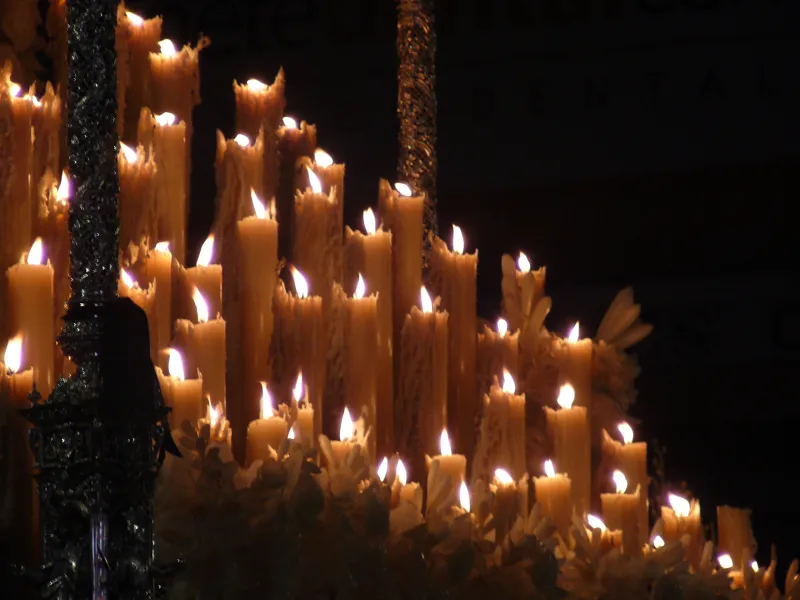
Basílica de la Macarena Guide
How to visit the Basílica de la Macarena in northern Seville: the beloved image of the Virgin of Hope, the on-site treasury museum, the Roman wall beside it, and the basilica's deep ties to Semana Santa.
Read guide
Best Free Things to Do in Seville
The best free things to do in Seville: grand plazas, shaded parks, riverside walks, beautiful churches, viewpoints, free-entry museum windows, and the heat-smart way to string them together without spending a euro.
Read guide
Best Museums in Seville
A decisive guide to Seville's museums: the golden-age paintings of Bellas Artes, the living art of the flamenco museum, contemporary work at the CAAC, ceramics in Triana and the palace-museums — compared by art, history, rain value and who each suits.
Read guide
Best Photography Spots in Seville
The best places to photograph Seville and exactly when to shoot them: Plaza de España's tiled curves, Alcázar patios, the Giralda framed down narrow lanes, rooftops, river bridges and Santa Cruz patios — built into a golden-hour route around the heat.
Read guide
Best Tours in Seville
Which guided tours in Seville are actually worth it: skip-the-line Alcázar and Cathedral visits, food and tapas tours, flamenco experiences, bike rides, river cruises and day trips — compared by who they suit, when to book, and where you're better off going solo.
Read guide