
Basílica de la Macarena Guide
How to visit the Basílica de la Macarena in northern Seville: the beloved image of the Virgin of Hope, the on-site treasury museum, the Roman wall beside it, and the basilica's deep ties to Semana Santa.
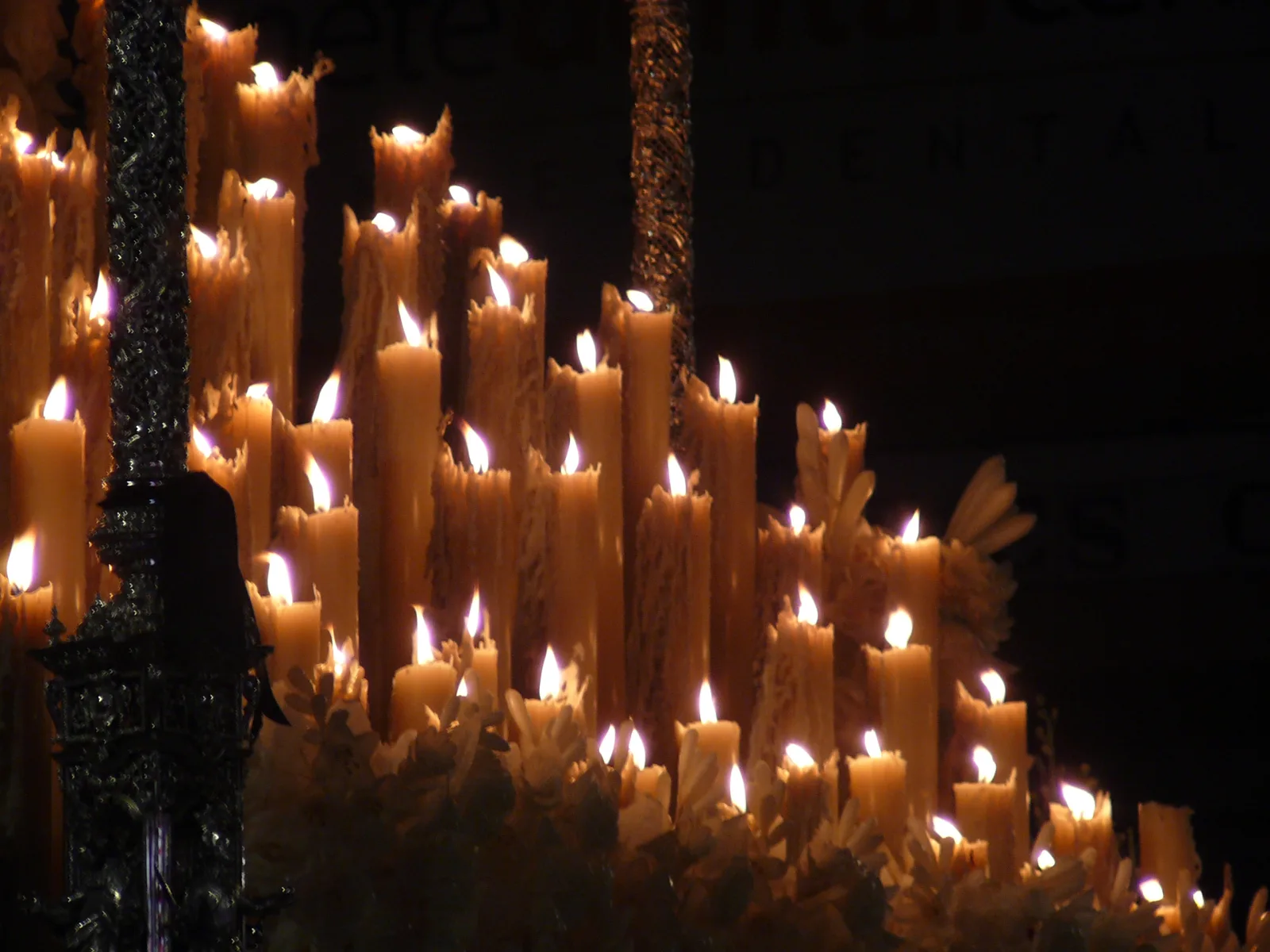
Photo: Julia Folsom / Wikimedia Commons · CC BY-SA 2.0
- ✓Home to the Virgen de la Esperanza Macarena, the most venerated processional image in Seville and the emotional heart of Semana Santa.
- ✓The basilica itself is free to enter; the adjoining treasury museum, with the brotherhood's robes, jewels and processional floats, is a paid visit.
- ✓It stands beside the surviving stretch of Seville's medieval Almohad city wall and the Puerta de la Macarena gate.
- ✓It sits in the everyday Macarena neighbourhood, away from the tourist core — pair it with local tapas and a slower northern-Seville afternoon.
- ✓Dress modestly and keep quiet: this is a living place of worship, not just a sight.
Why the Macarena matters
Few images in Spain are loved the way Seville loves the Virgen de la Esperanza Macarena. Housed in this basilica in the northern Macarena district, the polychrome wooden statue — a serene, weeping Virgin in an embroidered mantle and a golden crown — is the focus of intense popular devotion all year, and the absolute climax of Semana Santa, when her brotherhood carries her through the streets in the small hours of Good Friday before a crowd that can run into the tens of thousands.
To understand Seville, it helps to understand the Macarena. She is patroness to bullfighters and to ordinary Sevillanos alike; her image is everywhere in the city, from bar walls to tattoos; and the all-night procession of her paso is, for many, the single most moving event of the religious calendar. You can feel some of that charge simply by standing before her in the basilica on an ordinary Tuesday — which is exactly what makes the visit worthwhile even if you'll never see the procession.
Inside the basilica
The basilica is, by Seville's grand standards, a relatively modern building — it was completed in the early 20th century specifically to house the image, which had previously been kept in a nearby parish church. Don't expect a medieval cathedral; expect a bright, richly decorated devotional space built around a single focus. The interior is warm and ornate, but everything funnels your eye toward the high altar and the camarín, the elevated niche where the Macarena stands above the retablo in her finery.
Take your time here, and behave as the locals do: this is an active church, often with people praying quietly before the image, and at times Mass is in progress. Move softly, keep your voice down, switch your phone to silent, and dress with a little modesty — covered shoulders are a sensible courtesy in any Sevillian church. The reward is a quiet, close encounter with an image that means more to this city than almost any building does.
- The basilica is free to enter; the focus is the Macarena image above the high altar.
- It's an active church — people pray here and Mass is held; keep quiet and respectful.
- Dress modestly (covered shoulders) as you would in any working Sevillian church.
The image and the Madrugá
The statue itself is a masterpiece of Andalusian religious sculpture: a painted wooden image of the Virgin, her face turned in sorrow, with tears worked into the surface and glass eyes that catch the light. She is dressed and crowned in changing finery throughout the year, and the artistry of her face — at once grieving and tender — is a large part of why she inspires such devotion. People speak to her, weep before her and return to her across a lifetime; this is faith as relationship, not just observance.
All of that comes to a head during the Madrugá, the long night of Holy Thursday into Good Friday, when the Macarena's brotherhood carries her in procession through the dark streets in the small hours. It is the most charged moment in Seville's entire religious calendar — vast crowds, candlelight, the rhythm of the costaleros bearing the float, and, by tradition, saetas, the raw a cappella laments sung from balconies as she passes. You do not need to be religious to find it overwhelming. If you'll be in Seville for Semana Santa, the Madrugá is the night people remember for the rest of their lives.
- A painted wooden image famed for its sorrowful, tender face and worked tears.
- Dressed and crowned in changing finery through the year.
- Her Good Friday Madrugá procession is the emotional peak of Holy Week.
- Listen for saetas — raw, unaccompanied laments sung as she passes.
The treasury museum
Beside the basilica is the Museo de la Macarena, the brotherhood's treasury, and for many visitors it is the highlight. This is where the Hermandad de la Macarena keeps the astonishing material culture of its processions: the embroidered velvet mantles and canopies worked in gold thread over years, the jewels and crowns gifted across generations, the silverwork, the ceremonial robes, and — the centrepiece — the great processional pasos themselves, the floats on which the Virgin and the accompanying scene are carried.
Seeing the pasos up close, out of motion and in full light, is genuinely impressive: the scale of the silver and gilt, the density of the embroidery, the craftsmanship poured into objects most people only ever glimpse swaying through a crowded night street. The museum is a separate, ticketed visit from the free basilica; admission is modest, and it's the best way to grasp the sheer artistry behind Semana Santa without waiting for Holy Week.
- Houses the brotherhood's embroidered mantles, jewels, silverwork and ceremonial robes.
- The processional pasos (floats) are displayed up close, out of the crowd.
- Separate paid admission from the basilica — modest price; verify current details.
The Roman and medieval walls
Step outside and the basilica's setting deepens the visit. Directly opposite stands one of the best-surviving stretches of Seville's old city wall — a long run of crenellated rampart with towers, dating in its present form largely from the Almohad (12th-century) period, alongside the Puerta de la Macarena, one of the few medieval gates left in the city. For centuries this gate was the ceremonial entrance to Seville; kings and processions passed beneath it.
The wall is free to admire from the street and makes an atmospheric backdrop, especially in the evening light. It's a useful reminder that the Macarena district sat just inside the old defences, at the northern edge of the historic city — which is part of why it still feels like a real, lived-in neighbourhood rather than a tourist stage set.

When to go and how to plan
The basilica and museum are open to visitors through the year, but hours vary and the schedule shifts around Mass times and around Semana Santa itself, when the rhythm of the place changes completely. Confirm current opening times and the museum price on the official basilica site before you go, and avoid arriving during a service if you only want to look around.
During Holy Week the experience is entirely different: the image may be dressed for procession or already out in the streets, crowds gather, and the all-night Madrugá procession of Good Friday draws enormous numbers. If you're in Seville for Semana Santa, that's a once-in-a-lifetime sight but a logistical undertaking — read the dedicated Holy Week guide first. For a calm, contemplative visit, come on an ordinary weekday outside the festival.
- Hours shift around Mass times and around Semana Santa — verify before you go.
- Don't arrive mid-service if you only want to look around.
- Holy Week is extraordinary but crowded; read the Semana Santa guide if you'll be there.
Pair it with the neighbourhood
The Macarena rewards a visitor who lingers. This is a working district of small bars, traditional tapas joints and unflashy shops, and a coffee or a plate of something simple near the basilica is a far more local experience than the lanes around the Cathedral. Walk south from the wall and you reach the buzzy edge of the Alameda de Hércules; not far away sits the Palacio de las Dueñas, the Alba family's flower-filled palace, which makes a natural pairing if you want a second indoor stop.
A few minutes east, the Iglesia de San Luis de los Franceses — a jewel-box of Sevillian Baroque — is one of the city's most rewarding lesser-known interiors, and easily combined with the basilica into a single northern-Seville morning. Together they make a half-day that most first-timers miss entirely, and which locals quietly prefer.
- Eat and drink at the neighbourhood's traditional, unflashy tapas bars.
- Combine with San Luis de los Franceses for a Baroque northern-Seville morning.
- The Palacio de las Dueñas and the Alameda are both a short walk away.
Practical tips
The basilica is a 20-to-30-minute walk north from the Cathedral, or a short hop by bus or tram-plus-walk; it's flat the whole way. Entry to the church is free, but keep small change handy if you want to light a candle, and consider the museum ticket — it's the part most visitors find memorable. As with any place of devotion, photography inside should be discreet and flash-free, and you should never photograph people at prayer.
Above all, calibrate your expectations. You are not coming for vast Gothic architecture; you are coming for one of the most beloved religious images in Spain and the extraordinary craft that surrounds her, in a neighbourhood that still feels like Seville's own. Approached that way, the Macarena is one of the city's most quietly moving stops.
- About a 20–30 minute flat walk north from the Cathedral; buses and trams also serve it.
- Church entry is free; the treasury museum is the part most visitors remember.
- Photograph discreetly and never flash or photograph people at prayer.
At a glance
A quick-reference card for planning a calm, contemplative visit outside Holy Week.
- What it is: the basilica home to the Virgen de la Esperanza Macarena, Seville's most venerated image.
- Where: the Macarena district in northern Seville, beside the old city wall and the Puerta de la Macarena.
- Cost: the basilica is free; the adjoining treasury museum is a modest paid visit.
- Time needed: 30–45 minutes for the basilica and museum together.
- Don't miss: the image above the high altar, and the embroidered mantles and silver pasos in the museum.
- Best visited: an ordinary weekday for calm; Holy Week is extraordinary but very crowded.
- Etiquette: a living place of worship — dress modestly, stay quiet, photograph discreetly.

Macarena Guide
Northern Seville's most local quarter: the Basílica de la Macarena and its venerated image, the surviving Almohad city walls, real-life markets and tapas, the Alameda edge, and when this slower, better-value base makes sense.
Read guide
Semana Santa in Seville Guide
How to experience Seville's Holy Week with understanding and respect: what the processions are, where they pass, the great floats and brotherhoods, the all-night Madrugá, the crowds and street closures, what to wear and how to behave, where to stay, and how to plan a complex week calmly.
Read guide
San Luis de los Franceses Guide
A compact guide to the Iglesia de San Luis de los Franceses, Seville's great Baroque jewel-box in the Macarena district: the dome, the crypt, the upstairs chapel, plus tickets, timing and nearby stops most visitors miss.
Read guideMore in Things to Do
6
Archivo de Indias Guide
Why the Archivo General de Indias belongs on your Seville list: what's inside the great archive of the Spanish Americas, the Renaissance building it lives in, how free entry works, and how to slot it between the Cathedral and the Alcázar.
Read guide
Best Free Things to Do in Seville
The best free things to do in Seville: grand plazas, shaded parks, riverside walks, beautiful churches, viewpoints, free-entry museum windows, and the heat-smart way to string them together without spending a euro.
Read guide
Best Museums in Seville
A decisive guide to Seville's museums: the golden-age paintings of Bellas Artes, the living art of the flamenco museum, contemporary work at the CAAC, ceramics in Triana and the palace-museums — compared by art, history, rain value and who each suits.
Read guide
Best Palaces in Seville
Seville is a city of palaces — royal, aristocratic and ecclesiastical. A decisive guide to the Real Alcázar, Casa de Pilatos, Palacio de las Dueñas and the lesser-known palace-homes: which to choose, how to combine them, and how to avoid palace fatigue.
Read guide
Best Photography Spots in Seville
The best places to photograph Seville and exactly when to shoot them: Plaza de España's tiled curves, Alcázar patios, the Giralda framed down narrow lanes, rooftops, river bridges and Santa Cruz patios — built into a golden-hour route around the heat.
Read guide
Best Tours in Seville
Which guided tours in Seville are actually worth it: skip-the-line Alcázar and Cathedral visits, food and tapas tours, flamenco experiences, bike rides, river cruises and day trips — compared by who they suit, when to book, and where you're better off going solo.
Read guide