Semana Santa Seville Itinerary
A route-and-crowd-aware plan for Holy Week in Seville: how the processions work, how to choose what to see without exhausting yourself, where to stand, and how to weave in meals, rest and ordinary sightseeing around the pasos.
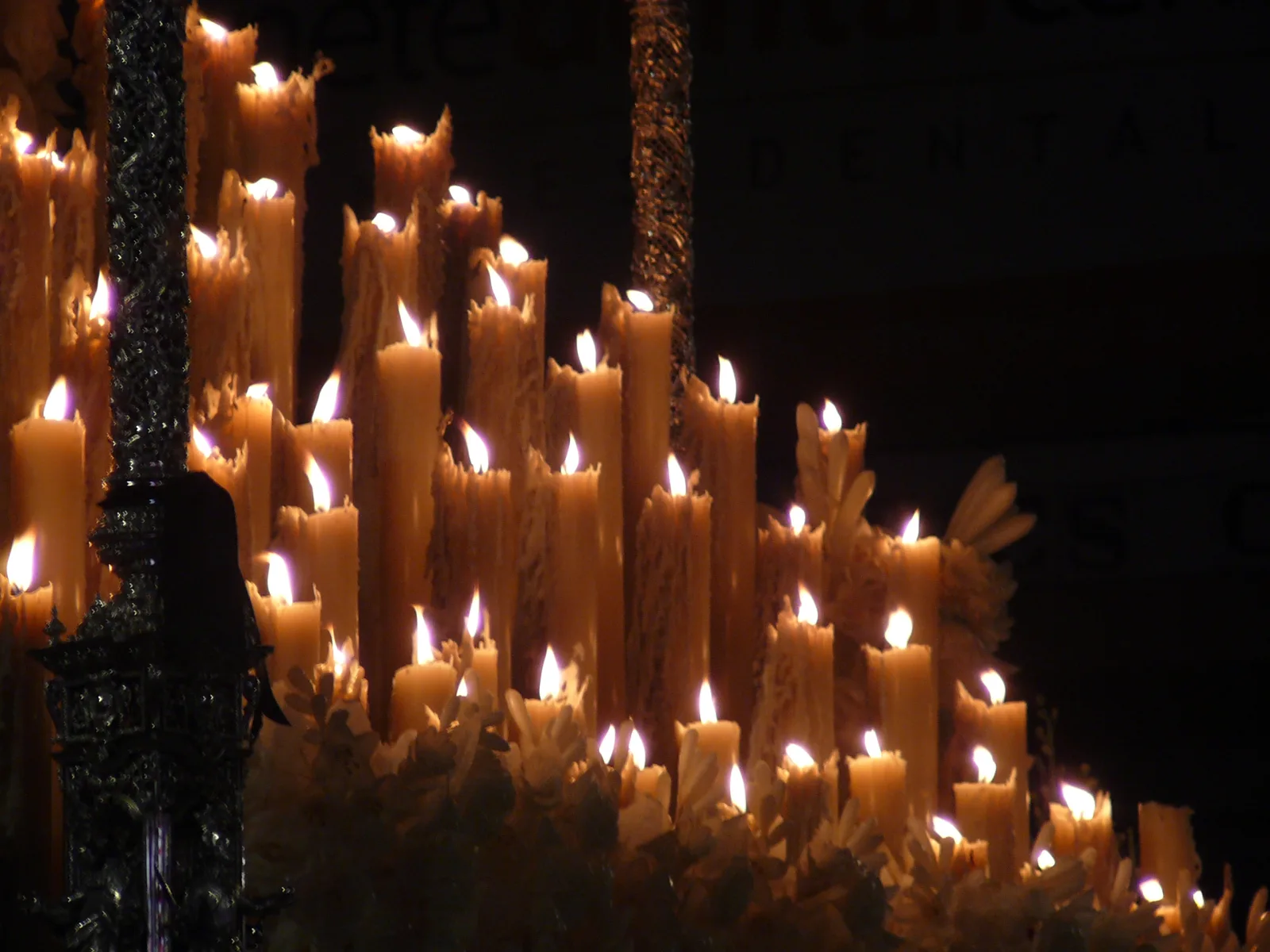
Photo: Julia Folsom / Wikimedia Commons · CC BY-SA 2.0
- ✓Semana Santa (Holy Week) is the week before Easter Sunday — the dates move every year with the Christian calendar, so confirm them before booking anything.
- ✓Dozens of brotherhoods (hermandades) parade their pasos — towering floats of carved figures — from their home churches to the Cathedral and back, day and night, all week.
- ✓You cannot see everything, and trying to will ruin the week. The art is choosing a few processions, a few good vantage points, and accepting that crowds, road closures and waiting are part of it.
- ✓Book hotels months ahead, plan meals around closed-off streets, and pace yourself — the most intense processions run through the small hours of the night.
- ✓This is a profound religious and civic event, not a show staged for tourists. Watch quietly, dress with a little respect, and let the city lead.
What Semana Santa actually is
Semana Santa — Holy Week, the week leading up to Easter Sunday — is the most important week of the year in Seville, a religious observance of extraordinary scale and beauty that takes over the entire city. Across the week, dozens of brotherhoods, or hermandades, each centuries old, carry their pasos — monumental floats bearing carved and painted figures of Christ and the Virgin, some of them masterpieces of Andalusian sculpture — in solemn procession from their home church through the streets to the Cathedral and back again. The processions run from Palm Sunday (Domingo de Ramos) through to the early hours of Easter Sunday, day and night, in an unbroken rhythm that reshapes the whole city.
Each procession is an immense, slow-moving cortège: ranks of nazarenos in robes and the tall pointed hoods called capirotes carrying candles, the great pasos borne on the shoulders of hidden bearers (costaleros) who move them with a swaying, deliberate step, brass bands or stark drum-and-bugle, and the haunting, improvised saetas — flamenco-rooted laments — sometimes sung from a balcony as a paso passes. Incense hangs in the air, and crowds line every street on the route. It is moving, overwhelming, and unlike anything else in Europe. The first thing to understand is that the dates change every year with the Christian calendar, so before you book a flight or a hotel, confirm the exact dates of Holy Week for the year you are travelling.
Before you go: the decisions that shape the week
A Semana Santa trip lives or dies on a few decisions made well in advance. First, the dates: Holy Week moves with Easter, so verify the year's calendar early. Second, accommodation: Seville fills completely and prices rise sharply, so book your hotel months ahead — and think hard about location, because road closures around the processions can make a far-flung hotel a nightly ordeal. A central base lets you dip in and out and retreat to rest, which matters enormously over a draining week.
Third, and most important: get hold of the official programme and route guide for the year. Every brotherhood has a fixed itinerary and timetable, published annually, and the city sells small route booklets (and there are widely used apps) that show which processions pass where and when. This is the single most useful planning tool of the week — without it you are wandering blind; with it you can position yourself deliberately. Pay particular attention to the carrera oficial, the official route every brotherhood must follow through the centre to the Cathedral, where seating exists but the standing crowds are densest.
- Confirm the exact Holy Week dates for your year before booking anything — they move annually.
- Book a central hotel months in advance; expect higher prices and limited availability.
- Buy or download the official route-and-timetable guide for the year — it is essential, not optional.
- Understand the carrera oficial (the shared official route to the Cathedral) and that grandstand seating there is limited and arranged in advance.
- Build in rest: this is a marathon, not a sprint, and the biggest processions run overnight.
How to choose what to see — you cannot see it all
The defining mistake of a first Semana Santa is trying to see everything. You cannot. With dozens of brotherhoods processing across the week, many at the same time and across the whole city, any attempt to catch them all will leave you exhausted, frustrated and stuck in crowds with no plan. The week is far better as a series of chosen moments than as a checklist.
So choose deliberately. Pick a handful of processions that matter to you — perhaps for the fame and beauty of their images, perhaps for the brotherhood's history, perhaps simply because their timing and route fit your day. Pick a few good places to watch from rather than chasing pasos through the crowds. And accept the texture of the week: long waits, sudden swells of people, streets you cannot cross because a procession is passing, and the slow, hypnotic pace of the pasos themselves. Watching one procession well — finding a spot early, letting it come to you, feeling the hush as the paso turns a narrow corner — is worth more than glimpsing six in a scramble.
If you want the most celebrated experience of all, read about La Madrugá, the night of Holy Thursday into Good Friday morning, when the city's most revered brotherhoods — including the Macarena and others with enormous followings — process through the small hours. It is the emotional peak of the week, and also the most crowded and demanding night; plan it as a deliberate all-nighter or not at all.
Where to stand and how the crowds work
Vantage point is everything. Broadly, you have three kinds of place to watch from. The narrow streets of the brotherhoods' own neighbourhoods — Santa Cruz, Triana, the Macarena district and others — offer the most intimate and atmospheric encounters, where a great paso fills a lane almost wall to wall and the bearers must inch it around tight corners to gasps from the crowd. The carrera oficial, the shared official route through the centre toward the Cathedral, gives you the grandest, most formal version but the heaviest crowds and the most restricted access; paid grandstand seating exists along parts of it but is arranged through the brotherhood council well in advance. And quieter outlying stretches of a route, away from the famous corners, can give you a clear, calm view with far fewer people.
Wherever you choose, arrive early and be patient — the prime spots fill long before a procession reaches them. Understand that once a paso is passing, the street is effectively a wall: you will not be able to cross, so position yourself on the side you need to be on, near where you will want to go next. Keep an exit in mind. And learn the etiquette of the crowd: people fall quiet as a paso approaches, and you should too.
- Neighbourhood streets (Santa Cruz, Triana, Macarena): the most atmospheric, intimate viewing of the pasos turning narrow corners.
- The carrera oficial: the grandest formal procession but the densest crowds; grandstand seats are limited and pre-arranged.
- Outlying parts of a route: clearer, calmer views with fewer people, if you do not need the famous backdrops.
- Arrive early for any good spot, and once a procession passes you cannot cross the street — plan which side you stand on.
- Wear comfortable shoes and expect a lot of standing and waiting.
Eating, drinking and resting around the processions
Meals during Semana Santa take planning, because the processions close streets unpredictably and the centre is packed. The trick is to eat a little off the procession routes and at slightly off-peak times, and to book ahead where you can. Many bars and restaurants in the thick of it are mobbed; step a few streets back from a route and you will find space. Keep snacks and water with you, because you may be pinned in a crowd for an hour or more with no easy way to a café.
There are foods particular to the season worth seeking out: torrijas, the Holy Week answer to French toast — bread soaked in milk or wine, fried and sweetened — appear in bakeries and bars across the city, and a plate of them with a coffee is a lovely, traditional pause. Beyond that, the ordinary pleasures of Seville's tapas bars are your friend: light, grazing, movable meals suit a week of stop-start days far better than long sit-down dinners.
And rest deliberately. The week is physically and emotionally draining — the heat of the crowds, the late nights, the standing, the sheer intensity. A central hotel you can retreat to in the afternoon is worth its weight in gold; an afternoon nap before a night procession is not laziness but strategy. Pace the week as a series of chosen highs with real recovery in between.
- Eat just off the procession routes and slightly off-peak; book ahead when you can.
- Carry water and snacks — you can be stuck in a crowd far from any café for a long time.
- Try torrijas, the traditional Holy Week sweet, in bakeries and bars across the city.
- Favour light, movable tapas over long meals, and retreat to your hotel to rest between processions.
Fitting in ordinary Seville around Holy Week
Semana Santa does not switch the rest of the city off, but it does change how you visit it. The mornings, before the day's processions build, are often the calmest window for ordinary sightseeing — though be aware that opening hours and access at the major monuments can change during the week, and the Cathedral in particular has altered access because it is the focal point of every procession. Always check current arrangements rather than assuming a normal visit.
Where you can, treat the classic sights as morning fill-ins between the processions that anchor your day. The Real Alcázar and its gardens, the Setas viewpoint, a museum, a quiet church, a wander through Santa Cruz before the crowds gather — these slot naturally into the gaps. But do not over-program; the processions are unpredictable in their timing, and a procession you stumble into is often the highlight of a day you had planned around something else. Leave room to be diverted. The week's magic lies as much in the unplanned encounter — a saeta drifting from a balcony, a paso emerging from a side street at dusk — as in anything you set out to see.
Etiquette, respect and practical notes
Finally, the most important framing: Semana Santa is a deeply held religious and civic tradition, not a spectacle staged for visitors. You are welcome to watch — the city has hosted onlookers for centuries — but watch as a respectful guest. Fall quiet as a paso passes, as the locals do. Do not block the brotherhoods or push into spaces reserved for them. Dress with a little care, particularly if you enter a church; this is a solemn occasion for the people around you, many of whom have profound personal connections to the images being carried. Be mindful with photography, especially of people in prayer or grief.
On the practical side: expect the centre to be crowded and slow, plan extra time for every journey, keep your belongings secure in dense crowds, and stay flexible when streets close. The weather in late March or April is usually mild but can turn — carry a light layer and check the forecast. Above all, surrender a little to the rhythm of the week rather than fighting it. Approached the right way — a few chosen processions, good vantage points, real rest, and an open, respectful spirit — Semana Santa in Seville is among the most moving experiences any traveller can have in Europe.
- Watch quietly and respectfully — this is a religious observance, not a tourist show.
- Dress modestly for churches and solemn moments; be careful with photography of worshippers.
- Allow far more time than usual for every journey, and keep valuables secure in crowds.
- Carry a light layer and check the forecast — spring weather can turn.
- Confirm the year's dates and the major monuments' Holy Week hours before you finalise plans.
A day-by-day shape for the week
Holy Week does not divide into neat identical days — each day has its own brotherhoods and character, building toward the climax of the Triduum at the end of the week. Rather than a rigid hour-by-hour plan (which the unpredictable processions defeat anyway), think of the week as a build, and pick your moments across it. Palm Sunday (Domingo de Ramos) opens proceedings and is a fine, slightly less overwhelming day to find your feet, get a feel for how a procession moves, and learn to read the route guide on the ground.
The middle days — Monday through Wednesday of Holy Week — see processions every afternoon and evening, and are a good window to combine a couple of chosen processions with calm morning sightseeing. Then comes the intensity: Holy Thursday into the famous La Madrugá (the small hours of Good Friday), the emotional summit, when the most revered brotherhoods process overnight before vast, devoted crowds. Good Friday itself is solemn and major. The week resolves through Holy Saturday to the joy of Easter Sunday (Domingo de Resurrección). Plan your energy with this arc in mind: pace the early days, rest hard before any night you intend to stay up for, and treat La Madrugá as a deliberate decision rather than something you drift into exhausted.
- Palm Sunday (Domingo de Ramos): a good, slightly gentler day to learn how the processions work.
- Holy Monday to Wednesday: daily afternoon and evening processions; pair a chosen few with calm morning sightseeing.
- Holy Thursday into La Madrugá: the emotional peak and the most demanding night — plan it as a deliberate all-nighter.
- Good Friday: solemn and major; Holy Saturday and Easter Sunday bring the week to its close.
- Rest hard before any procession you intend to watch through the night.

Is Semana Santa the right trip for you?
It is worth being honest with yourself before you commit, because Semana Santa is a particular kind of trip and not the right one for every traveller or every moment. If you are drawn to deep tradition, sacred art, intense atmosphere and the experience of a city given wholly over to a centuries-old observance, there is nothing in Europe quite like it, and it can be profoundly moving even for the entirely secular. The processions are genuinely beautiful, the craftsmanship of the pasos is world-class, and the collective emotion of the crowds is unforgettable.
But go in clear-eyed. This is not a relaxed sightseeing holiday: the centre is crowded and slow, the streets close unpredictably, the famous nights run until dawn, and ordinary visiting is constrained by the processions and the holiday hours. If your priority is breezy, flexible sightseeing of the monuments, or a calm romantic break, another week of the year will serve you far better — and you can always return for Holy Week another time. If, on the other hand, you come for the Semana Santa itself, accept the crowds and the constraints as the price of something rare, plan a handful of well-chosen moments with real rest between them, and watch as a respectful guest, you will leave with memories that outlast almost any other trip. The whole secret is matching your expectations to what the week actually is.
- Right for you if: you want deep tradition, sacred art, intense atmosphere and an unforgettable collective experience.
- Reconsider if: your priority is relaxed, flexible monument sightseeing or a calm romantic break — pick another week.
- Either way: match your expectations to the reality of crowds, closures and overnight processions before you book.

Reading the language of the processions
Part of what makes Semana Santa so absorbing is learning to read what you are seeing, and a little vocabulary transforms a procession from a beautiful blur into something you can follow. Each brotherhood typically carries two pasos: one of Christ, depicting a scene from the Passion, and one of the Virgin (the palio), borne under an ornate embroidered canopy and surrounded by candles and flowers. The figures, many of them centuries-old works by master Andalusian sculptors, are dressed and adorned with extraordinary care, and the Virgin's image in particular is often the emotional focus of the brotherhood's followers.
The pasos do not roll on wheels — they are carried on the necks and shoulders of the costaleros, hidden beneath the float, who move it with a distinctive swaying step under the direction of a capataz who guides them by voice and by knocking on the paso. Watching a great float be eased around a tight corner, lifted in unison, set down to rest and raised again, is one of the most thrilling things to witness up close. Ahead of the pasos walk the nazarenos in their robes and tall capirotes, often barefoot, carrying long candles, and the air fills with incense, the slow beat of drums or the brass of a band, and sometimes a saeta — a raw, improvised flamenco lament sung to the passing image, at which the whole street holds its breath. Knowing these elements, you will find yourself reading each procession rather than merely watching it.
- Most brotherhoods carry two pasos: a Christ scene and the Virgin under an embroidered canopy (palio).
- Costaleros carry the floats hidden beneath them, guided by a capataz — watch the corners and the lifts.
- Nazarenos in robes and capirotes walk ahead carrying candles, often barefoot.
- Listen for the saeta — an improvised flamenco lament sung to a passing image, a spine-tingling moment.


Semana Santa in Seville Guide
How to experience Seville's Holy Week with understanding and respect: what the processions are, where they pass, the great floats and brotherhoods, the all-night Madrugá, the crowds and street closures, what to wear and how to behave, where to stay, and how to plan a complex week calmly.
Read guide
Seville in March
March in Seville means waking spring — mild, bright days, the first orange blossom, gardens reopening and, in some years, Semana Santa. A month-by-month guide to weather, crowds, festival timing and what to book before you come.
Read guide
Seville in April
April is peak spring in Seville — warm sun, orange blossom and, most years, the city's two great festivals: the tail of Semana Santa and the riot of Feria de Abril. A guide to the weather, the crowds, the festival logistics and exactly what to book first.
Read guideMore in Itineraries
6
2 Days in Seville Itinerary
A balanced two-day Seville plan: the UNESCO icons and Plaza de España on day one; Triana, the Setas, a market and a flamenco night on day two — built around the ticket slots and the afternoon heat.
Read guide
3 Days in Seville Itinerary
A complete three-day Seville itinerary: the UNESCO icons and Plaza de España; Triana, the Setas and flamenco; then a quieter palace, a market morning, a museum and slow golden-hour river time.
Read guide
4 Days in Seville Itinerary
A four-day Seville itinerary: the icons, Triana and flamenco, a quieter palace and a museum — then a fourth day for one Andalusian day trip, Córdoba's Mezquita above all, or a deliberate day off.
Read guide
Accessible Seville Itinerary
A realistic, romantic accessible route through Seville built on smoother surfaces, level entrances, lifts, taxis and the tram — with honest notes on cobbles, ramps, rest stops and the heat, paced so the city stays a pleasure rather than an obstacle course.
Read guide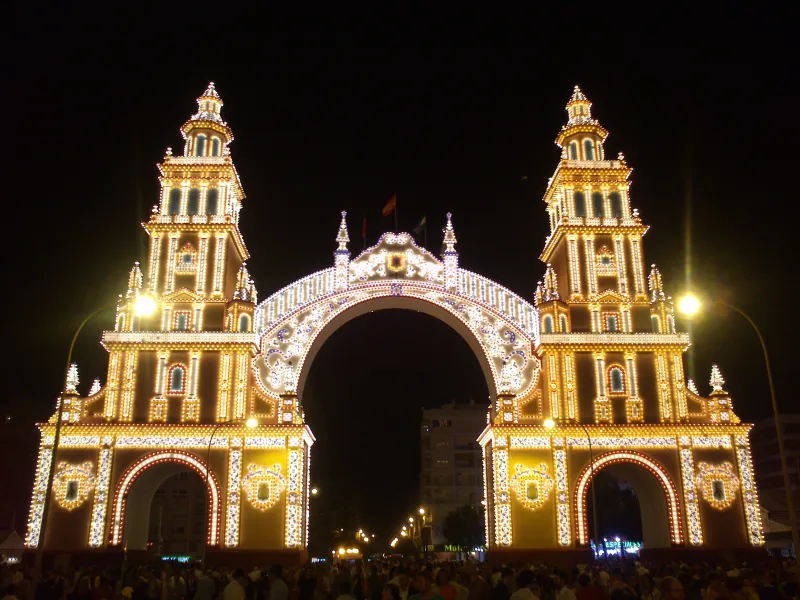
Feria de Abril Itinerary
How to plan days and nights at Seville's Feria de Abril: understanding the casetas and how to get inside one, what to wear, when the fairground comes alive, the daytime horse paseo, the rides, and how to fit ordinary sightseeing around the fair.
Read guide
Heat-Smart Summer Seville Itinerary
How to actually enjoy Seville in summer: a day built around early starts, a long midday break, pools and shade in the worst hours, and the long warm evenings the city was made for — with a sample three-day plan.
Read guide