
CAAC Seville Guide
How to visit the Centro Andaluz de Arte Contemporáneo on Cartuja island: contemporary art inside a former Carthusian monastery with a Columbus and ceramics past, set in the legacy of Expo '92 — what's on, who it suits, and how to reach it.
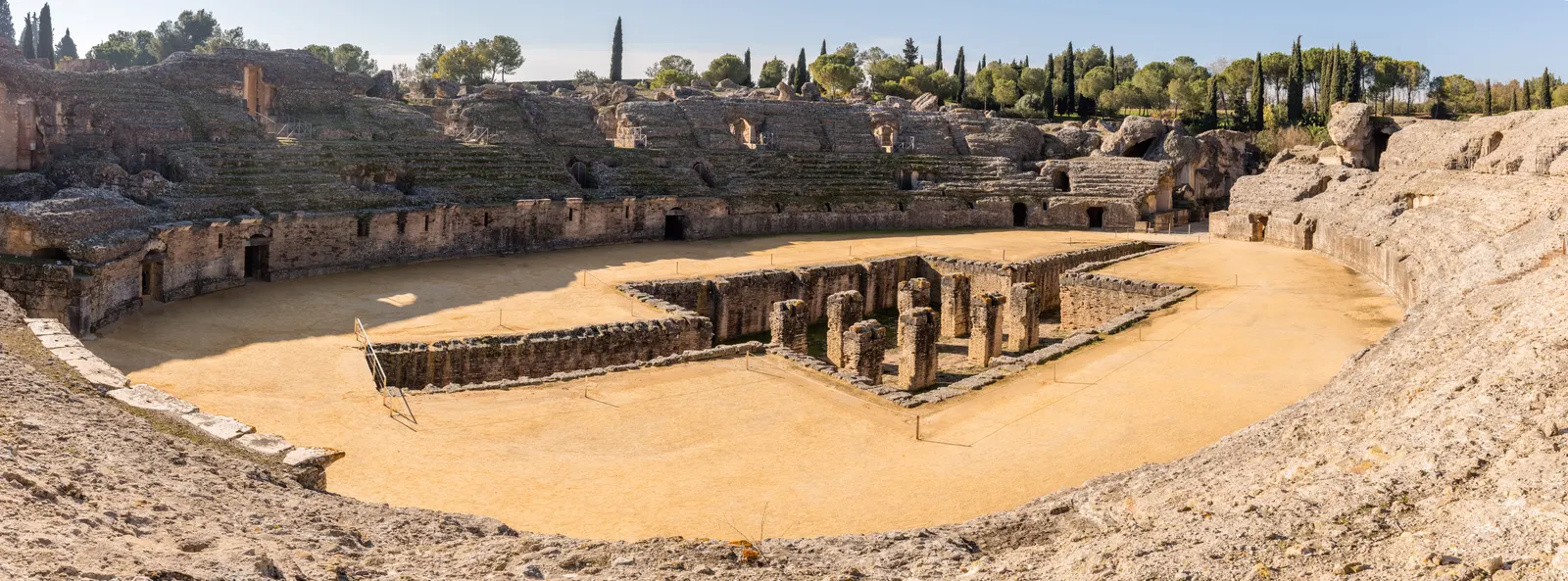
Photo: Diego Delso / Wikimedia Commons · CC BY-SA 4.0
- ✓Andalusia's flagship contemporary-art centre, set inside the historic Monasterio de Santa María de las Cuevas (La Cartuja).
- ✓The building is the story: a former Carthusian monastery linked to Christopher Columbus, later a 19th-century ceramics factory, then a centrepiece of Expo '92.
- ✓Old monastic architecture meets contemporary art, plus a sculpture-dotted garden and the surviving industrial kilns.
- ✓On Cartuja island across the river — a different, more spacious side of Seville, away from the old-town crowds.
- ✓A strong choice for art lovers, design-minded travellers and teens or anyone who finds the historic core too relentlessly old.
What the CAAC is
The Centro Andaluz de Arte Contemporáneo — CAAC — is the regional government of Andalusia's flagship institution for contemporary and modern art. But to call it simply an art gallery undersells it, because the venue is as compelling as anything hanging on its walls. It occupies the Monasterio de Santa María de las Cuevas, universally known as La Cartuja, a former Carthusian monastery on the island of the same name in the bend of the Guadalquivir, across the river from the historic centre.
That gives a visit two layers running at once. On one hand, you have changing exhibitions of contemporary art and a permanent collection of modern and recent Andalusian and international work; on the other, you have a richly historic complex of cloisters, chapels and gardens that has lived several extraordinary lives. The contrast — bold, current art set against centuries-old brick and tile — is exactly the appeal, and it makes CAAC unlike anything else in the city.
It is also gloriously uncrowded and spacious. Where Seville's old town can feel saturated, Cartuja island is open and modern, and the CAAC's galleries and grounds give you room to roam. For travellers who want a change of register — something contemporary, something with space to breathe — this is the antidote to one more golden-age church.
A monastery, Columbus, ceramics and Expo '92
The history packed into these walls is genuinely remarkable. The Carthusian monastery was founded here in the late medieval period, and it has a direct link to Christopher Columbus: the explorer was a guest of the monks, planned voyages here, and his remains were even interred at the monastery for a period before their long journey onward — a connection that ties this quiet island to the whole arc of Spain's age of discovery.
After the monks left in the 19th century, the complex was bought by the British entrepreneur Charles Pickman and turned into a famous ceramics factory — the bottle-shaped brick kilns that still rise among the buildings are the survivors of that industrial chapter, and they are one of the site's most photogenic and surprising features. Then came 1992, when Seville hosted the Universal Exposition (Expo '92) on Cartuja island; La Cartuja was restored as a flagship venue, and the CAAC was subsequently established here, giving the monastery its current life as an art centre.
Reading those layers as you walk — Carthusian silence, Columbus's ambition, Victorian industry, the optimism of Expo '92, contemporary art today — is half the pleasure. Few buildings anywhere compress so much history into one site, and the CAAC makes a virtue of letting all of it show.
- Founded as a Carthusian monastery (La Cartuja) on the island in the river bend.
- Linked to Christopher Columbus, who stayed here and was once interred at the site.
- Became a 19th-century ceramics factory under Charles Pickman — the brick kilns survive.
- Restored for Expo '92, then established as the home of the CAAC.
The art and the grounds
Inside, the CAAC programmes a rotating slate of temporary exhibitions alongside works from its permanent collection of contemporary and modern art, with a particular eye on Andalusian and Spanish artists set in an international context. The galleries make clever use of the monastic spaces — vaulted halls, former chapels and refectory rooms now hung with painting, sculpture, photography, video and installation — so that the art and the architecture are in constant conversation. Because exhibitions change, it's always worth checking the current programme before you go; what's on can range from a single ambitious solo show to a sprawling group survey.
Outside, the grounds reward unhurried wandering. There are gardens dotted with large-scale sculpture, the surviving ceramics kilns, the old church and cloisters, and open spaces that feel a world away from the dense old town. Even for visitors who aren't usually drawn to contemporary art, the combination of grounds, history and a few striking installations makes for a satisfying couple of hours.
- Rotating temporary exhibitions plus a modern/contemporary permanent collection.
- Andalusian, Spanish and international art across painting, sculpture, photo, video and installation.
- Sculpture gardens, the surviving brick kilns and the old cloisters and church to explore outdoors.
- Check the current programme before visiting — exhibitions change regularly.
Who should go — and who can skip it
CAAC is for the curious. Art lovers and design-minded travellers will relish the contemporary programme and the building's history. Anyone who has had their fill of golden-age churches and palaces will find it a refreshing change of pace and register. And it lands surprisingly well with teenagers and older kids, who often respond to bold installations and the offbeat thrill of brick kilns and a Columbus-and-Expo backstory more than to yet another cathedral.
It's a less obvious pick if your time in Seville is tight and you've never been: the unmissable core is the Alcázar, Cathedral and Santa Cruz, and CAAC asks for a deliberate trip across the river. If contemporary art leaves you cold, you may get more from the grounds and history than the galleries. But for second-time visitors, art enthusiasts, families with teens, and anyone craving space and modernity, it's one of the most rewarding off-piste choices in the city.
At a glance
A quick reference for planning. Opening hours, ticket prices and free-entry arrangements are set by the regional authority that runs the CAAC and do change — and, as with many public museums in Andalusia, there may be free-admission windows on certain days or for certain visitors. Always confirm the current rules on the official CAAC website before you go. The points below are the evergreen ones.
- What you see: contemporary/modern art exhibitions inside a former Carthusian monastery, plus historic grounds and kilns.
- Where it is: Monasterio de la Cartuja, on Cartuja island across the river from the centre.
- How long: 1.5–2.5 hours, depending on the exhibitions and how long you linger in the grounds.
- Getting there: a longer trip than the old-town sights — across the river to Isla de la Cartuja, by bus, taxi or a longish walk.
- Good for: art lovers, design-minded travellers, repeat visitors and families with teens.
- Verify before you go: opening hours, ticket price, any free-entry day, and the current exhibitions (set by the CAAC).
Getting there and pairing it with Cartuja island
CAAC sits on the Isla de la Cartuja, the river island that hosted Expo '92, on the far side of the Guadalquivir from the historic centre. It is too far to be a casual add-on to a Santa Cruz wander — plan it as its own outing. The island is reachable by city bus, by taxi, or on foot if you don't mind a longer walk over one of the bridges; it's worth checking current routes and the museum's own travel advice, as the area is more spread out and modern than the old town.
Make a half-day of the island. The Expo '92 grounds left behind a cluster of modern attractions, and Cartuja is also home to the Isla Mágica theme park and various science and tech venues — so families, in particular, can build a full day around the area. Pair the CAAC's art and history with a wander of the wider island, and you get a side of Seville most visitors never see: open, contemporary and full of the strange afterlife of a world's fair.
Cartuja island and the legacy of Expo '92
To make sense of the CAAC, it helps to understand the strange and fascinating place it sits in. The Isla de la Cartuja is a large island formed by the Guadalquivir and a flood-control channel, and for most of its history it was quiet farmland and the grounds of the monastery. Everything changed in 1992, when Seville staged the Universal Exposition — a world's fair on the theme of the 'Age of Discovery', timed to the 500th anniversary of Columbus's first voyage — and transformed the island into a vast modern showground of pavilions, bridges, lakes and futuristic architecture.
When the fair ended, the island had a second life to invent. Much of the Expo site became the Cartuja science and technology park and a cluster of leftover attractions; La Cartuja monastery, restored as a flagship venue, became the home of the CAAC. The result is a part of Seville unlike any other: open, modern, slightly surreal, with grand boulevards and the ghosts of a world's fair among the new offices and labs. Visiting the CAAC, you're really visiting this whole afterlife — the place where Seville chose to put its future, right next to a monastery tied to its past.
That backdrop is part of the draw for design-minded and curious travellers. Cartuja is where you go to see a different Seville: not the orange-scented old town of the postcards, but a city that, for one extraordinary year, tried to imagine the 21st century — and then had to work out what to do with the leftovers.
What to expect from a visit
A CAAC visit is best approached with the right expectations, because it is not a conventional white-cube museum or a tightly curated permanent display you can rely on being the same each time. The programme rotates, so the experience genuinely varies — sometimes you'll catch a major, ambitious exhibition that fills the monastic halls; at quieter moments the draw tips more toward the building, the grounds and the history than the art on the walls. Checking what's on before you go is therefore not optional but essential to deciding whether to make the trip.
What's constant is the pleasure of the place itself: the cloisters and chapels, the sculpture-strewn gardens, the haunting brick kilns, and the sheer space and calm of it all after the density of the old town. Allow a couple of hours, take the outdoor parts slowly, and treat any strong exhibition as a bonus on top of a setting that would be worth visiting even empty. Go in curious rather than checking a box, and the CAAC tends to reward you — often with the day you remember most from a longer Seville trip.
- The programme rotates — the art on show changes, so check before committing the trip.
- The building, grounds, kilns and history are the constant draw, exhibitions the variable bonus.
- Go in curious; treat the setting as the main event and any strong show as extra.
Practical tips for a smoother visit
Check what's on before you commit the trip — because the programme rotates, the CAAC experience varies a lot with the current exhibitions, and a quick look at the website tells you whether it's a blockbuster or a quieter moment. Wear comfortable shoes for the galleries and the grounds, and bring sun cover in summer: the outdoor parts, including the sculpture gardens and kilns, are exposed, and Cartuja island offers less shade than the dense old town.
Photography rules vary by exhibition, so check the posted notices. The site is large and partly historic, so confirm accessibility specifics with the venue if needed. And give the grounds their due — the kilns, cloisters and gardens are a big part of why a visit here sticks in the memory long after the individual artworks fade.
One more piece of planning advice: build the CAAC into a half-day that suits the island rather than squeezing it between old-town sights. Allow time for the journey across the river both ways, factor in that Cartuja is quieter and has fewer cafés than the centre, and consider pairing it with the river crossing or a Triana stop on the way. Approached on its own terms — as a deliberate excursion to a strange, spacious, history-soaked corner of Seville — it consistently turns out to be a highlight, and one of the few places in the city where you can have great art and an unhurried, near-empty cloister to yourself.
- Check the current exhibitions before making the trip — the programme changes.
- Comfortable shoes and summer sun cover for the exposed outdoor grounds and kilns.
- Plan it as its own outing across the river, not a quick add-on to the old town.
Best Museums in Seville
A decisive guide to Seville's museums: the golden-age paintings of Bellas Artes, the living art of the flamenco museum, contemporary work at the CAAC, ceramics in Triana and the palace-museums — compared by art, history, rain value and who each suits.
Read guide
Seville Hidden Gems Worth Your Time
Beyond the Alcázar and the Cathedral: Seville's quieter palaces, small museums, tiled corners, local neighbourhoods and underused walking routes — the places that make the city feel like a discovery rather than a checklist.
Read guide
Seville with Teens
Seville for teenagers: standout viewpoints, bikes along the river, flamenco and food tours, street culture and contemporary art, a couple of great day trips, and heat-smart pacing that keeps older kids engaged.
Read guideMore in Things to Do
6
Archivo de Indias Guide
Why the Archivo General de Indias belongs on your Seville list: what's inside the great archive of the Spanish Americas, the Renaissance building it lives in, how free entry works, and how to slot it between the Cathedral and the Alcázar.
Read guide
Basílica de la Macarena Guide
How to visit the Basílica de la Macarena in northern Seville: the beloved image of the Virgin of Hope, the on-site treasury museum, the Roman wall beside it, and the basilica's deep ties to Semana Santa.
Read guide
Best Free Things to Do in Seville
The best free things to do in Seville: grand plazas, shaded parks, riverside walks, beautiful churches, viewpoints, free-entry museum windows, and the heat-smart way to string them together without spending a euro.
Read guide
Best Palaces in Seville
Seville is a city of palaces — royal, aristocratic and ecclesiastical. A decisive guide to the Real Alcázar, Casa de Pilatos, Palacio de las Dueñas and the lesser-known palace-homes: which to choose, how to combine them, and how to avoid palace fatigue.
Read guide
Best Photography Spots in Seville
The best places to photograph Seville and exactly when to shoot them: Plaza de España's tiled curves, Alcázar patios, the Giralda framed down narrow lanes, rooftops, river bridges and Santa Cruz patios — built into a golden-hour route around the heat.
Read guide
Best Tours in Seville
Which guided tours in Seville are actually worth it: skip-the-line Alcázar and Cathedral visits, food and tapas tours, flamenco experiences, bike rides, river cruises and day trips — compared by who they suit, when to book, and where you're better off going solo.
Read guide