
Hospital de los Venerables Guide
How to visit the Hospital de los Venerables in Santa Cruz: a serene Baroque almshouse turned art centre, with a famous sunken courtyard, a frescoed church, and a small but choice collection that brings the world of Velázquez and Murillo into focus.
Photo: Julia Folsom / Wikimedia Commons · CC BY-SA 2.0
- ✓A 17th-century Baroque almshouse for elderly priests, tucked into the lanes of Barrio Santa Cruz, now a cultural centre and quiet art stop.
- ✓Its sunken central courtyard, built to channel and store water, is one of the most photographed patios in the city.
- ✓The church is a jewel-box of Baroque fresco and gilded altarpieces, with ceiling paintings by Juan de Valdés Leal and his son.
- ✓Home to the Centro Velázquez, framing the Seville-born master and his contemporaries — a Velázquez context worth seeking out.
- ✓Small, shaded and calm — an ideal rainy-day or midday-heat stop a few steps from the Cathedral and Alcázar.
What the Hospital de los Venerables is
Despite the name, the Hospital de los Venerables was never a hospital in the modern sense. It was built in the late 17th century as a residence and refuge for elderly and infirm priests — the 'venerable' clergy of its title — a charitable almshouse run by a brotherhood of Seville's priesthood. Set deep in the lanes of Barrio Santa Cruz, the old Jewish quarter, it is one of the city's most complete and atmospheric pieces of Sevillian Baroque, and today it serves as a cultural centre and art space run by a foundation.
What you get is a building designed for calm: a graceful arcaded courtyard, a richly decorated church, and a sequence of rooms now given over to art and exhibitions. It is compact, beautiful and almost always peaceful — a deliberate contrast to the icons a few streets away. For travellers who want Baroque drama and serious art without the scale and crowds of the Cathedral or a big museum, Los Venerables is one of Santa Cruz's quiet triumphs.
It also rewards a slower, more curious traveller. There is no obligatory route march here, no timed-slot anxiety; you wander a self-contained world of fresco, gilt and stone, and you set your own pace. An hour is plenty, which makes it easy to fold into a Santa Cruz morning or use as a cool refuge in the heat of the afternoon.
The sunken courtyard
The centrepiece, and the image most people remember, is the central courtyard. Ringed by a two-storey arcade of warm ochre and Pompeian-red walls, it is unusual in that its middle dips down: a circular, sunken patio with a fountain at the bottom, reached by curving steps. The design is practical as much as beautiful — built to gather, channel and store precious rainwater in a hot, dry city — but the effect is sculptural, a perfect Baroque oval that draws the eye and the camera straight down to the water.
It is also a masterclass in how Seville's architecture handles heat and light. The arcades throw deep shade, the painted walls glow, and the sound of the fountain softens everything. Photographers love the geometry of the curved steps and the circular pool; everyone else loves that it is a beautiful place to simply stand still for a few minutes. Many visitors rate this patio among the loveliest in a city full of them.
- A two-storey arcaded courtyard in warm ochre and red — classic Sevillian Baroque.
- A distinctive sunken centre with a circular fountain, designed to manage rainwater.
- Deep shade and the sound of water — a genuine relief on a hot day.
- One of the most photogenic patios in Seville; come for the geometry and the light.
The church: Baroque fresco and gilt
The hospital's church is a small, dazzling space — a single nave drenched in Baroque decoration, with gilded altarpieces, sculpture and walls and vaults covered in fresco. The painted programme is closely associated with Juan de Valdés Leal, one of the leading Sevillian painters of the period, working with his son Lucas Valdés; their ceiling and wall paintings give the interior its sense of swirling, theatrical movement, where architecture, sculpture and illusionistic painting blur together in the way Baroque intended.
It is the kind of interior that repays looking up. The trompe-l'oeil effects, the gilded retablos and the integration of painting with the real architecture are exactly the visual rhetoric the Counter-Reformation church used to move worshippers — and it still works on visitors today. After the courtyard's cool restraint, the church hits as a burst of colour and drama, and the contrast between the two is part of what makes the visit memorable.
Art and the world of Velázquez
Beyond its own fabric, Los Venerables has long served as a home for art, and in particular for framing the legacy of Diego Velázquez — Seville's most famous painter, born in the city in 1599 before his career took him to the royal court in Madrid. The building has housed the Centro Velázquez, a project devoted to the master and his Sevillian context, presenting works and exhibitions that place him among the contemporaries and traditions that shaped him.
For art lovers, this is the hook: a chance to think about Velázquez where he came from, and to see Golden Age Sevillian painting in an intimate setting rather than a vast gallery. Specific works and exhibitions on display change over time, so it is worth checking the current programme before you visit — but the throughline of Seville's extraordinary 17th-century art scene, the world of Velázquez, Murillo, Zurbarán and Valdés Leal, is the lens that makes the collection sing.
If the Sevillian Baroque catches you here, the larger picture is across town at the Museum of Fine Arts, which holds the city's deepest Murillo and Zurbarán collection — a natural follow-on for anyone hooked.
At a glance
A quick reference for planning. Opening hours, ticket prices, free-entry windows and the exhibition programme are set by the managing foundation and change with the season, so always confirm current details on the official Hospital de los Venerables / Fundación Focus website before you go. The points below are the evergreen ones.
- What you see: the sunken courtyard, the frescoed Baroque church, and art rooms including Velázquez context.
- Where it is: Plaza de los Venerables, in the heart of Barrio Santa Cruz.
- How long: about an hour; art lovers may stay longer if there's a temporary show.
- Visit style: self-guided and compact; calm even in peak season.
- Good for: rainy days, midday heat breaks, and travellers who want Baroque and art without the crowds.
- Verify before you go: opening hours, ticket price, any free-entry window, and the current exhibition (all set by the foundation).
When to go — and why it's a great heat or rainy-day stop
Los Venerables is one of those sights that solves a problem. When the afternoon heat makes outdoor sightseeing in Seville a test of endurance, the shaded courtyard and cool interiors are a sanctuary; when it rains — which it can, especially in late autumn and winter — this is an indoor pleasure that doesn't depend on blue skies. Either way, it slots into the day as a calm, contained hour rather than a major undertaking.
Because crowds are rarely an issue, you don't need to chase the first slot. A mid-morning or mid-afternoon visit works well, and the courtyard photographs beautifully when the sun is high enough to light the arcades but the patio itself stays shaded. Allow about an hour, more if there's a temporary exhibition you want to dwell on.
The brotherhood and the building's history
Understanding why Los Venerables exists makes the visit richer. It was founded in the second half of the 17th century by a brotherhood of Seville priests — the Hermandad de los Venerables Sacerdotes — to care for clergy who had grown old, poor or infirm in a city that, in the great age of the Indies trade, was both fabulously wealthy and harshly unequal. The building is therefore a piece of Counter-Reformation charity made architecture: a dignified refuge for the elderly priesthood, designed around a calm courtyard and a church for daily devotion.
It belongs to a wider Sevillian phenomenon. The 17th century saw the city's brotherhoods and wealthy patrons fund a string of charitable hospitals and almshouses, several of which survive as some of the finest Baroque interiors in Spain — the Hospital de la Caridad, with its famous Murillo and Valdés Leal canvases, is the best-known cousin. Seen together, these buildings tell the story of a society obsessed in equal measure with worldly riches, mortal vanity and the salvation of souls, and Los Venerables is one of its most graceful expressions.
Today the complex is cared for by a cultural foundation, which restored it and runs its art programme — the reason the old almshouse now does double duty as one of the loveliest small art spaces in the city. The continuity is rather moving: a building made to shelter the venerable still gathers people in, only now for beauty rather than refuge.
Los Venerables for couples and slow travellers
This is a sight that rewards the unhurried. There is no rush, no timed slot, no crowd to outflank — just a beautiful, contained world you can move through at your own pace. For a couple, it makes a perfect quiet interlude in a busy Seville day: the cool of the sunken courtyard, the drama of the gilded church, a small, choice collection to discuss, and then back out into the romance of the Santa Cruz lanes. It asks for about an hour and gives back a sense of calm that the headline icons, for all their grandeur, rarely manage.
It is also a genuinely good wet-weather date or a midday refuge when the heat outside is punishing. Pair it with a leisurely tapas lunch in one of Santa Cruz's plant-filled plazas, and you have the bones of a gentle, cultured afternoon — the kind of thing Seville does better than almost anywhere, once you step off the main tourist track and into a place like this.

Pair it with Santa Cruz and the icons
The Hospital's position is a gift. It sits in the tangle of Barrio Santa Cruz, the city's most atmospheric quarter, a few minutes' walk from the Cathedral, the Giralda and the Real Alcázar. The natural sequence is the big monuments early — book the Alcázar and Cathedral first slots — then a slow loop through Santa Cruz's whitewashed lanes and plant-filled plazas, with Los Venerables as the cultured, shaded pause in the middle.
From the Plaza de los Venerables, you are also a short stroll from the orange-tree squares, tiled fountains and tapas bars that make Santa Cruz so seductive in the evening. Treat the Hospital as the thoughtful counterweight to a day of headline sights: a quiet, beautiful interlude that sends you back out into the lanes refreshed.
Practical tips for a smoother visit
Wear comfortable shoes — there's stone underfoot and the curving steps down into the sunken courtyard to negotiate, which is also the main thing to weigh if anyone in your group has mobility limitations; check accessibility specifics with the venue. Personal photography is generally welcome in the courtyard; follow the posted rules for the church and exhibition rooms, where restrictions on flash or tripods may apply.
Check the current programme before you go, since the temporary exhibitions can be a highlight, and take your time in the church — looking up is where the rewards are. It is an easy, low-stress visit: small, beautiful and self-paced, and one of the better-kept secrets of a quarter that most people rush straight through.
A final thought on how to use it well: don't try to wring a half-day out of Los Venerables — it isn't that kind of place, and treating it as a quick, jewel-like hour is exactly right. Slot it between two bigger things, or use it to cool off and recharge in the middle of a hot or rainy afternoon, and it will feel like a small luxury rather than an obligation. That modest scale is a feature, not a flaw: in a city where the headline monuments can leave you footsore and overstimulated, an hour of pure, uncrowded beauty is sometimes exactly what the day needs.
- Comfortable shoes; mind the steps down into the sunken courtyard.
- Photography usually fine in the patio; check rules for the church and exhibition rooms.
- Check the current exhibition before visiting — temporary shows can be the highlight.

Barrio Santa Cruz Walk
A self-guided walking route through Barrio Santa Cruz — the whitewashed lanes, hidden plazas, flower-filled patios, old legends and shaded squares of Seville's former Jewish quarter, pressed against the Alcázar walls.
Read guide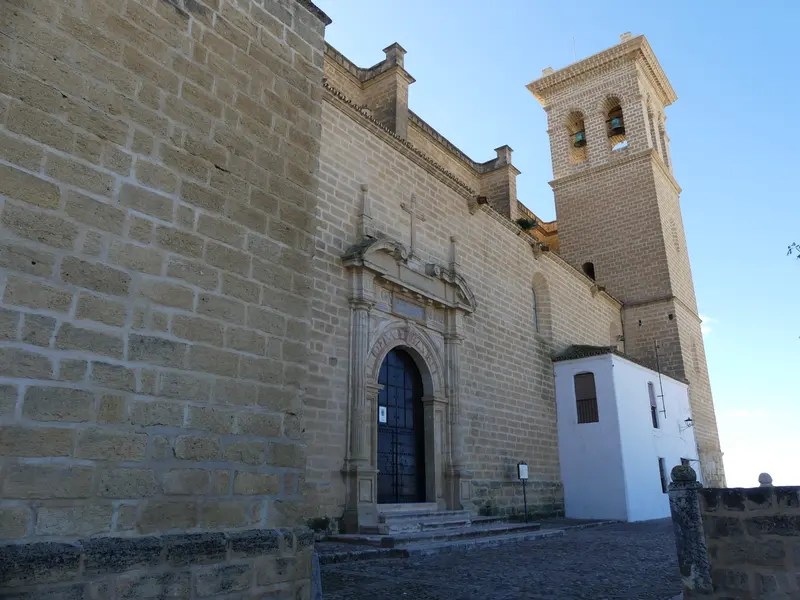
Best Museums in Seville
A decisive guide to Seville's museums: the golden-age paintings of Bellas Artes, the living art of the flamenco museum, contemporary work at the CAAC, ceramics in Triana and the palace-museums — compared by art, history, rain value and who each suits.
Read guide
What to Do in Seville When It Rains
A flexible, indoor-friendly plan for wet days in Seville: palaces and museums, long tapas lunches, flamenco, beautiful churches, covered markets, and how to keep a romantic city romantic under grey skies.
Read guideMore in Things to Do
6
Archivo de Indias Guide
Why the Archivo General de Indias belongs on your Seville list: what's inside the great archive of the Spanish Americas, the Renaissance building it lives in, how free entry works, and how to slot it between the Cathedral and the Alcázar.
Read guide
Basílica de la Macarena Guide
How to visit the Basílica de la Macarena in northern Seville: the beloved image of the Virgin of Hope, the on-site treasury museum, the Roman wall beside it, and the basilica's deep ties to Semana Santa.
Read guide
Best Free Things to Do in Seville
The best free things to do in Seville: grand plazas, shaded parks, riverside walks, beautiful churches, viewpoints, free-entry museum windows, and the heat-smart way to string them together without spending a euro.
Read guide
Best Palaces in Seville
Seville is a city of palaces — royal, aristocratic and ecclesiastical. A decisive guide to the Real Alcázar, Casa de Pilatos, Palacio de las Dueñas and the lesser-known palace-homes: which to choose, how to combine them, and how to avoid palace fatigue.
Read guide
Best Photography Spots in Seville
The best places to photograph Seville and exactly when to shoot them: Plaza de España's tiled curves, Alcázar patios, the Giralda framed down narrow lanes, rooftops, river bridges and Santa Cruz patios — built into a golden-hour route around the heat.
Read guide
Best Tours in Seville
Which guided tours in Seville are actually worth it: skip-the-line Alcázar and Cathedral visits, food and tapas tours, flamenco experiences, bike rides, river cruises and day trips — compared by who they suit, when to book, and where you're better off going solo.
Read guide