
Weekend in Seville Itinerary
A Friday-to-Sunday Seville plan built for couples, food and flamenco — the icons before noon, a real heat break, and long, lamp-lit evenings of tapas, rooftops and the river.

- ✓Two nights and two full days is the natural weekend shape: arrive Friday evening, give Saturday and Sunday to the city, leave Sunday night or Monday morning.
- ✓Book the Real Alcázar and the Cathedral the moment your dates are fixed — the first entry slot of the day is the whole secret to an unrushed weekend.
- ✓Saturday is the UNESCO core and a flamenco night; Sunday crosses to Triana for the market, the ceramics and a slow river afternoon.
- ✓Every day here front-loads monuments into the cool morning and surrenders the worst of the afternoon to a long lunch, a siesta or a pool.
- ✓Distances in the old town are tiny and flat, so this is a weekend about sequence and timing, not transport — confirm hours and prices on official sites close to your trip.
Why a weekend works so well in Seville
Seville is built for the two-night escape. The headline sights cluster so tightly around the cathedral that you can stand beneath the Giralda, walk straight into the Real Alcázar, drift through Barrio Santa Cruz and reach Plaza de España, all on foot, without ever feeling you are marching. That density is what lets a Friday-to-Sunday trip feel generous rather than frantic: you are not losing half a day to a metro map or a bus across town, you are simply moving from one beautiful thing to the next along lanes that are themselves the point.
The shape we recommend is the classic city-break rhythm. Land or step off the train on Friday evening, drop your bags, and give the night to a tapas crawl and a rooftop drink — no monuments, no agenda, just the city introducing itself. Saturday is your big day: the two ticketed icons in the cool of the morning, a long Andalusian lunch through the heat, the open-air sights as the light softens, and a flamenco show after dark. Sunday belongs to the other side of the river — Triana's market and ceramics — and a slow, golden-hour goodbye along the Guadalquivir before you leave that evening or first thing Monday.
Treat this page as a strong default rather than a timetable to obey. The sequence is the part worth keeping: book ahead, see the monuments early, let go of the hottest hours, and let the evening run long. The specific stops are yours to swap. If you want the swoonier, slower version of these same two days, the couples and romantic guides tell the story with more candlelight.
At a glance: your weekend
A quick decision card before the detail. This is the skeleton; the day-by-day sections below flesh out the order, where to eat between sights and how to flex it for summer heat.
- Friday evening — arrive, settle in, no monuments: a Santa Cruz or Triana tapas crawl and a rooftop nightcap with the Giralda lit up.
- Saturday morning — the Real Alcázar on the first slot, then the Cathedral and Giralda climb before the midday heat.
- Saturday afternoon — a long lunch and a deliberate heat break; reopen for Plaza de España and María Luisa Park in the softer late light.
- Saturday night — an early dinner, then a flamenco show, then a final drink wherever the evening leads.
- Sunday morning — cross the river to Triana for the Mercado de Triana and the ceramics, with a tostada breakfast first.
- Sunday afternoon — a slow Guadalquivir walk, a rooftop or riverside terrace, and a last unhurried meal before you go.
- Stay flexible: swap a museum for a market, skip the tower if stairs aren't for you, and always verify hours and ticket prices close to your dates.
Book this before you arrive
Two sights make or break a Seville weekend, and both reward planning above all else. The Real Alcázar — the layered Mudéjar palace with its tiled rooms and sunken gardens — and the Cathedral with its Giralda bell-tower are the anchors of your Saturday morning, and both can sell their best time slots out days ahead in any busy season. The single most useful thing you can do for this trip is book them as far in advance as you reasonably can, and choose the first or near-first entry of the day. An early Alcázar slot, with the Patio de las Doncellas and the gardens still half-empty and the air still cool, is worth more than any other piece of timing in the whole weekend.
Beyond those two, a flamenco show for Saturday night is the other thing worth reserving ahead — the intimate venues are small and fill up, especially on a weekend. Everything else on this plan is walk-up or open-air: tapas bars, rooftops, the river, the free lanes of Santa Cruz. A note that applies to the entire page: hours, prices and even which days things open shift with the season, with religious calendars and with the occasional closure, so treat any specific number as something to confirm on the official site close to your trip rather than trusting a figure printed months earlier.
Friday evening: arrive and ease in
Resist the urge to schedule anything ticketed on your first night. The point of Friday evening is to let Seville do the work — to drop your bags, change into something cooler, and walk out into the warm dusk with no plan except dinner. If you are staying in or near Barrio Santa Cruz, the lanes around you are already the introduction: lamp-lit, jasmine-scented, opening onto small squares where the tables spill out. If you have based yourselves in Triana across the river, even better — Calle Betis along the water is one of the great places in the city to start an evening, with the old town glowing on the far bank.
Make it a crawl rather than a meal. The Sevillian way is to stand at the bar, order two or three small plates and a drink, then move on to the next place — so pick a direction and let three or four bars carry you through the evening. Start with something cold and classic: salmorejo, a plate of jamón ibérico, perhaps a tortilla, and a glass of fino or manzanilla, the bone-dry sherries from down the road in Jerez and Sanlúcar. Then drift. End the night up high: Seville's rooftop bars are at their best after dark, when the Giralda is floodlit and the heat has finally lifted off the streets. A single drink with that view is the right note to fall asleep on.
If your train or flight gets in late, don't worry about cramming any of this in — a quiet tapa near the hotel and an early night sets you up perfectly for the one morning that really matters. The weekend is structured so that Saturday morning, not Friday night, is where the energy goes.
- Keep it to walking distance of your hotel — Friday is about easing in, not crossing the city.
- Order the cool classics: salmorejo, jamón, a tortilla, a glass of fino or manzanilla.
- Finish on a rooftop with the lit Giralda; one drink is plenty.
- Late arrival? A single tapa and an early night — Saturday morning is the priority.
Saturday morning: the UNESCO core
This is the morning the whole weekend is built around, so make it count by starting early. Be at the Real Alcázar for your first-slot ticket. Give it ninety unhurried minutes at least: the Patio de las Doncellas with its long reflecting pool, the gilded Salón de Embajadores under its honeycombed dome, and then the gardens, which are the quiet miracle of the place — sunken parterres, palm shade, fountains and tiled benches that feel a world away from the city outside. Going first means you walk these spaces before the tour groups arrive and before the sun turns the open courtyards into furnaces.
From the Alcázar it is a five-minute walk to the Cathedral, the largest Gothic cathedral in the world, built on the footprint of the city's great mosque. Inside, the scale is the point — the vast nave, the gilded altarpiece, the tomb monument to Columbus carried by four heralds. Then climb the Giralda, the old minaret turned bell-tower, by its gentle internal ramps rather than stairs (it was built so a rider could ascend on horseback), and take the view over the rooftops while the morning air is still kind. If stairs and crowds at altitude aren't your thing, skip the climb without guilt and spend the time in the Patio de los Naranjos, the orange-tree courtyard, instead.
By late morning you will have seen the two things people travel to Seville for, and the heat will be building. That is exactly the plan. Wander out into Barrio Santa Cruz — free, atmospheric, gloriously shaded by its narrow lanes — and let it carry you toward lunch.
- Real Alcázar first slot — palace rooms, then the gardens, before the groups and the sun arrive.
- Cathedral and Giralda next, five minutes away; climb the ramps for the rooftop view while it's cool.
- Not climbing? Linger in the orange-tree courtyard instead — no shame in it.
- Let Santa Cruz's shaded lanes walk you toward a long lunch.
Saturday afternoon: the heat break, then Plaza de España
From roughly late spring to early autumn, the Seville afternoon is not a time to be sightseeing in the open, and a weekend visitor who tries to push through it pays for it all evening. So build the break in deliberately and enjoy it. A long, late lunch is the obvious move — find a shaded terrace or a cool interior, order more freely than you did at the tapas bar, and let the meal run. Then do as the city does: retreat. A siesta back at the hotel, a swim if your hotel has a pool, a cool museum, or simply a slow coffee and a granizado in the shade. None of this is a compromise; it is the correct way to spend the hottest hours, and it is what makes the evening feel so good.
Re-emerge in the later afternoon when the light has gone golden, and walk south-east to Plaza de España. Built for the 1929 Ibero-American Exposition, it is the city's grandest open-air set piece — a vast tiled half-moon of bridges and painted province alcoves wrapped around a little canal you can row. It is free, it is open year-round, and it is at its most magical in the soft light of late afternoon and early evening, when the tiles glow and the worst of the day's crowds have thinned. Pair it with a loop through the adjacent María Luisa Park, the green, shaded lung beside it, full of fountains and quiet corners. This is the part of the day to slow right down.
In the cooler months you can flip this and visit Plaza de España in the morning, using the afternoon for a museum or simply a longer wander — but in summer the late-afternoon timing is the one that turns it from a hot photo stop into a genuine pleasure.
- Make lunch long and the heat break real: shade, a siesta, a pool or a cool museum.
- Reopen for Plaza de España in the golden late afternoon — free, open-air, at its best then.
- Loop María Luisa Park next door for fountains and proper shade.
- Cooler months: feel free to flip the order and do the plaza in the morning.
Saturday night: flamenco and a long evening
Saturday night is the emotional high point of the weekend, and flamenco is the natural anchor. Seville is one of the homes of the art form, and you have a real choice of register: a polished tablao with a full company and a fixed show time, or a smaller, more intimate venue or peña where the line between performer and audience nearly disappears. Either way, book ahead — the good rooms are small and a Saturday fills up — and time your dinner around the show rather than the other way round. Spaniards eat late, so an early-by-local-standards dinner before a show, or a proper meal after it, both work.
Around the show, let the evening breathe. The streets of Seville are at their most beautiful after dark — the monuments lit, the heat gone, the squares full of people out for the paseo. Walk the lit cathedral and Giralda, drift back through Santa Cruz, find a last terrace. There is no need to over-plan this part; the city does the atmosphere for you. The only real decision is whether to keep the night long with one more bar or to bank the energy for Sunday. On a weekend, we'd lean toward one more — Seville's nights are part of what you came for.
- Book the flamenco show ahead; choose a tablao for polish or a peña for intimacy.
- Plan dinner around the show time — eat early before, or properly after.
- Walk the lit monuments and Santa Cruz lanes; the city does the atmosphere for you.
- One more terrace, or bank it for Sunday — your call, but the nights are part of the point.
Sunday: Triana, the market and the river
Give Sunday to the other Seville — the one across the Guadalquivir. Cross the Puente de Triana into the neighbourhood that gave the city much of its flamenco and almost all of its ceramics, and start, as ever, with breakfast: a tostada with tomato and good olive oil, or pan-fried, dusted toast and strong coffee at a corner bar. Then aim for the Mercado de Triana, the covered market on the site of an old castle, where you can browse stalls of fish, ham, olives and cheese, snack your way along the counters, and feel the local Sunday rhythm. It is one of the most enjoyable hours of the whole weekend, and one of the best-value.
Around the market, Triana is a neighbourhood to wander. The ceramic tradition is everywhere — tiled shopfronts, workshops, the small ceramics museum that traces the trade — and the riverside is lined with terraces looking back at the old town. If the morning is cool enough, this is also the place for a relaxed bit of shopping: hand-painted tiles and ceramics here are the real thing and the best souvenir Seville offers. Keep the pace gentle; Sunday is a wind-down, not a second sprint.
Round the day, and the trip, with the river. A slow walk along the Guadalquivir — past the Torre del Oro, under the bridges, with the light going long and gold — is the right way to say goodbye to Seville. A final riverside lunch or a rooftop drink, and you are ready to leave that evening or first thing Monday, having spent two days in the city rather than merely seeing it.
- Cross to Triana and start with a tostada-and-coffee breakfast.
- Browse and snack through the Mercado de Triana — the best-value hour of the weekend.
- Pick up real hand-painted ceramics; it's Seville's standout souvenir.
- End on the Guadalquivir: a golden-hour walk past the Torre del Oro and a last unhurried meal.
Where to base yourselves for a weekend
On a two-night trip your hotel's location matters more than anything else about it, because every minute saved walking is a minute spent enjoying the city. Three areas suit a weekend best. Barrio Santa Cruz is the classic romantic base — beautiful, atmospheric and steps from the Alcázar and Cathedral, though its lanes can be lively at night. El Arenal trades a little of that charm for the river, the bullring and a calmer feel while staying thoroughly central. Triana, across the water, is the food-and-flamenco choice with a strong local character and easy access to your Sunday plans. Any of the three puts you within an easy walk of everything on this page.
Book early — a Seville weekend is a popular thing, and around Semana Santa or Feria de Abril the city fills months ahead and prices climb sharply. If your dates land near either festival, that is not a problem to be solved on this page so much as a different kind of trip, with its own logic; build the weekend around the events and reserve everything far earlier than you otherwise would. In high summer, a hotel with a pool or a genuinely shaded patio repays itself with interest during the afternoon heat break.
Getting in and getting around
A weekend leaves no time to waste on transfers, so it helps to know the shape of arrival in advance. Seville's airport sits a short way east of the centre; the airport bus (the EA line) runs into town in around half an hour, and a taxi is a quick fixed-tariff alternative — confirm the current fare and timetable close to your trip, as both can change. If you are coming from elsewhere in Spain, the high-speed train is often the nicer option: Santa Justa station is the city's rail hub, walkable or a short taxi from most central hotels, and trains from Madrid and Córdoba are fast and comfortable. Either way, aim to arrive Friday with enough of the evening left for a tapa and a rooftop drink.
Once you are in, the great gift of a Seville weekend is that you barely need transport at all. The old town is compact, flat and walkable end to end, and everything on this itinerary — the Alcázar, the cathedral, Santa Cruz, Plaza de España, Triana, the river — is within an easy stroll or a single short hop. There is a tram and a bus network for longer distances and a bike-share scheme if you want to cover ground faster, but most weekend visitors use their feet and a taxi or two and nothing else. Wear shoes you can walk miles in over uneven cobbles, carry water in the warm months, and let the walking be part of the pleasure rather than a chore.
- From the airport: the EA bus (around 30 minutes) or a fixed-tariff taxi — verify the current fare and times.
- By train: Santa Justa is the hub, with fast links from Madrid and Córdoba; it's central and easy.
- In town: walk almost everywhere — the old town is flat, compact and made for it.
- A tram, buses and bike-share exist for longer hops, but most weekenders barely need them.

Plan around the season and the festivals
When you come changes the weekend more than anything else. Spring and autumn are the prime windows — orange blossom and mild mornings in April and May, golden light and softer heat in October — and they let you relax the afternoon discipline a little. From roughly June to September the city centre runs as hot as anywhere in Europe, with afternoon highs frequently in the mid-thirties Celsius and worse in a heatwave (check the AEMET forecast close to your dates). The itinerary still works in high summer, but the afternoon break becomes non-negotiable and a hotel with a pool earns its keep. Winter is quiet, mild and crowd-free, with shorter queues and soft light — pack for cooler, occasionally wet days and run the same routes a little earlier.
Two festivals can transform — and crowd, and price up — a weekend. Semana Santa, in the run-up to Easter, fills the streets with solemn processions that reshape where you can walk and when. Feria de Abril, a couple of weeks later, sees the city decamp to its fairground in a blaze of flamenco dresses, horses and casetas. Both are extraordinary, but they turn a relaxed city break into a very different, more intense kind of trip, with its own logistics and premium prices. If your weekend overlaps either, build the days around the events, book your hotel and flamenco far earlier than usual, and accept that the normal rhythm bends to the festival.
- Spring & autumn: the prime seasons — mild, bright and forgiving.
- High summer (≈ June–September): monuments before noon, a real heat break, a pool if you can; check the forecast.
- Winter: quiet, mild, short queues — pack for cooler, occasionally wet days.
- Semana Santa & Feria de Abril: spectacular but crowded and pricey; plan around the events and book far ahead.
Make the weekend your own
Hold the structure and let the stops flex. The non-negotiables are the early start on Saturday, the real afternoon heat break in the warm months, and a flamenco night — everything else can bend to your mood. Travelling with a foodie? Swap a sight for a guided tapas tour or a market crawl. Want it slower and more romantic? Stretch the gardens, the rooftops and the river and skip the tower entirely. Got a third night? Add a quieter palace like Casa de Pilatos, or take the high-speed train to Córdoba's Mezquita and turn the weekend into a long one.
If you remember one thing, let it be that Seville rewards the unhurried. The best moments of a weekend here are rarely the ticketed ones — they are the free, in-between ones: a courtyard you wandered into by mistake, the Giralda glowing over a rooftop at dusk, a third tapa you hadn't planned to order. Leave room for them, and a two-night trip will feel like far more than its hours.

Best Date Nights in Seville
Ready-made romantic evenings for two in Seville, sorted by mood and neighbourhood: elegant and special, soulful and flamenco-led, playful and low-pressure, and easy budget-friendly nights. How to sequence a sunset, a dinner and a lamplit walk into one perfect evening.
Read guide
Best Romantic Hotels in Seville
How to choose a romantic hotel in Seville: atmospheric patio houses and palace stays, rooftop-pool boutiques, grand luxury hotels, and value-for-charm picks. What romantic touches to look for, which neighbourhood suits couples, and how to book the right room.
Read guide
Best Tapas Bars in Seville
How to choose where to do tapas in Seville: the difference between classic tiled institutions, modern kitchens, deeply local bars and central crawl spots, which neighbourhoods reward a tapas evening, and how to build a crawl that flows.
Read guideMore in Itineraries
6
2 Days in Seville Itinerary
A balanced two-day Seville plan: the UNESCO icons and Plaza de España on day one; Triana, the Setas, a market and a flamenco night on day two — built around the ticket slots and the afternoon heat.
Read guide
3 Days in Seville Itinerary
A complete three-day Seville itinerary: the UNESCO icons and Plaza de España; Triana, the Setas and flamenco; then a quieter palace, a market morning, a museum and slow golden-hour river time.
Read guide
4 Days in Seville Itinerary
A four-day Seville itinerary: the icons, Triana and flamenco, a quieter palace and a museum — then a fourth day for one Andalusian day trip, Córdoba's Mezquita above all, or a deliberate day off.
Read guide
Accessible Seville Itinerary
A realistic, romantic accessible route through Seville built on smoother surfaces, level entrances, lifts, taxis and the tram — with honest notes on cobbles, ramps, rest stops and the heat, paced so the city stays a pleasure rather than an obstacle course.
Read guide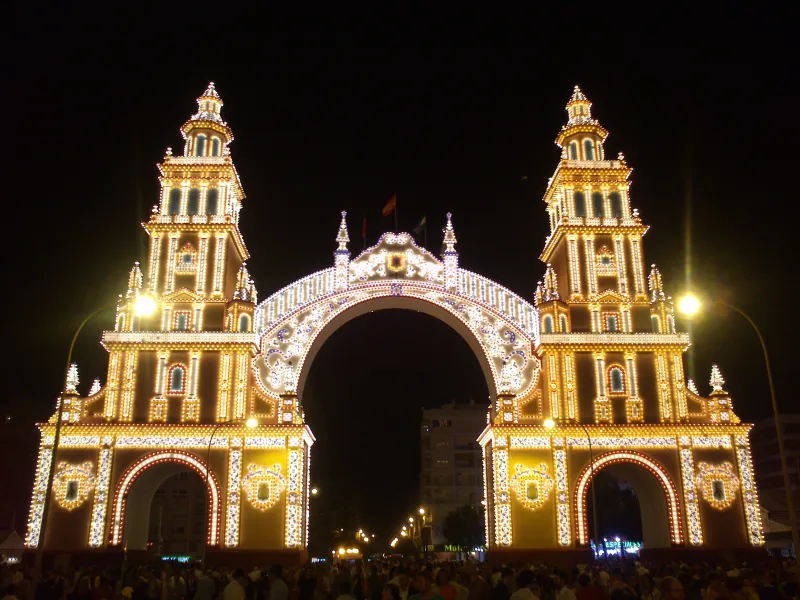
Feria de Abril Itinerary
How to plan days and nights at Seville's Feria de Abril: understanding the casetas and how to get inside one, what to wear, when the fairground comes alive, the daytime horse paseo, the rides, and how to fit ordinary sightseeing around the fair.
Read guide
Heat-Smart Summer Seville Itinerary
How to actually enjoy Seville in summer: a day built around early starts, a long midday break, pools and shade in the worst hours, and the long warm evenings the city was made for — with a sample three-day plan.
Read guide